Snorkeling
Snorkeling in Panama: two coasts that peak in opposite months
Panama's Caribbean and Pacific peak in opposite seasons. How San Blas actually works and what it costs, Bocas' two calm windows, Coiba's permit system, and which coast fits your dates.
We earn a commission on purchases made through links on this page, at no extra cost to you. It never affects which products we recommend.
On this page
Panama gives a snorkeler two oceans forty miles apart, and they peak in opposite months: pick the wrong coast for your dates and the whole trip goes murky. Almost nothing worth snorkeling here is reachable on foot, so the real questions are the charter questions — which sea, which month, and whose boat.
Book the coast, not the country. December to April, go Pacific (Coiba and the Gulf of Chiriquí) or out to San Blas. September and October, go to Bocas del Toro and nowhere else.
| Caribbean: San Blas, Bocas, Portobelo | Pacific: Coiba, Gulf of Chiriquí | |
|---|---|---|
| Best months | San Blas Dec–Apr; Bocas Sep–Oct and Feb–Apr | Dec–Apr |
| Water | 79–84 °F year-round | Warm at the surface; cold patches Jan–Mar |
| Visibility | 25 m+ at Cayos Holandeses; variable at Bocas | 20–30 m in the dry season, plankton haze May–Nov |
| What you see | Coral gardens, a shallow wreck, starfish, reef fish | Big animals: whale sharks, humpbacks, rays, sharks |
| How it works | Lanchas and sailboats, Guna-run in San Blas | Licensed park operators out of Santa Catalina and Boca Chica |
| Cost structure | Guna fees ~US$27–30 in cash before you wet a mask | US$20 park fee plus the boat |
San Blas: the Guna archipelago, and how it actually works
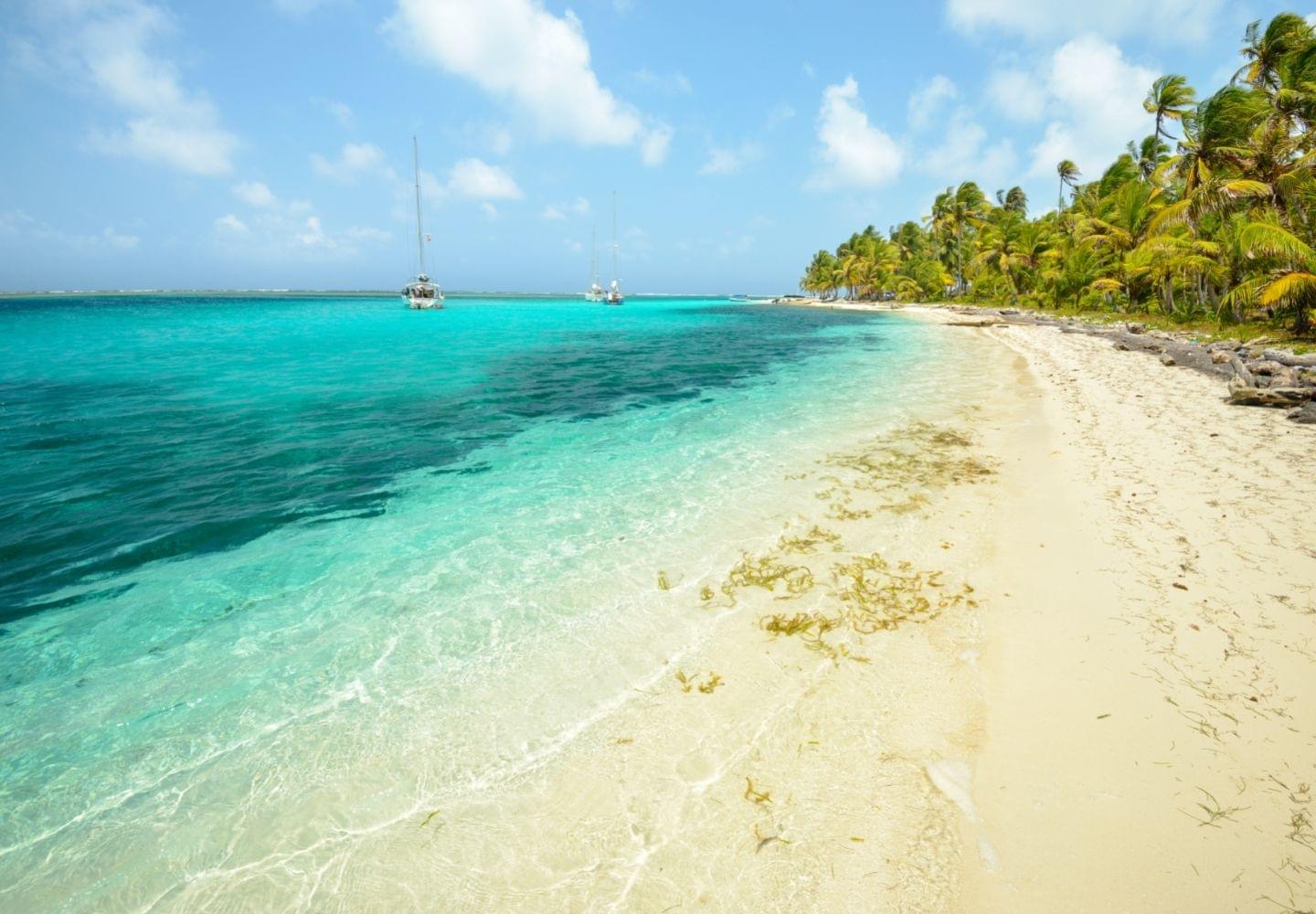
San Blas is not a national park and does not behave like one. The archipelago, about 365 islands with 49 carrying Guna communities, is the autonomous comarca of Guna Yala, and the Guna control every part of a visit: the boats, the islands you may land on, the fees. You pay the comarca US$22–23 to enter, US$2 at the Cartí dock, and another US$2–3 per island you set foot on. Cash, exact where you can manage it. There are no ATMs out there, and no negotiating at a checkpoint window.
Getting in is a 5 a.m. hotel pickup in Panama City, a 4x4 over the Llano–Cartí road (three to four hours, the last stretch a mountain switchback), then a lancha from the dock. Day trips exist and run from about $99 before the comarca’s fees, and they are honest about what they are: a long drive for a swim at Isla Perro Chico and lunch on sand. The snorkeling case for the day-trip islands is one wreck: a small cargo ship that burned and grounded off Perro Chico in the 1950s, lying in nothing to fifteen feet of water, close enough to swim from the beach with angelfish and parrotfish working the plates. It is a genuinely good first wreck. It is also the only structure most day-trippers see.
The water that justifies the trip is further out at Cayos Holandeses, the northern chain behind a barrier reef, where the anchorage is flat as a pool and visibility runs past 25 meters on a dry-season day. No day trip reaches it. You get there by sleeping in the islands: a two-day all-inclusive sailboat, a three-day run that names Holandeses on the itinerary, or a night in the Guna-run over-the-water cabins with meals and a daily boat. A sailboat here is the best version of the place: the reefs arrive on the boat’s schedule instead of the dock’s. The rule of thumb: the further from Cartí, the better the coral.
Two rules the brochures skip. Scuba is banned throughout Guna Yala. The comarca decided it, operators respect it, and that makes this a snorkeling destination by law rather than by default. And the season is the trade-wind season: December through April brings the clear, wind-groomed water; August to November is squally and unpredictable.1
One more thing you should know before you go, because it explains the place. In June 2024 the community of Gardi Sugdub, about 1,200 people, moved off their island to a purpose-built town on the mainland, the first climate-driven relocation in Panama’s history. The sea around these islands is rising at about 3.4 mm a year, and the Guna are planning around it.2 You are snorkeling an archipelago that is, slowly and literally, going under.
Bocas del Toro: two calm windows, and the real map
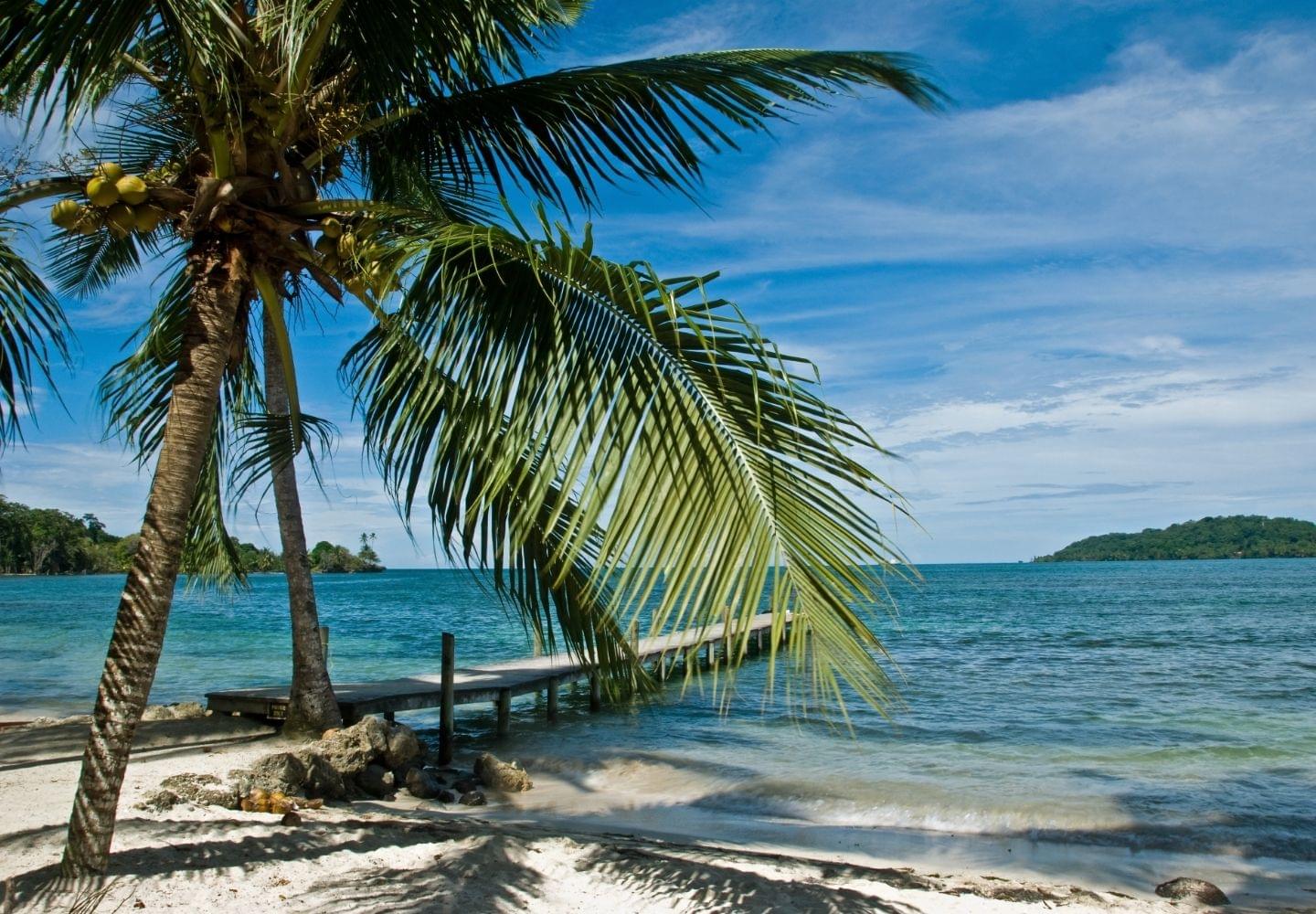
Bocas runs on a microclimate that inverts the national weather: its flattest, clearest water comes in September and October, storm season everywhere else in the Caribbean, with a second window February to April. Book against that calendar, not Panama’s.1
The archipelago’s snorkeling is a boat circuit, and the sites sort cleanly:
- Cayo Coral (Crawl Cay), off Bastimentos’ south end, is the anchor stop: a patch-reef shallows with three stilt restaurants over the water. Order lunch, snorkel while it cooks. Soft corals, sponges, juvenile fish in the mangrove edges.
- Cayos Zapatillas, the two uninhabited cays inside Isla Bastimentos National Marine Park, carry the best beach-and-barrier-reef combination in Bocas. The ranger hut collects a park fee. Bring US$10–20 in cash and expect inconsistency: the posted tariff and what gets collected are not always the same document.3
- Starfish Beach on Isla Colón is exactly what the name says: cushion sea stars on a sand flat in waist-deep water, with small fish along the mangrove line. Do not lift the stars; a starfish out of water for a photo is a starfish dying.
- Polo Beach and Hospital Point round out the circuit: a reef-protected cove on Bastimentos’ north tip and a calm bay off Isla Solarte, both standard stops on the island-hopping day tours that bundle Zapatillas, Cayo Coral and a sloth-spotting mangrove run.
Red Frog Beach is not a snorkeling site. It is the archipelago’s surf beach, with real rip currents, and the turtles associated with it are nesting on the sand at night between March and September, not swimming the break.
The easy day afloat is the six-hour catamaran sail with lunch, which works Starfish Beach or Dolphin Bay plus the Solarte coral gardens depending on wind: a sailing day with snorkeling attached, and the right pick for mixed groups.
Bahía Almirante has taken a century of runoff and sediment, and the 2023 marine heatwave hit these lagoons as hard as anywhere in the Caribbean: Smithsonian researchers at Bocas measured water past 32 °C and documented bleaching in a third to two-thirds of star-coral colonies, worst in exactly the shallow, still water snorkelers use.4 The heat stress on this cell peaked at 20.01 degree heating weeks in November 2023, past the threshold where mass mortality begins.5 What survives is still worth a mask (sponges, soft coral, the fish population of a mangrove nursery), but Bocas in 2026 is an ecosystem tour with bright patches, not a coral garden, and anyone selling it as pristine is selling.
The Pacific: Coiba, and the gulf the whales use
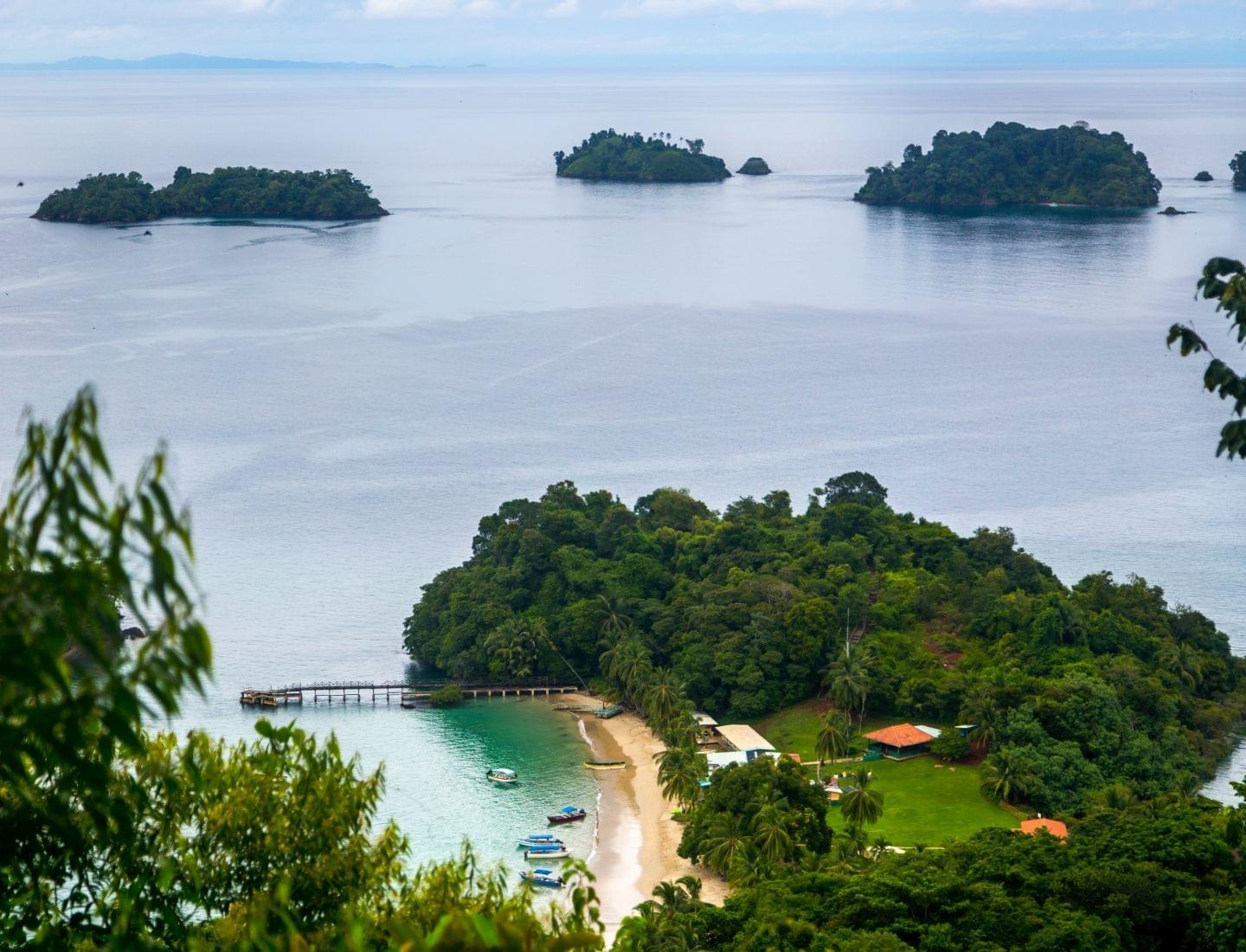
Coiba National Park is the best snorkeling in Panama and it is not close. The former penal colony’s isolation left 1,700 hectares of the healthiest coral in the eastern Pacific, UNESCO-listed since 2005, in water that goes properly clear, 20 to 30 meters, in the December-to-April dry season.6 The system is simple and non-negotiable: US$20 park fee for foreigners, licensed operators only, boats out of Santa Catalina, 60 to 90 minutes each way.7 A full-day snorkel tour runs the near islands with a ranger-station stop on the main island.
Know two things before you book. Granito de Oro — the islet on every Coiba postcard — is closed to visitors while its hammered reef recovers; tours snorkel Isla Coco and Ranchería instead, and an operator still advertising Granito is advertising a stop they cannot make. And the calendar decides your animals: whale sharks cruise the park December to April with a January–March peak, humpbacks July to October.6 Turtles, white-tip reef sharks and rays are year-round. The trade-off in whale season is water: May to November is plankton soup, which is why the whales are there and why you will not see much else past ten meters.
The Pacific has been running hot. The 2023–24 El Niño bleached pocillopora gardens through the gulf, and the Coiba cell has been accumulating heat stress again through mid-2026: 15 degree heating weeks by August.5 The park also re-entered the news in June 2026 when Panama moved 29 prisoners to the island’s naval facility and drew a formal UNESCO warning; tours run unchanged, but it is a live political fight.8
The Gulf of Chiriquí is the same sea with easier logistics: day boats out of Boca Chica (75 minutes from David) work the beaches and fringing reefs of Islas Gámez and Bolaños in the national marine park, and from mid-July to mid-October every crossing is a whale watch: this gulf is a humpback calving ground. The whale-watching and islands day tour out of Boquete pairs the two. Islas Secas, further out, is a private resort now, not a day stop.
Portobelo: read this before you pack a mask
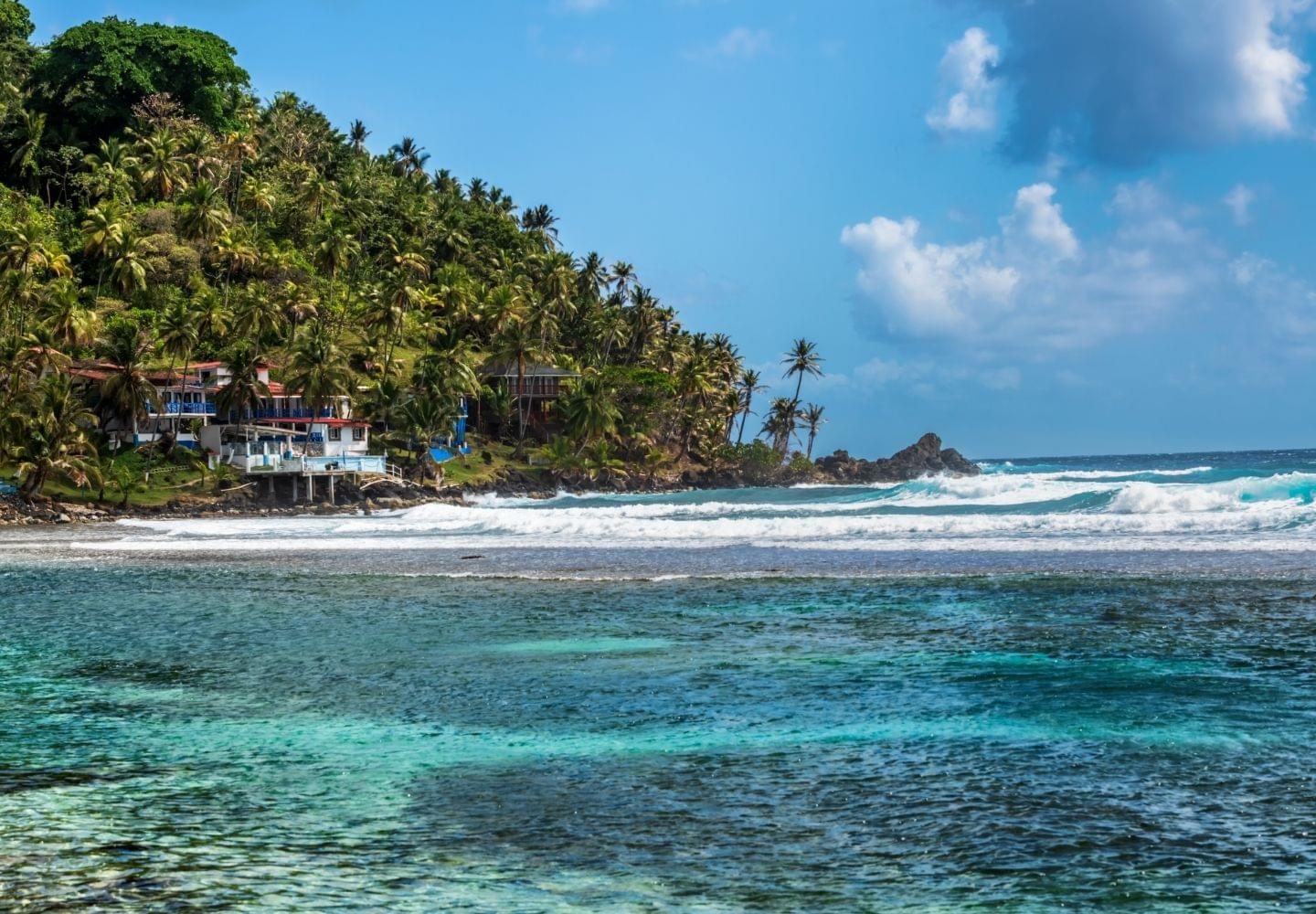
Portobelo’s famous underwater sights are dive sites. The sunken C-45 aircraft sits at about 70 feet near Isla Drake (named for Francis Drake, who died off this coast in 1596 and went down in a lead coffin nobody has ever found), and the mainland bays run murky with river runoff and boat traffic. The snorkel case is the fringe on Isla Grande’s north shore on a dry-season day, plus a colonial fort and a good lunch. Fine for a Caribbean-side day out of Panama City; not worth building a trip around.
When to go, by coast
| Month | Pacific (Coiba, Chiriquí) | Bocas | San Blas |
|---|---|---|---|
| Dec–Apr | Prime: calm, clear, whale sharks | Good Feb–Apr | Prime: trade-wind clarity |
| May–Jun | Plankton builds | In-between | Workable |
| Jul–Aug | Humpbacks arrive; haze | July often rough | Squall season begins |
| Sep–Oct | Whales, but wet | Prime: the glass months | Unpredictable |
| Nov | Wettest month countrywide | Rough | Unpredictable |
One week, snorkeling first: pick a single coast. Dry season, do Santa Catalina/Coiba and finish with two nights sailing San Blas. September–October, do Bocas and don’t second-guess it: you will have the best water in the country while the guidebooks call it the wrong season.
Getting there, and where to base
Bocas: fly Albrook to Bocas Town in 50 minutes (from about $80), or take the overnight bus to Almirante and the 30-minute water taxi. Base in Bocas Town for boat choice, or across on Bastimentos if you want the water at your dock: Casa Cayuco on Bastimentos’ outer shore runs its own boats, lends gear, and puts Zapatillas and Cayo Coral twenty minutes away instead of an hour. Bocas is near the Costa Rica border, and Costa Rica’s Caribbean coast is also clearest in September and October.
Pacific: Santa Catalina is a seven-to-eight-hour haul from Panama City by bus via Soná; commit at least three nights, with Hotel Santa Catalina as the walk-to-the-panga base. For Chiriquí, fly to David; Selva Terra Island Resort (the former Cala Mia, renamed) sits on Isla Boca Brava inside the gulf with the marine park at its dock.
San Blas is not a base, it is an expedition from Panama City. Book the boat, bring the cash, and treat the 4x4 leg as part of the adventure rather than an obstacle to it. Past Guna Yala the coast turns into Colombia, and snorkeling in Colombia starts at Capurganá and Sapzurro.
Panama snorkeling FAQ
Frequently asked questions
When is the best time to snorkel in Panama?
Depends which sea. The Pacific side (Coiba and the Gulf of Chiriquí) is best December to April, when the seas are calm and visibility runs 20 meters or more. Bocas del Toro runs backwards: its glassiest water comes in September and October, with a second window February to April. There is no month that is wrong for the whole country.
Do you need a permit to snorkel Coiba National Park?
You need the park fee, US$20 for foreigners, and a licensed operator, because private visits are not how the park works. Boats run from Santa Catalina, about an hour to an hour and a half each way. Granito de Oro, the islet on the old postcards, is closed while its reef recovers; tours snorkel Isla Coco and Ranchería instead.
Is San Blas worth it for the snorkeling alone?
As a day trip, no: you spend six hours driving and boating for two in the water, over reefs the day-trip islands have mostly worn out. Sleep out there and it flips. Two or three days on a sailboat gets you to Cayos Holandeses, where the barrier reef holds the clearest water in the archipelago.
Resources
Footnotes
-
PADI, “Best Time to Dive Panama,” blog.padi.com; Bocas’ inverted seasons per Bocas Dive Center. ↩ ↩2
-
NBC News, “Hundreds of Indigenous families complete relocation from Gardi Sugdub,” June 2024, nbcnews.com. ↩
-
MiAmbiente protected-area entry tariffs, Resolutions DM-0182-2020 and DM-0013-2024, miambiente.gob.pa. ↩
-
Smithsonian Tropical Research Institute on the 2023 Bocas bleaching, March 2024, smithsonianmag.com. ↩
-
NOAA Coral Reef Watch 5 km Degree Heating Weeks, cells 9.375 N −82.225 W (Bocas; 20.01 DHW on 2023-11-18) and 7.425 N −81.625 W (Coiba; 15.19 DHW on 2026-08-14), retrieved 16 August 2026 via PacIOOS ERDDAP. ↩ ↩2
-
Coiba conditions, seasons and closures per park operator guidance, snorkelcoiba.com; UNESCO listing, whc.unesco.org. ↩ ↩2
-
Coiba entry US$20 foreigner / US$5 national; cashless payment system since July 2025, panamaamerica.com.pa. ↩
-
The Tico Times, “Panama moves 29 high-risk inmates to Coiba, prompting UNESCO warning,” June 2026, ticotimes.net. ↩
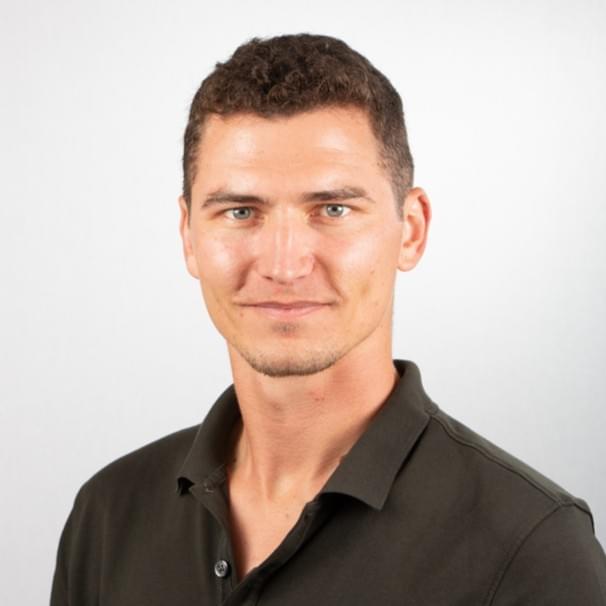
Nick Brisson — Co-founder, OutsiderView
Nick was born in Florida and grew up in Puerto Rico. He spent over ten years in Key West working in the boat charter industry, put four to five years into snorkeling and spearfishing the Florida Keys reef, and lives in Jacksonville Beach now, where he surfs year-round.