Snorkeling
Roatán snorkeling: which sites are still worth the swim
Roatán sits on the Mesoamerican Barrier Reef, and bleaching and disease changed what is down there. What each site offers now, the park tag, and when to come.
We earn a commission on purchases made through links on this page, at no extra cost to you. It never affects which products we recommend.
On this page
- How Roatán is laid out, and which end to stay on
- What the reef actually looks like now
- The marine park tag, and what it buys
- West Bay Beach
- Half Moon Bay and West End
- Sandy Bay
- French Key and the south shore
- The East End: Turquoise Bay and Pigeon Cay
- Cruise days, and what fits in six hours
- When to come
- Where to stay
- Frequently asked questions
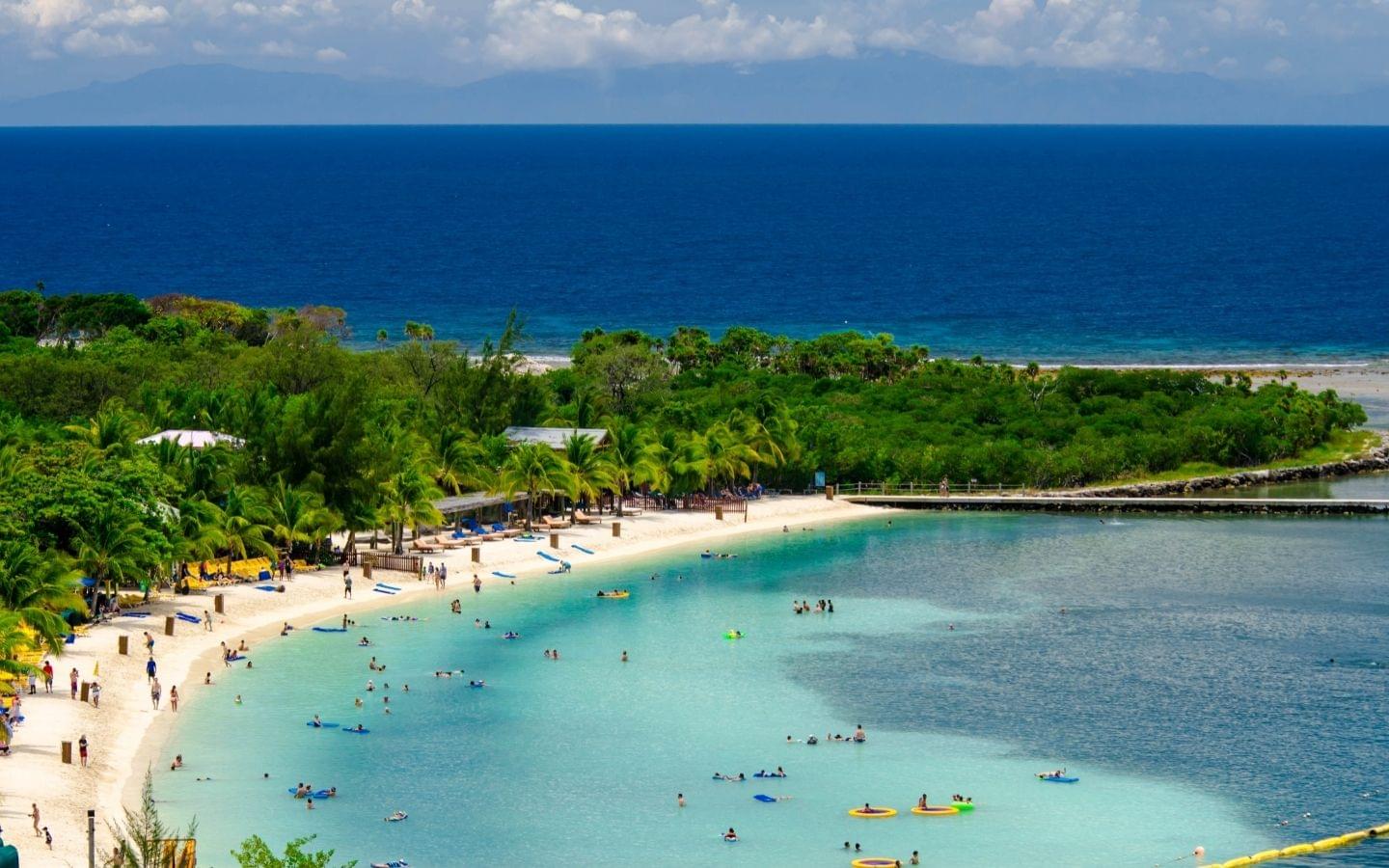
The most useful fact about snorkeling on Roatán is a distance. At the southern end of West Bay Beach the reef edge is 100 to 200 yards from where you put your bag down, the flat in front of it sits at about 10 feet and it drops to 30 at the wall.1 You can swim to the edge of the Mesoamerican Barrier Reef, look over it, and be back on the sand inside half an hour. Very few places in the Caribbean put the second-largest barrier reef in the world that close to a beach chair.
The second most useful fact is less comfortable, and no guide written before 2022 carries it. Stony coral tissue loss disease arrived on Roatán in September 2020 and is now recorded at roughly 95% of the sites the Roatán Marine Park monitors.23 The 2023 marine heatwave then pushed heat stress across the Bay Islands to a record.4 The reef is still worth swimming, but what is down there has changed, and knowing what to look at is most of the difference between a good morning and a disappointed one.
How Roatán is laid out, and which end to stay on
Roatán is a long, thin island, roughly 40 miles end to end and rarely more than two miles wide, with the barrier reef running along both shores and closest to land on the north and northwest. The airport sits at Coxen Hole in the middle of the south coast, and everything else is a drive from there.
The west end — West Bay and West End village — is where the shore snorkeling is. It is about a 20 to 30 minute taxi from the airport, and the two are ten minutes apart by road or water taxi. It is also where the crowds, the dive shops and the restaurants are.
The north shore runs east from Sandy Bay: quieter, still reef-fringed, and home to Anthony’s Key and the Spooky Channel.
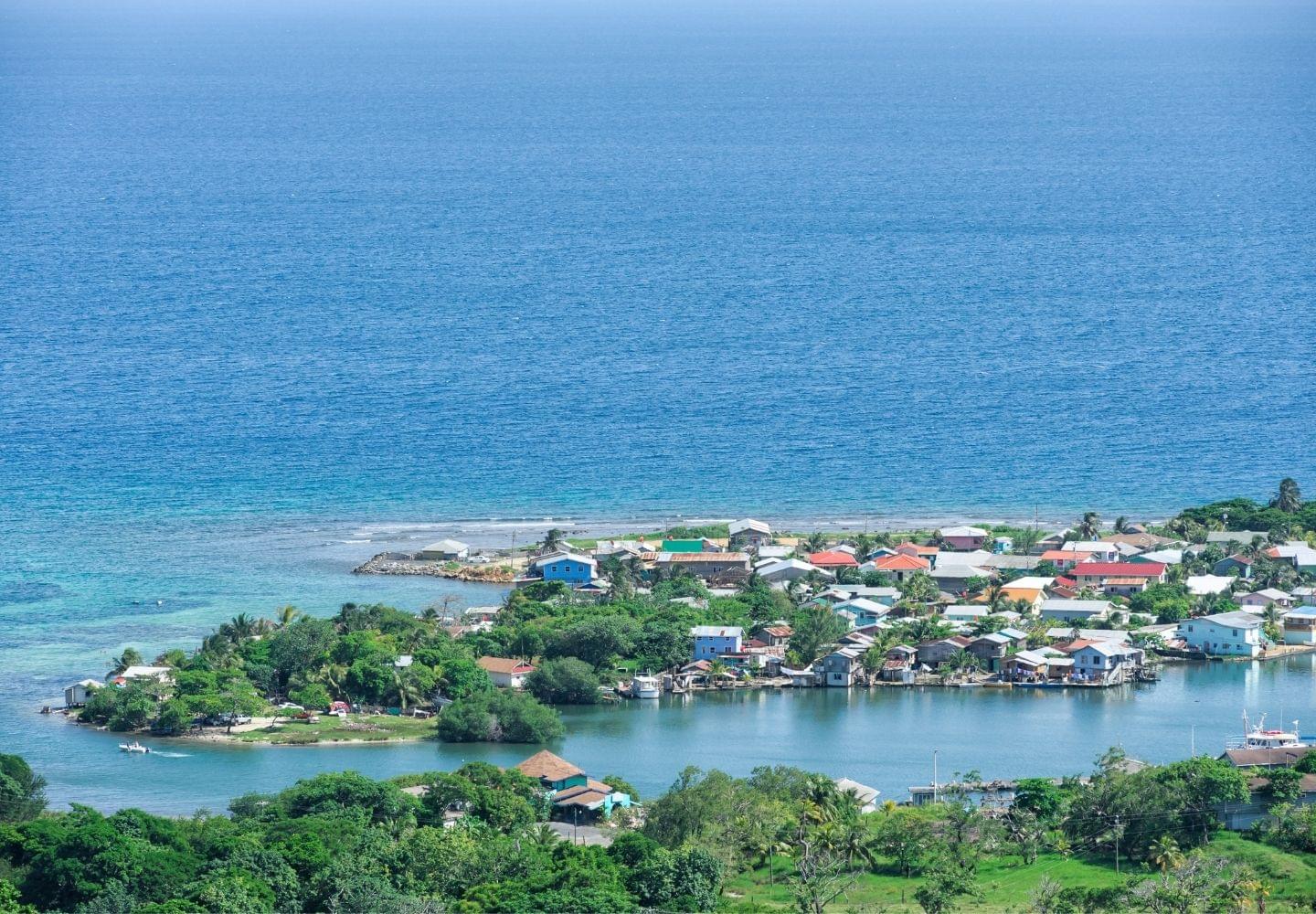
The East End — Turquoise Bay, Camp Bay, Port Royal, and the boats out to Pigeon Cay — is 60 to 90 minutes from the airport. Almost nobody goes, which is the point.
The south shore carries both cruise ports, French Harbour, and the private islands at French Cay. It is the practical end rather than the pretty one.
Stay at the west end if you want to snorkel most days without booking anything, and go east if you want the reef to yourself and do not mind driving.
What the reef actually looks like now
Stony coral tissue loss disease was first reported on Roatán on 24 September 2020, at Flowers Bay on the south shore. It moved around Roatán and Utila at roughly 155 meters a day over the following 13 months and had affected at least 28 coral species by November 2021, spreading more than twice as fast along the windward north coast as along the sheltered south.2 The Roatán Marine Park has since tagged and treated 1,373 corals and applied more than 3,000 treatments at 48 dive sites, with treatment working between 50 and 65% of the time. Its monitoring now finds signs of the disease at about 95% of the sites it watches.3
Then came the heat. Thermal stress in the Bay Islands began building unusually early, in June 2023, and peaked in October at an average of 12.8 °C-weeks — a record for the region.4 Across the Mesoamerican Reef as a whole, 40% of corals were severely affected.5
What that means at the surface is specific. The species SCTLD takes hardest are the big reef-building ones — brain corals, star corals, maze corals, pillar coral — so the losses fall on exactly the large, sculptural colonies that photograph well. What has held up better is the reef structure itself, the sea fans and sea whips, and the fish. The 2024 Mesoamerican Reef Report Card, the most recent edition, graded the whole system “Poor” but recorded the first improvement in five years, driven by herbivorous fish — and singled out the Bay Islands’ protected areas as places where parrotfish and surgeonfish are doing well. Honduras’s coral cover fell about 3% over the same period.6
So come for the fish, the wall and the water clarity, and treat any large healthy coral head as a bonus. Repair work is under way: the Coral Restoration Center Roatán, a land-based coral rearing lab run by the California Academy of Sciences and the Roatán Marine Park, opened on 18 June 2025, and the park has out-planted 687 coral fragments.57
The marine park tag, and what it buys
The Roatán Marine Park manages the Bay Islands National Marine Park, 647,153 hectares covering Utila, Roatán, Santos Guardiola and Guanaja, declared a protected area on 10 June 2010 and the largest marine protected area in Honduras.7
Its user fee is $10 for a bracelet or token, and the park itself calls it voluntary. You buy it at the RMP EcoStore in West End or through partner dive shops,8 and plenty of operators will not take you out without one, so if you are diving you will end up with it anyway.
Buy it. The visible return is the infrastructure that keeps boats and swimmers apart: more than 329 dive and snorkel moorings, 139 of them installed or replaced in 2024; 186 channel markers across 39 channels; and 20 demarcation markers whose specific job is marking out snorkeling areas — an estimated 95% of the marine infrastructure around Roatán.9 The buoys you swim between at West Bay exist because somebody paid for them.

West Bay Beach
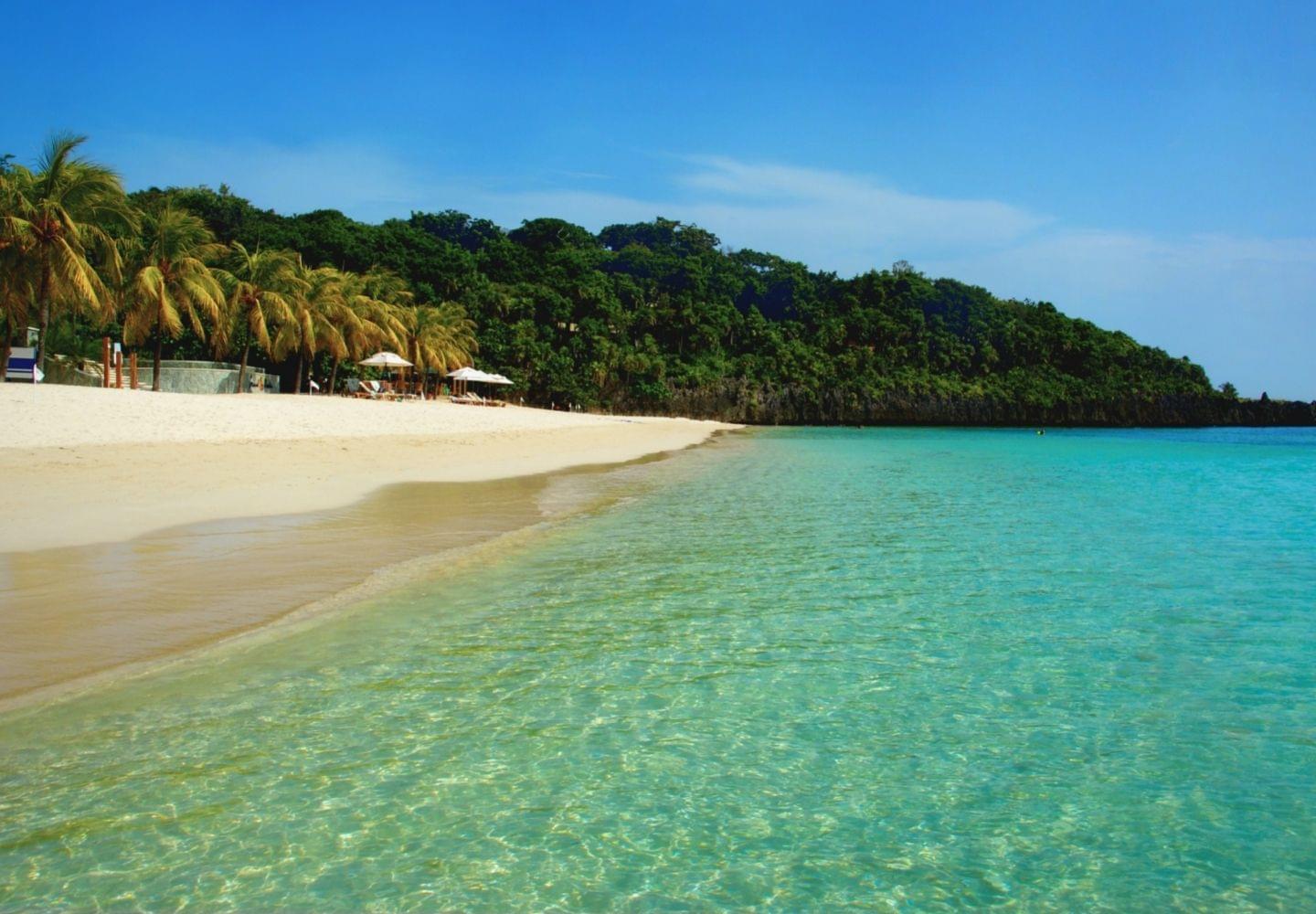
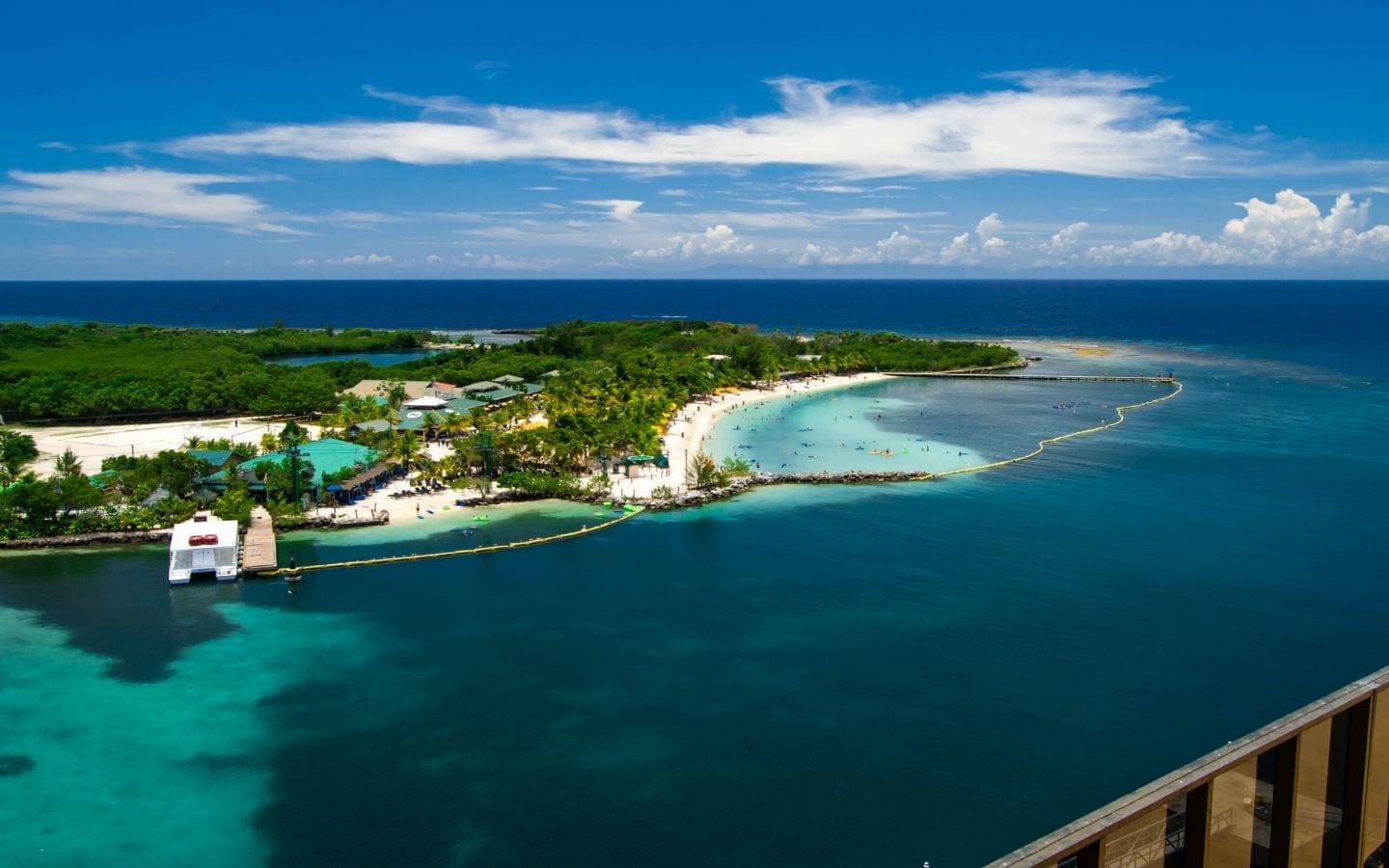
This is the best shore snorkeling on the island and the reason most people come.
Getting in. Two marked entries sit at the southern end of the bay. The first is directly in front of the Kimpton Grand Roatán Resort + Spa — the resort older guides still call the Grand Roatan — with buoys marking the route out. The second is immediately left of the jetty as you face the water, in front of Infinity Bay Spa and Beach Resort.1
Everything north of the jetty is a boat lane. Vessel traffic runs there all day and it is not a place to swim outside the marked areas. That is the one hard rule on the beach, and worth repeating to anyone in your group who wanders.
What the water does. The bay is sheltered enough that waves are effectively absent most of the year and currents are slight. Depth on the flat is about 10 feet; the drop-off is 30 feet and the reef edge is 100 to 200 yards out at the southern end, which is the closest it comes to shore anywhere in the bay.1 Swim along the ironshore on your left and then straight out. Beginners can stay inside the buoys and still see plenty; the wall is the reward for the extra hundred yards.
What you see. Parrotfish, blue tang and surgeonfish in numbers, three species of angelfish, schooling sergeant majors and Bermuda chub in the shallows, and turtles more often than not out toward West End Wall at the northern boundary.1 Iguanas on the ironshore on the way back.
Starfish Alley, and what happened to it. Just north of West Bay, past Las Rocas Resort and Dive Center, a stretch of shallow seagrass in under three feet of water was for years reliably full of Caribbean cushion sea stars. It is not any more. A guide told visitors in 2022 that there were none left, and an April 2024 report found only a handful.10 Do not build a morning around it and do not book a tour that sells it as the headline. The reef at the southern end of West Bay is a far better use of the same hour.
Crowds. On cruise days the beach and the shallows fill. The reef does not get worse; the water above the flat gets busy.

Half Moon Bay and West End
West End village is the low-rise, sandy-street end of the island, and Half Moon Bay is its snorkeling beach. It sits inside the Sandy Bay–West End Marine Reserve.
Getting in. Enter at the southern end of the beach — on your left facing the sea — which is the most sheltered corner and gives the easiest line out. A shallow seagrass meadow at half a meter to a meter runs out from the sand before the reef proper starts at one to three meters, and beyond the reef the seabed drops away to ten.11 The reef is about 200 meters out, further than West Bay but over easier, shallower water the whole way.
Boats are the hazard here, not the water. Keep out of the marked channel between the markers; West End is a working dive village and the boats coming and going are constant.
What you see. Blue tang, sergeant majors, bluehead wrasse, Spanish hogfish, scrawled filefish and three species of butterflyfish; cushion sea stars still turn up in the shallow meadow here, which is more than can be said for the site named after them.11 Sea fans and sea whips along the reef top.
The boat option. Half Moon Bay is the departure point for the short trips to Blue Channel, a cut through the reef near Bailey’s Key that is one of the island’s better snorkel sites and consistently good for snapper, triggerfish, grouper and the occasional eagle ray. A kayak and snorkeling tour reaches it under your own steam, and a two-hour boat trip covers Blue Channel plus Aquarium, Turtle Crossing and Black Rock — more reef in two hours than you will swim to in a week.
Stay for the sunset. Half Moon Bay faces west and the beach bars are on the sand.

Sandy Bay
North of West End the coast quietens, the boat traffic thins and the reef comes back close to shore. Two sites here are worth the trip.
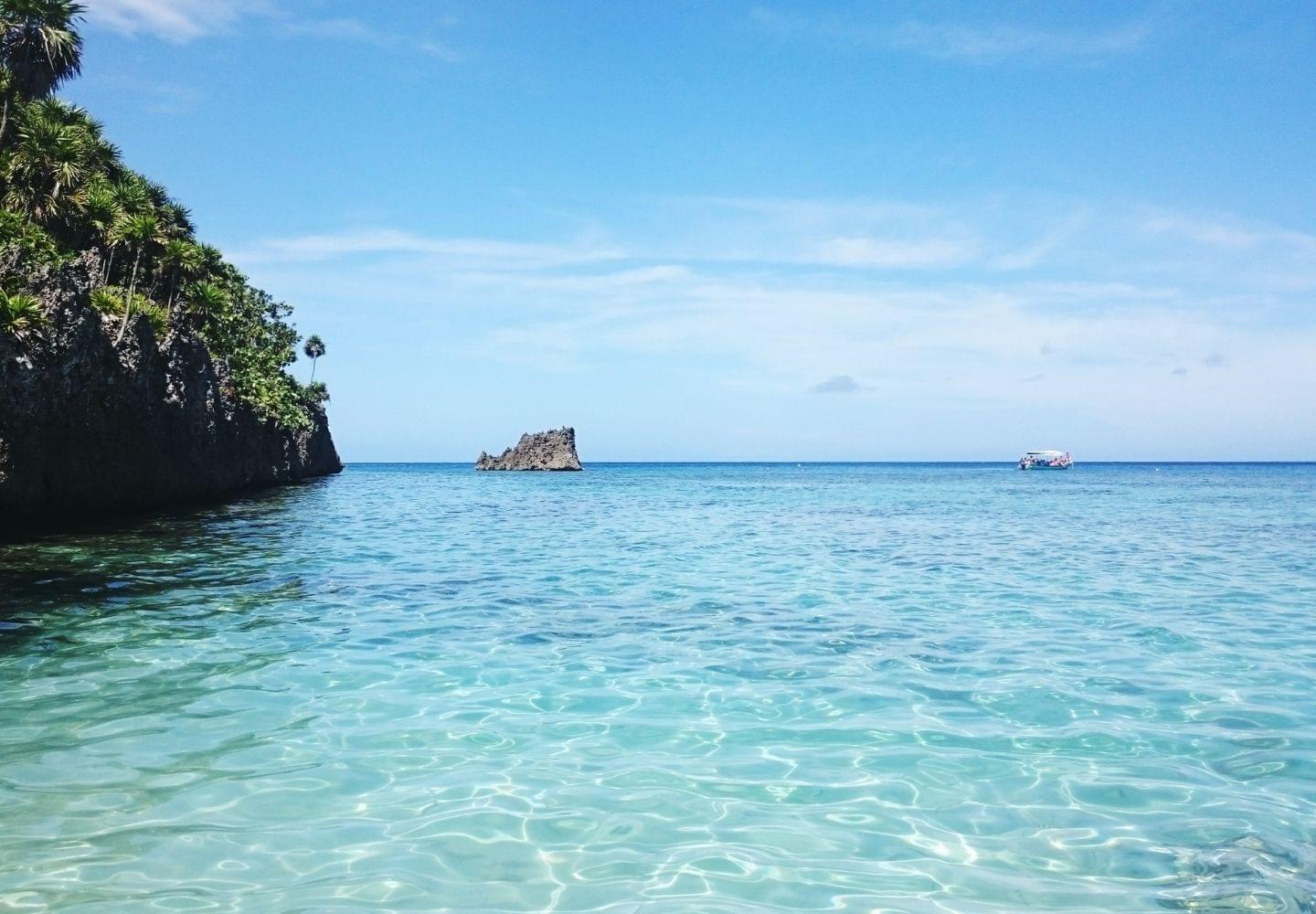
Spooky Channel is a deep cut running back into the reef, walls rising on both sides and light coming down through the gap — the reason for the name, and unlike anything else you can snorkel here. Swim or kayak out from the beach near Puerta Azul; look for the buoy about 200 yards off, and if you swim, start from the end of a dock rather than the sand.
This is not a beginner’s site. It is deep, it is a distance from shore, the outer wall is exposed to open water and current is possible. Take it on as a confident open-water swimmer with fins and a float, and leave it alone otherwise.
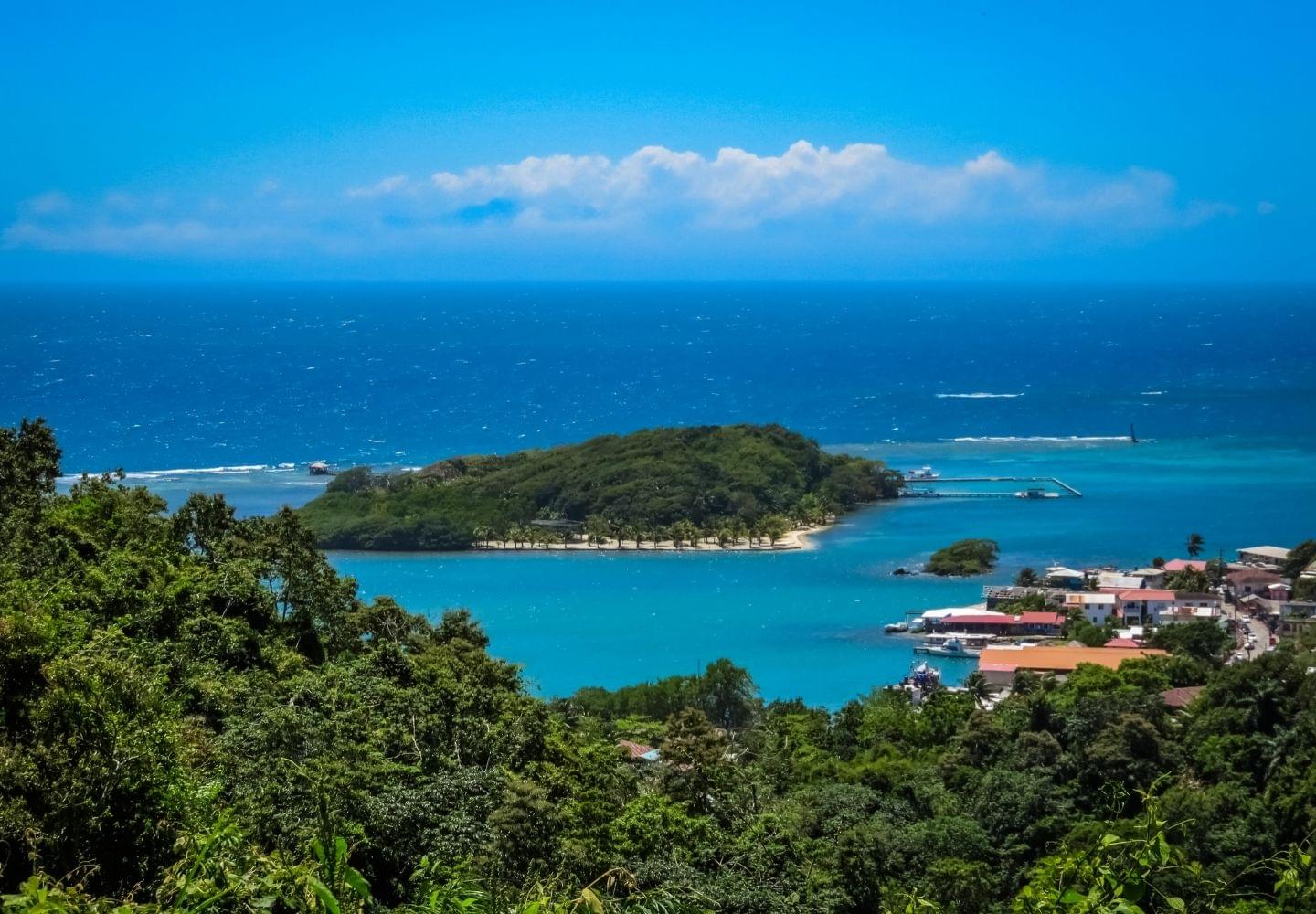
Anthony’s Key is the small island offshore, and Anthony’s Key Resort has run on it for over fifty years. It takes guided snorkeling trips out twice daily, and its lagoon and the water around neighboring Bailey’s Key are sheltered and easy for anyone still building confidence.

French Key and the south shore
French Cay, off the south coast near French Harbour, encloses a shallow lagoon behind the barrier reef. The water is glassy, the depth runs three to six feet in the lagoon and to about 20 in the channel, and the snorkeling strip along the inside of the reef is roughly 50 yards wide.12 Grunts in large schools, lobsters, reef squid, butterflyfish, bar jacks and southern stingrays.
Access is through somebody’s gate. The lagoon is reached from Little French Key, from Fantasy Island, or on a boat tour, and there is almost always an entrance fee.12 Neither private island publishes a standing day-pass price, so get a figure in writing when you book rather than at the dock.
One thing to know about Fantasy Island. A fire on the night of 2 March 2026 destroyed 36 of its 108 rooms along with the lobby, reception, restaurant, kitchen, three bars, the disco and the shops. Around 60 guests were evacuated and nobody was hurt; the dive center and roughly two-thirds of the rooms were untouched.13 It is still taking bookings, and recent reviews are the fastest way to see what has reopened. If you want the lagoon rather than the resort, a boat tour gets you there without the question.
Lionfish. French Key holds dozens of them, and they are the one thing in the water here that can hurt you.12 The spines are venomous, the fish are slow and unbothered by people, and the sting is a genuinely bad afternoon. Look, photograph, do not reach. Roatán’s culling program is live and well organized — the Marine Park runs its lionfish workshop at the Half Moon Bay office on Mondays and Wednesdays at 4pm, $70 including the spear and licence or $60 with a park bracelet14 — and 747 hunters have been certified through it.7 If you dive and you are staying a week, it is the most directly useful thing you can do for this reef.
The East End: Turquoise Bay and Pigeon Cay
The far end of the island is where Roatán stops feeling like a cruise stop. Turquoise Bay, on the northeast shore, has reef close in front of it, a dive operation on site and almost no one else in the water; it is where most people who want the East End end up. The trade is distance — an hour and a half from the airport, and you eat where you sleep.
Pigeon Cay is the reason to make the trip. It is an uninhabited sandbank off the East End, ringed by reef in genuinely good condition, and it looks like the postcard because there is nothing on it. You need a boat. A full-day trip runs from West End or West Bay with several snorkel stops on the way, and West Bay Tours sells a day trip that adds Spooky Channel and the Palmetto Bay shipwreck. This is the one trip on the island that goes where the crowds do not.
There is no shade on the cay. Take a rash guard rather than more sunscreen, and read what to wear snorkeling before a full day on open water.

Cruise days, and what fits in six hours
Roatán has two cruise terminals, both on the south coast. Carnival ships dock at Mahogany Bay; Royal Caribbean and Norwegian use Coxen Hole, the Port of Roatán.15 Between them they take calls on roughly 16 days a month in high season,15 and often more than one ship at a time, which is why West Bay can go from empty to shoulder-to-shoulder in an hour.
If you are on a ship, the ranking is short. West Bay is worth the taxi — 30 to 40 minutes from either terminal, and the only place you can be on the reef within twenty minutes of reaching the sand. Go straight there, get in immediately, and eat afterwards; the water is emptiest early and the buses arrive mid-morning.
Mahogany Bay’s own beach is the fallback. It is man-made, the entry is easy, there are chairs, kayaks, paddleboards and bars, and the snorkeling is ordinary — fine for a first mask-and-snorkel, not a reason to skip West Bay.
If you are staying on the island, use the cruise calendar in reverse: spend the two- and three-ship mornings at Half Moon Bay, Sandy Bay or the East End, and save West Bay for the days nothing is docked.
When to come
Roatán is warm all year and the constraint is rain, because rain is what puts sediment in the water and takes the visibility with it.
- March to August is the window, and April and May are the best of it — the two driest months on the island.16
- June to September is hot and increasingly wet but still workable; the sea is calm and mornings are usually clear.
- October, November and December are the three wettest months.16 Avoid them if snorkeling is the point of the trip: the water goes cloudy, the exposed shores get rough, and a lot of days are simply written off.
- December to February brings the northern cold fronts, which put swell onto the north and west shores. West Bay and West End are the ones that suffer; the sheltered south side and the French Cay lagoon are the better call on those days.
Hurricane season runs May through October, with tropical waves crossing the island directly.16 Direct hits are rare but not unheard of, and travel insurance for the season is not optional.
Where to stay
At West Bay, the Kimpton Grand Roatán Resort + Spa and Infinity Bay Spa and Beach Resort sit directly on the two marked entry points, which means you can be over the reef in the ten minutes between waking up and the beach filling. Both run dive centers with gear rental and guided trips.
For quieter water and a dive-resort rhythm, Anthony’s Key Resort at Sandy Bay puts a sheltered lagoon and the Spooky Channel within reach and runs guided snorkeling twice a day. Las Rocas Resort and Dive Center, between West Bay and West End, is the middle ground — the reef in front, the village walkable.
Bring your own mask wherever you stay. Rental gear on Roatán is plentiful and rarely well fitted, and where the good stuff is a hundred yards out, a mask that floods is the difference between reaching the wall and turning back. If anyone in the group is a weak swimmer, a snorkel vest makes West Bay and Half Moon Bay comfortably doable — our vest recommendations cover what is worth packing.
Frequently asked questions
Can you snorkel from the beach in Roatán?
Yes, and it is the main reason to come. West Bay Beach has the reef edge 100 to 200 yards from the sand, with the shallow flat at about 10 feet and the drop-off at 30 (Snorkeling Report). Half Moon Bay in West End puts it about 200 meters out over an easier, shallower approach. Both are sandy walk-ins with no boat needed, and between them they cover a beginner and a confident swimmer. The one rule that matters at West Bay is to stay south of the jetty — everything north of it carries vessel traffic all day.
Is Roatán's reef damaged?
Yes, and it is worth knowing what that means before you get in. Stony coral tissue loss disease reached Roatán in September 2020 and the Roatán Marine Park now reports signs of it at roughly 95% of the sites it monitors (Roatán Marine Park). The 2023 marine heatwave then pushed heat stress in the Bay Islands to a record. The 2024 Mesoamerican Reef Report Card graded the whole reef system "Poor" but recorded the first improvement in five years, driven by herbivorous fish, which have improved inside the Bay Islands' protected areas. In practice you will see fewer big brain and boulder corals than a 2019 photo suggests and about as many fish.
Do you have to pay to snorkel in Roatán?
Not to get in the water at West Bay, West End or Sandy Bay. The Roatán Marine Park sells a $10 user-fee bracelet or token, which it describes as voluntary, from its EcoStore in West End and through partner dive shops (Roatán Marine Park). Many dive operators require it before they will take you out. It funds the mooring buoys, channel markers and swim-area demarcation that keep boats off snorkelers. French Key is the exception among the named sites — the private islands there charge admission.
What is the best time of year to snorkel in Roatán?
March through August, with April and May the strongest. They are the driest months on the island, and rain is what costs you visibility (Roatán Tourism Bureau). October, November and December are the wettest and the ones to avoid if snorkeling is the point of the trip. Winter cold fronts put swell onto the north shore between December and February, which is when West Bay and West End go choppy and the sheltered south side is the better bet.
Which side of Roatán should you stay on?
The west end, unless you have a specific reason not to. West Bay and West End put the two best shore entries, most of the dive shops and almost all of the restaurants within a short taxi ride of each other, and you can snorkel every day without booking anything. The East End — Turquoise Bay, Camp Bay, the boats out to Pigeon Cay — is quieter, greener and much emptier, and it is a 60 to 90 minute drive from the airport with far less within walking distance. The south shore around French Harbour is where the cruise ports and the private islands are, and it suits a short stay more than a week.
Sources
Footnotes
-
“Snorkeling in West Bay, Roatán.” Snorkeling Report, snorkeling-report.com. Both entry points, reef distance of 100–200 yards, depths of 10 ft and 30 ft, the vessel-traffic rule north of the jetty, and the species list. ↩ ↩2 ↩3 ↩4
-
Truc et al., “Evaluating the spread of stony coral tissue loss disease in the Bay Islands, Honduras.” Frontiers in Marine Science, 21 July 2023, frontiersin.org. First report at Flowers Bay on 24 September 2020, spread rate of ~155 m/day, the windward-versus-leeward difference, and the count of affected species. ↩ ↩2
-
“SCTLD.” Roatán Marine Park, roatanmarinepark.org. Corals tagged and treated, treatments applied, dive sites covered, treatment efficacy, and the share of monitored sites showing disease. ↩ ↩2
-
“Unprecedented heat stress and coral bleaching in 2023: a regional assessment from the Bay Islands of Honduras.” Coral Reefs, 2025, doi.org/10.1007/s00338-025-02807-6. Onset of heat stress in June 2023, October peak, and the record 12.8 °C-week degree heating week average. ↩ ↩2
-
“California Academy of Sciences and Roatán Marine Park Open First Coral Rearing Lab in Honduras.” California Academy of Sciences, 31 July 2025, calacademy.org. The 40% figure for the Mesoamerican Reef, the global bleaching context, and the Coral Restoration Center Roatán opening on 18 June 2025. ↩ ↩2
-
“Reef Health Showing Slight Increase in Mesoamerican Reef Region.” Coral Reef Alliance, 12 November 2024, coral.org, reporting the 2024 Mesoamerican Reef Report Card published by the Healthy Reefs Initiative. First improvement in five years, the overall “Poor” grade, the 3% fall in Honduran coral cover, and herbivore recovery inside the Bay Islands’ protected areas. ↩
-
Roatán Marine Park, roatanmarinepark.org. Bay Islands National Marine Park extent and 2010 designation, coral fragments out-planted, and lionfish hunters certified. ↩ ↩2 ↩3
-
“User Fee Bracelets and Tokens.” Roatán Marine Park, roatanmarinepark.org. The $10 fee, its voluntary status, and where it is sold. ↩
-
“Marine Infrastructure.” Roatán Marine Park, roatanmarinepark.org. Mooring, channel-marker and demarcation-marker counts, the 2024 installation figures, and the share of island infrastructure maintained. ↩
-
“Snorkeling in Starfish Alley, Roatán.” Snorkeling Report, snorkeling-report.com. Access, depth, and the 2022 and April 2024 reports of the sea star population having collapsed. ↩
-
“Snorkeling in West End, Roatán.” Snorkeling Report, snorkeling-report.com. Half Moon Bay entry, the ~200 m reef distance, the depth profile, the Sandy Bay–West End Marine Reserve, and the species list. ↩ ↩2
-
“Snorkeling in French Key, Roatán.” Snorkeling Report, snorkeling-report.com. Lagoon and channel depths, the width of the snorkeling strip, the access routes and entrance fee, the species list, and the lionfish population. ↩ ↩2 ↩3
-
“Dive-center spared in Fantasy Island resort fire.” Divernet, March 2026, divernet.com; see also “Fire damages section of popular Roatan resort,” Cayman Marl Road, 5 March 2026, caymanmarlroad.com. Date of the fire, what burned, rooms lost, guests evacuated, and the dive center surviving. ↩
-
“Lionfish Workshop.” Roatán Marine Park, roatanmarinepark.org. Workshop days and times, the $70 and $60 prices, and the minimum group size. ↩
-
“Cruises to Roatán, Honduras.” Cruise Timetables, cruisetimetables.com. Which lines dock at Mahogany Bay and which at Coxen Hole, and the number of call days in a representative month. ↩ ↩2
-
“Roatan Climate.” Roatan Tourism Bureau, roatantourismbureau.com. Wettest and driest months, the influence of trade winds and winter cold fronts, and the hurricane season. ↩ ↩2 ↩3

Liz Meyer — Travel writer
Liz is a full-time traveler and a PADI Rescue Diver. She loves to explore new places in and out of the water and share her experiences with others.