Snorkeling
Snorkeling in Grenada: the sculpture park, the fee, the month
Grenada's snorkeling turns on one site: an underwater sculpture park you need a boat to reach, inside a marine protected area whose fee doubles on 1 October 2026. Where the sculptures are, what a snorkeler can see, and when to come.
We earn a commission on purchases made through links on this page, at no extra cost to you. It never affects which products we recommend.
On this page
- The Underwater Sculpture Park at Molinere Bay
- Getting there: the boat, the fee, and the rule nobody mentions
- Where the other sites are
- Snorkeling Grenada from the shore
- What the reef is actually like now
- Carriacou after Beryl, and the second sculpture park
- When to go
- Where to stay, and what to book
- Frequently asked questions
Grenada has more than forty beaches and one reason to bring a mask. In 2006 a British sculptor sank a set of concrete figures into a bay north of St George’s, on a stretch of seabed a hurricane had flattened two years earlier, and the Molinere Underwater Sculpture Park became the first thing of its kind anywhere.1 Twenty years on it is still the thing worth planning a trip around, and almost everything published about it — the number of pieces, what they are made of, and above all what it costs to see them — is out of date.
The rest of the island’s snorkeling is more modest than the brochures suggest. The reef is not close to the sand at Grand Anse, the north coast faces the Atlantic, and the two sites everyone else names are a boat ride. That is not a complaint. It means the decisions here are few and clear.
The Underwater Sculpture Park at Molinere Bay
Jason deCaires Taylor installed the first works in 2006 in about 800 square metres of seabed in the Molinere-Beauséjour Marine Protected Area, deliberately siting them on ground stripped bare by Hurricane Ivan in 2004 to pull divers off what living reef remained.1 The park worked so well that the MPA was designated around it.
It has grown since, and the most recent growth is new enough that most guides have not caught up. In 2023 Taylor added twenty-seven pieces: twenty-five works called The Coral Carnival, depicting Grenada’s Spicemas masqueraders — Jab Jab, Short Knee, Vieux Corps, Wild Indian and Fancy Mas — plus new editions of The Lost Correspondent and The Un-Still Life. They sit at 3 to 7 metres, and they are the first of Taylor’s underwater sculptures to carry colour: a calcium carbonate base worked with organic pigments including squid ink, cochineal and turmeric.2 The Grenada Tourism Authority’s own account of the renovation that finished around them counts twenty-nine new sculptures, two replacements, nineteen moorings, an eight-seat underwater wedding chapel and a GRENADA sign at Grand Mal.3
One replacement matters more than the tourism copy admits. The original Vicissitudes — the 2007 ring of children holding hands, and the park’s signature image — was taken up. Its figures were redeployed into Sentinels, three separate rings of seven. The Tourism Authority states it plainly: “The statues in the rings were derived from the original ‘Vicissitudes’ ring of children when it was replaced.”4 A new Vicissitudes of twenty-six children now stands at 5 metres, and it is that one you will photograph.
Taylor is no longer the only artist down there. The Grenadian sculptor Troy Lewis has Sienna, Christ of the Deep, Mermaid, La Diablesse, Mama Glo, a leatherback turtle, a Belair dancer, and The Petroglyphs — enlarged replicas of the rock carvings at Duquesne and Mt Rich. Lene Kilde contributed the Nutmeg Princess, from Richardo Keens-Douglas’s story. Rene Froehlich added The Silent Cry and Bench + Selfie.4
| What you are looking at | Artist | Depth |
|---|---|---|
| Vicissitudes — the ring of children, replaced and reinstalled | Jason deCaires Taylor | 5 m4 |
| The Coral Carnival — 25 Spicemas masqueraders, in colour | Jason deCaires Taylor | 3–7 m2 |
| The Lost Correspondent — man at a desk with a typewriter | Jason deCaires Taylor | Re-editioned 20232 |
| The Un-Still Life — table, vase, fruit bowl | Jason deCaires Taylor | Re-editioned 20232 |
| Sentinels — three rings of seven, the old Vicissitudes figures | after Taylor | Unstated4 |
| The Petroglyphs, Christ of the Deep, Mama Glo, La Diablesse | Troy Lewis | Unstated4 |
| Nutmeg Princess | Lene Kilde | Unstated4 |
| The Silent Cry, Bench + Selfie | Rene Froehlich | Unstated4 |
How many pieces are down there is genuinely disputed. Taylor’s own site gives the park as seventy-five works before the 2023 expansion added twenty-seven.1 Published counts elsewhere run from “over sixty-five” to eighty-two. Take it as upwards of seventy-five, and treat any precise figure with suspicion.
What a snorkeler actually sees. The site depth band is 5 to 8 metres, so from the surface you are looking down two to three body lengths at objects the size of people.1 That is comfortably within snorkeling range and the Coral Carnival figures at 3 metres are close enough to touch, which you should not. The complication is twenty years of growth: the concrete is meant to recruit coral and sponge and it has, which is the point of the project and also why recent visitors report the works being difficult to pick out until a guide points at one. Visibility is the other variable, and it is local rather than seasonal — a river drains into Dragon Bay next door, so the water goes milky after rain and stays that way while the runoff settles. No operator on the island publishes a visibility figure, and any guide that quotes you one is guessing.
Getting there: the boat, the fee, and the rule nobody mentions
Take a boat. Dragon Bay, the next inlet south, is the road access — signposted off the coast road toward Gouyave, roughly ten minutes north of St George’s, with a car park, a bar, changing rooms and no lifeguard — and it is genuinely possible to swim from there round Molinere Point to the sculptures. It is also a bad idea. The current runs, the shallow return route is thick with sea urchins, and the bay is worked by tour boats using nineteen moorings. The boat ride from St George’s or Grand Anse is about ten minutes.
There is also a legal point that the travel press does not raise and the operators do not advertise. Grenada’s Fisheries (Marine Protected Areas) Regulations make it an offence to dive “using SCUBA or snorkel equipment” inside a marine protected area “unless the person is, or is under the supervision of, a qualified diver” — defined as a member of the Grenada SCUBA Divers Association or another association the Authority approves. The penalty clause specifies a fine of ten thousand dollars and six months’ imprisonment.5 Read straight, unguided snorkeling in a Grenadian MPA is an offence. We have found no report of anybody being stopped for it, and the practical reading is simply that the island expects you to be on somebody’s boat. Wardens patrol, and the wristband is checked.
What it costs, and what it is about to cost
| Effective | MPA conservation fee, per person per visit |
|---|---|
| 15 May 2025 | US$3.50 |
| 1 October 2026 | US$7.00 |
| 1 October 2027 | US$10.00 |
The schedule was announced by the Grenada Tourism Authority on 18 March 2025 and applies to “all visitors, including divers, snorkelers, and explorers”.6 It is collected through the Pure Grenada payment portal, not at the beach; Aquanauts asks guests to pay online and email the receipt before the trip.7 If you are reading this before October 2026 you are inside the US$3.50 window, and Grenada’s own portal carries no notice of the increase.
The same announcement lists a second layer under the Fisheries Act — a snorkel fee of US$10 or EC$27 per person per day, with SCUBA at the same rate and kayaks, glass-bottom boats and free divers likewise.6 We can find no operator itemising it and no visitor account of paying it, so confirm the total with whoever takes you out rather than assuming US$3.50 covers the day.
Where “about a dollar” came from, and why it is wrong now. The 2001 regulations set a snorkel dive fee of US$1 or EC$3 per day, and the Second Schedule marks it “payable in arrears” — it was remitted monthly by the dive or charter operator on a return of passenger numbers, not handed over by a swimmer at the water’s edge.5 That is the figure still circulating in guides published as recently as 2026, including the previous version of this page. It has been superseded since May 2025.
Who runs it, and for how much
| Operator | Base | Snorkel trip | Price |
|---|---|---|---|
| Dive Grenada | Grand Anse Beach | 2 hrs, one site; 2 hrs 30, two sites with a wreck | US$65 / US$95, max 8, min age 78 |
| Aquanauts Grenada | True Blue Bay | Morning snorkel, Thursdays and on request | US$657 |
| Eco Dive | Coyaba, Grand Anse, and Port Louis Marina | One and two site | US$55 / US$70 as published9 |
| Scuba West Indies | Calabash, L’Anse aux Épines | Park only; park plus Flamingo Bay | US$80 / US$110 incl. VAT10 |
| Native Spirit Scuba | Grand Anse | Half day; full day | US$85 / US$14511 |
Two names in older Grenada guides should not be used. Grenada Seafaris, the powerboat operator that sponsored more of the sculptures than anyone, appears to have gone — its bookings account is dead, its reviews stop in 2020 and part of its site now serves gambling spam. Scuba Tech Grenada trades as Scuba West Indies on a new domain; the old address lapsed and now hosts SEO spam, and the Tourism Authority’s own directory still points at it.
For a boat with sails rather than a dive tender, this four-hour sail and snorkel cruise takes the sculpture park and then Flamingo Bay, and the eight-hour full-day sail adds lunch at Mango Bay and a sunset run down the west coast. Both are run by Corsair Sailing Charters, out of the Grenada Yacht Club and Grand Anse. If you are not going to get in the water at all, glass-bottom trips run from the Carenage at about US$45 for two hours — but the sculptures are 5 to 8 metres down and a hull only works on a clear day. It is a fallback, not a substitute.
Where the other sites are
South to north along the leeward coast, then the Atlantic side.
| Site | Where | Getting in | Fee | What it is for |
|---|---|---|---|---|
| Magazine Beach | Point Salines, by the airport | Shore, in front of the Aquarium | None | The island’s best shore snorkel. Elkhorn, sea fans, chain morays, to ~3 m12 |
| Grand Anse | St George’s | Shore, ~100 m out from the south end | None | The artificial reef, not the beach. No natural reef inshore13 |
| Morne Rouge (BBC Beach) | South of Grand Anse | Shore | None | Calm and sheltered by Quarantine Point. Modest life |
| Dragon Bay | North of St George’s | Shore, down a signposted road | MPA fee | The road access for Molinere. 5–28 m9 |
| Molinere Bay | Beside Dragon Bay | Boat | US$3.50, US$7.00 from 1 Oct 2026 | The sculpture park |
| Flamingo Bay | West coast | Boat | MPA fee | 5–18 m, a wall from about 7 m, shallow reef snorkelable14 |
| Grand Mal | North of St George’s | — | — | A tanker terminal and a 6–22 m dive site. Not a snorkel stop15 |
| Hog Island | South coast | Footbridge walk or water taxi | None | Reef close in, a drop-off further out |
| Bathway Beach | Levera, north-east | Shore, inside the rock shelf only | Park | Atlantic. A natural pool; swimming behind the reef is prohibited16 |
| Levera Beach | North-east | — | Park | Turtles, not snorkeling. Currents16 |
Two entries on that table correct the version of this page that stood for five years. Grand Mal Bay is where Grenada discharges petroleum: the Ports Authority lists tanker berths there, and Grand Mal Reef is a 6 to 22 metre dive site the Tourism Authority does not classify as a snorkeling location.15 And Levera’s leatherback nesting season is March to July on the Tourism Authority’s current page, not the May to September this page previously cited to the same authority.16 The nesting beach is closed overnight in season and visits are guided.
Snorkeling Grenada from the shore
There is less of it than the beach count suggests, and the honest ranking is short.
Magazine Beach is the answer. Swim out from in front of the Aquarium restaurant at the southwestern end and work toward the headland: elkhorn coral, sea fans, boxfish, tangs and wrasse in no more than about 3 metres, close enough in that it suits a nervous swimmer.12 It is free, it is fifteen minutes from most of the hotels, and it is rarely busy. Two hazards, and the first is the real one: fire coral is mixed in among the sea fans, so keep your hands in and your fins up. The beach also shelves steeply right by the restaurant, and there is surge in the shallows.
Grand Anse is a swimming beach. There is no reef near the sand, and the clearest evidence is that Dive Grenada — whose shop is on that beach — leaves Grand Anse off its own list of the island’s seven best snorkeling spots.13 What is worth the swim is man-made: the Grenada Artificial Reef Project, started in 2013, has sunk more than a hundred hollow block pyramids about 100 metres off the southern end in roughly 5 metres of water, with the first structures marked by a surface buoy.13 French grunts, squirrelfish and cowfish have moved in. Two cautions: there is fire coral on the older units, and the site is suffering from fine sediment settling out of the watershed.
Morne Rouge is the beginner’s beach, sheltered by Quarantine Point, calm and shallow, with less to look at than either of the above.
Everything else worth swimming — the sculptures, Flamingo Bay, Hog Island’s outer reef, Sandy Island — needs a boat or a long walk. Grenada is not Bonaire. Plan on one or two boat days and treat Magazine as the fill.
Three things to pack accordingly. Something on your feet, because Magazine, Dragon Bay and the Grand Anse artificial reef are all entries over rock or rubble at some point — the footwear note in what to wear snorkeling applies here more than it does on a sand island. A snorkel vest, which earns its place on the boat days rather than the beach ones: Molinere is 8 metres deep with traffic overhead, and Flamingo Bay drops to 18. And your own mask, because every operator rents but nothing fits like your own; our travel snorkel gear guide covers what packs small.
What the reef is actually like now
Two things have happened to Grenada’s water since this page was first written, and only one of them is the hurricane everybody knows about.
Hurricane Beryl put its eye over Carriacou at 1520 UTC on 1 July 2024 as a Category 4, with 120-knot winds and a pressure of 950.0 mb measured at Lauriston. It damaged or destroyed 99% of the buildings on Carriacou and 70% on Petite Martinique, killed three people in Grenada and caused US$218 million of damage, and the National Hurricane Center calls it the strongest hurricane of record to make landfall on Grenada or its dependencies.17 The mainland was hit hard — Maurice Bishop airport recorded 80 knots sustained with a 105-knot gust, and about 95% of residents lost power — but the leeward coast where the snorkeling is came through it. Nothing reports damage to the sculpture park, and the Tourism Authority describes it as operating normally.
No quantitative assessment of Beryl’s damage to Grenada’s reefs has been published. Nobody has surveyed the sculpture park either, before or after. What exists is restoration spending: the Grenada Coral Reef Foundation holds a US$138,035 Caribbean Biodiversity Fund grant to restore management of the Sandy Island / Oyster Bed Marine Protected Area after Beryl, with two phases of Sandy Island revegetation already complete as of February 2025.18
The heat is the other story, and it is the one nobody is telling. Degree heating weeks are NOAA’s measure of accumulated thermal stress on coral, and the 5 km satellite cell that contains Molinere Bay reads as follows.
| Year | Peak DHW | Date of peak | Days at or above 4 DHW |
|---|---|---|---|
| 2023 | 16.89 | 9 November | 122 |
| 2024 | 22.43 | 8 November | 145 |
| 2025 | 12.00 | 5 November | 129 |
| 2026, to 31 July | 0 | — | 0 |
NOAA’s published thresholds put multi-species mortality as likely above 12 degree heating weeks, severe mortality in more than half of corals above 16, and near-complete mortality in more than 80% of corals above 20. The Molinere cell crossed that last line on 17 October 2024, in the second of three consecutive stress years.19 Set against that, one clean number: the cell’s heat stress fell to zero on 27 January 2026 and has stayed there through 31 July — the first clean summer in four years.
What this changes about a trip, and what it does not. Grenada was never a coral-cover destination — the reason to come is a sculpture park, a wreck too deep to snorkel and a set of sheltered bays. The concrete does not bleach, and the growth on it is the part of the project designed to be replaced. If branching coral in good condition is what you are flying for, this is the wrong island and has been for twenty years, since Ivan.
Carriacou after Beryl, and the second sculpture park
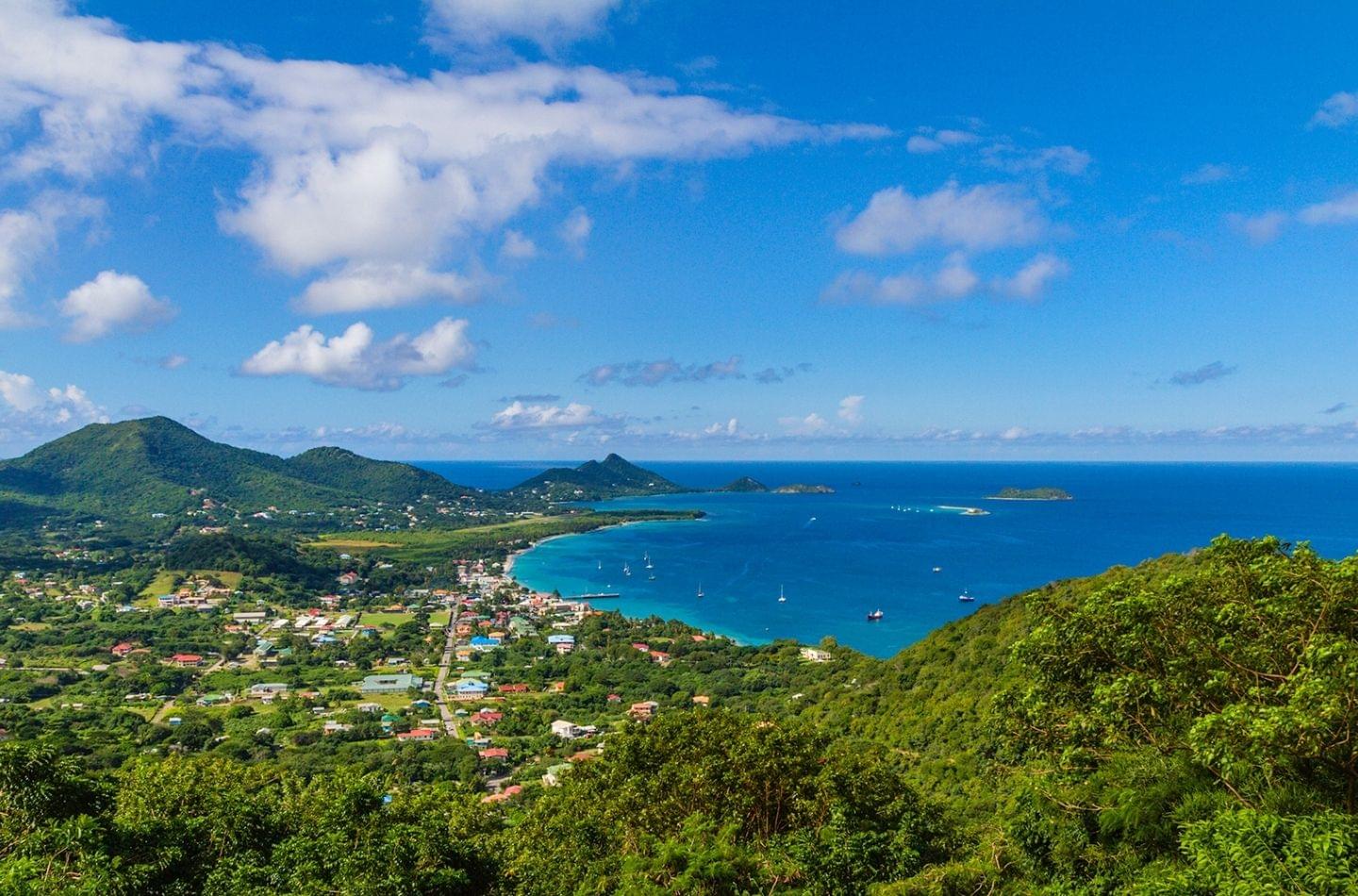
The 2021 version of this page sent readers to Carriacou for Paradise Beach and Sandy Island. That advice survives, which is not what you would guess from the damage figures, but three details in it need replacing.
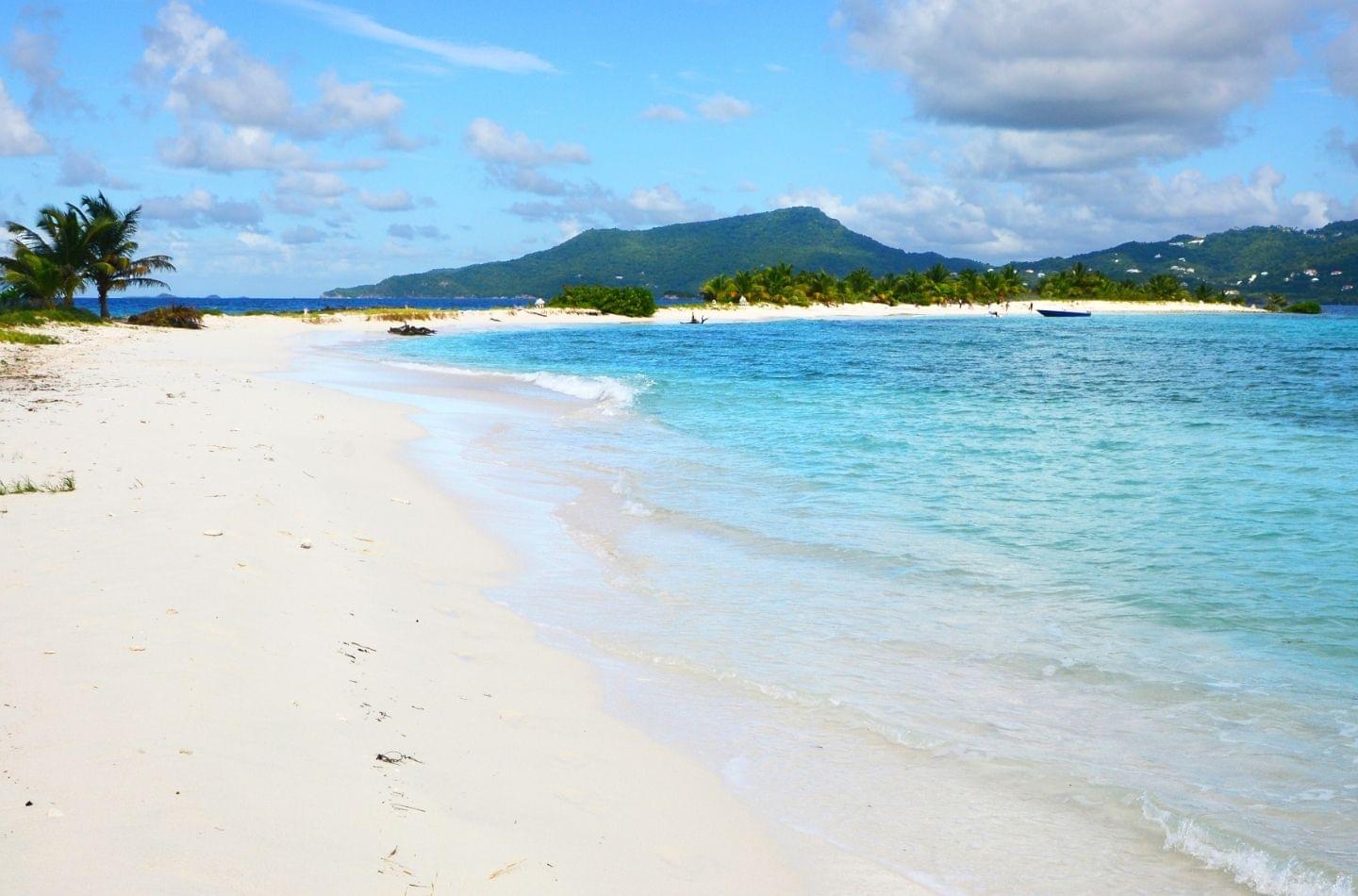
Sandy Island was not washed away. The uninhabited cay off Hillsborough lost most of its vegetation to Beryl and at high tide in August 2024 was close to splitting in two. It is still there. In November 2025 the Caribbean Journal described it as a sandbar “just wide enough for a single line of palms and just long enough to wander barefoot from end to end”, where you can “snorkel straight off the beach” into coral gardens with parrotfish, sergeant majors and the occasional turtle, and where “most visitors come by small boat from Hillsborough or Paradise Beach”.20 The single most useful practical change: there is almost no shade now. The grove in the photographs is a replanted line. Bring cover.
Paradise Beach came through. The sand and the water were reported unchanged a month after the storm, and the beach bars are back.
And Carriacou gained something. In October 2024, three months after Beryl — through which the installation work was actually going on — Jason deCaires Taylor’s second Grenadian project opened at Jack-A-Dan, a short boat trip off Hillsborough. A World Adrift is thirty boat sculptures, each crewed by a cast of a local schoolchild, with sails carrying global temperature data and rigging built as coral and sponge nurseries. It sits at 4 metres — shallower than Molinere — and the artist describes it as accessible to snorkelers.21 It is commissioned by the Tourism Authority, it is two years old, and it is on almost no snorkeling guide to Grenada.
Getting there. The Osprey ferry runs from the Carenage in St George’s and arrives at Tyrrel Bay, not Hillsborough — Monday to Friday at 09:00 and 17:00, Saturday at 09:00, no Sunday service, about an hour and three quarters, EC$80 (US$31) one way for an adult.22 SVG Air flies to Lauriston in twenty minutes from around US$100. Two years on, the island is green again and most roofs are rebuilt, but the desalination plant is running part-time and accommodation is still below its pre-Beryl capacity, so book a bed before you book the ferry: Carriacou’s stock is thinner than it was.
When to go
| Months | Rain, Point Salines23 | Water19 | Sargassum24 | Cruise ships25 | Verdict |
|---|---|---|---|---|---|
| Jan | 65 mm | 81 °F | Lowest | Peak — 77,114 in Jan 2026 | Clear, busy, windy |
| Feb | 40 mm | 81 °F | Low | 64,755 | Good. The trades are at their strongest |
| Mar | 25 mm — driest | 81 °F | Ramping | 43,103, falling | Go now |
| Apr | 35 mm | 81 °F | Rising fast | 20,640 | The quiet alternative |
| May | 55 mm | 82 °F | High | Effectively none | Fine, less reliable |
| Jun – Aug | 125–145 mm | 83–85 °F | Peak | None | Wet, warm, storm season open |
| Sep – Oct | 120–150 mm | 86 °F | Falling | None | Peak storm risk and peak heat stress |
| Nov | 165 mm — wettest | 84 °F | Low | 43,364 | Season ends 30 November |
| Dec | 105 mm | 83 °F | Lowest | Peak — 91,534 in Dec 2025 | Improving, and full |
March is the answer and the margin is in the rainfall. Point Salines takes 25 mm in March against 165 mm in November — 15% of it.23 That matters more than comfort does, because on a steep volcanic island what wrecks visibility is river silt, and rain is the only thing that makes it. The same logic is why Dragon Bay in particular goes milky: it has a river in it.
Water temperature is never the constraint. The satellite cell over Molinere has averaged 81 °F in February and March and 86 °F in September across the last five years, a four-degree swing.19 A rash guard is enough in any month, and the range is warmer than the 79 °F to 83 °F older guides quote.
Hurricanes are a real but small risk, and the number is smaller than the last two years suggest. The season runs 1 June to 30 November and peaks on 10 September. Grenada sits at about 12°N, at the southern edge of the belt: closest-approach distances computed from NOAA’s HURDAT2 best-track database give thirteen hurricanes passing within 60 nautical miles of the island between 1851 and 2024 — one every thirteen years — and only two of major intensity.26 But three of the thirteen have come since 2004: Ivan passed six nautical miles south-southwest as a Category 3 in September 2004 and killed 39 people, Emily crossed the island as a Category 1 in July 2005, and Beryl arrived in 2024. The historical rate is reassuring; the recent rate is not, and both are true.
Sargassum is an east-coast problem that is no longer only an east-coast problem. Grenville, Soubise, Telescope and Levera take the weed; the leeward coast is normally spared. Normally is doing work in that sentence. Grenada’s own National Sargassum Task Force logged Grand Anse at moderate coverage over about 50 metres of shoreline on 20 February 2026, La Sagesse at roughly 70% coverage four days later and Levera under thick mats across its whole 200-metre stretch.24 The protection the west coast enjoys is a wind direction, not a geography. Regionally, the University of South Florida measured the eastern Caribbean’s bloom peaking at 9.0 million tonnes in June 2026 and falling to 6.2 million in July, and expects it to keep falling until around November — 2026 is on course to be the second-largest sargassum year on record, behind only 2025.27
Crowds are the easiest variable to control. Grenada took 370,787 cruise passengers in 2025 and 206,437 in the first six months of 2026 alone; the season runs November to April, peaks in December and January, and stops almost completely from May to September.25 If you are snorkeling the sculpture park, that is the difference between sharing nineteen moorings and having a boat to yourself.
Where to stay, and what to book
Stay on the south-west corner. Every sculpture park departure leaves from Grand Anse, from the Carenage or Port Louis Marina in St George’s, or from True Blue Bay, and all three are within twenty minutes of each other. Anywhere else on the island adds a transfer to every water day.
Grand Anse is the default — the deepest hotel supply on the island, the artificial reef off the south end, and boats leaving from the sand. Silversands Grenada and the all-inclusive Spice Island Beach Resort both sit on it. Coyaba Beach Resort is the value pick and the practical one: Eco Dive’s main office is on the property — it is Eco Dive, not the unnamed “on-site dive centre” this page used to describe, and it publishes daily 2026 schedules. Note that Calabash, down at L’Anse aux Épines, has closed for part of the low season in recent years.
St George’s is equally close to Molinere and thinner on beds, but it puts you beside the Carenage and Port Louis Marina, which is where the sailing charters and the glass-bottom boats leave from.
For Magazine Beach, stay above it. Maca Bana is seven hillside villas over the Aquarium restaurant with the island’s best shore snorkel at the bottom of the path — no dive operation of its own, which does not matter when the reef is a two-minute walk. Six Senses La Sagesse opened in April 2024 on the south-east coast, which is the wrong side of the island for any of this.
Grenada sits in our wider Caribbean snorkeling guide as the island where a single named site, rather than the reef in general, is the reason to go.
Frequently asked questions
Can you snorkel the Underwater Sculpture Park, or do you have to dive?
You can snorkel it. The park sits in 5 to 8 metres of water and the 2023 Coral Carnival figures are shallower still, at 3 to 7 metres, so most of it is visible from the surface on a clear day and reachable on a breath if you want a closer look. Vicissitudes, the ring of children that is the park's signature image, stands at 5 metres. What you will not get from the surface is the detail — after twenty years the concrete is thick with sponge, algae and coral, and recent visitors describe pieces as genuinely hard to spot. Divers see faces; snorkelers see shapes and the occasional face. Every dive shop on the island runs a snorkel trip rather than treating the site as scuba-only, which tells you what the operators think.
How much does it cost to visit the Underwater Sculpture Park in Grenada?
A marine protected area conservation fee of US$3.50 per person per visit, and it rises to US$7.00 on 1 October 2026 and to US$10.00 on 1 October 2027 under a schedule the Grenada Tourism Authority published on 18 March 2025. It applies to "all visitors, including divers, snorkelers, and explorers", and it is paid through the Pure Grenada payment portal rather than at the water — Aquanauts, for one, asks guests to pay online and email the receipt. On top of that you pay the boat: US$65 a head at Dive Grenada or Aquanauts for a two-hour single-site trip, US$95 for two sites. Ignore the "about US$1 to US$2" that older guides still quote; that is the 2001 statutory schedule and it was superseded in May 2025.
Can you reach the sculpture park from the shore?
In principle, and you should not plan on it. Dragon Bay is the road access — signposted off the coast road toward Gouyave, about ten minutes north of St George's, with a car park, a bar and changing rooms — and the sculptures lie round Molinere Point from there. The swim is exposed, the current runs, the shallow route back is carpeted in sea urchins, and the bay is busy with tour boats working nineteen moorings. There is also a legal point almost nobody raises: Grenada's Fisheries (Marine Protected Areas) Regulations make it an offence to dive "using SCUBA or snorkel equipment" inside a marine protected area unless you are, or are supervised by, a qualified diver. Take the boat.
Is Grand Anse Beach good for snorkeling?
Not really, and the most telling evidence is that Dive Grenada leaves it off its own list of the island's seven best snorkeling spots — from a shop that sits on the sand at Grand Anse. There is no reef close in. What there is, and it is worth the swim, is the Grenada Artificial Reef Project: more than a hundred hollow block pyramids sunk about 100 metres off the southern end in roughly 5 metres of water, marked by a surface buoy, now holding grunts, squirrelfish and cowfish. Watch for fire coral on the older units. For shore snorkeling proper, drive fifteen minutes to Magazine Beach.
Is Carriacou still worth visiting after Hurricane Beryl?
Yes, with two caveats. Beryl put its eye over Carriacou on 1 July 2024 as a Category 4 and damaged or destroyed 99% of the island's buildings, and two years on the recovery is real but incomplete: most roofs are back, the island is green again, the desalination plant runs part-time, and bed capacity is still below where it was, so book ahead. Sandy Island was not washed away — it is still there and you can still snorkel straight off it — but the palm grove is now a single replanted line, so there is very little shade. And Carriacou gained something in the meantime: A World Adrift, Jason deCaires Taylor's second Grenadian installation, thirty boat sculptures at 4 metres off Jack-A-Dan, opened in October 2024 and shallower than Molinere.
When is the best time to snorkel in Grenada?
March, with April a close second. Point Salines takes 25 mm of rain in March against 165 mm in November, and on a steep volcanic island rain is what ruins visibility, because runoff is the only thing that makes silt. March also lands after the eastern Caribbean's sargassum season has begun but before it ramps — 2.0 million tonnes across the region in March 2026 against 9.0 million in June — and after the cruise peak has broken, with Grenada taking 43,103 cruise passengers in March 2026 against 77,114 in January. The water is 81 °F, which is the coolest it gets, and the hurricane season has not opened. Take April instead if you would rather have the quiet than the last of the dry: cruise arrivals halve again, and the trades ease.
Sources
Footnotes
-
“Molinere Underwater Sculpture Park.” Jason deCaires Taylor, underwatersculpture.com. 2006 installation, 800 square metres, the 5–8 m depth band, seventy-five works before the 2023 expansion of twenty-seven, and the siting on seabed damaged by Hurricane Ivan. ↩ ↩2 ↩3 ↩4
-
“The Coral Carnival.” Jason deCaires Taylor, underwatersculpture.com. Twenty-five works at 3–7 m installed 2023 depicting Jab Jab, Short Knee, Vieux Corps, Wild Indian and Fancy Mas; pH-neutral geo-polymer cement, calcium carbonate and organic pigments including squid ink, cochineal and turmeric; the first use of colour on Taylor’s underwater work; and the re-editions of The Lost Correspondent and The Un-Still Life. ↩ ↩2 ↩3 ↩4
-
“Grenada Tourism Authority introduces new user fees to support sustainable tourism at Molinere-Beauséjour Marine Protected Area.” Travelweek, 21 April 2025, travelweek.ca. The Tourism Authority’s tally of the renovation — twenty-nine new sculptures, two replacements, nineteen moorings, an eight-seat underwater wedding chapel and the GRENADA sign at Grand Mal — and chairman Randall Dolland’s statement. ↩
-
“Underwater Sculpture Park.” Grenada Tourism Authority / Pure Grenada, puregrenada.com, accessed 2 August 2026. The named works and their artists, Vicissitudes at 5 m, and the statement that the Sentinels figures “were derived from the original ‘Vicissitudes’ ring of children when it was replaced.” ↩ ↩2 ↩3 ↩4 ↩5 ↩6 ↩7
-
Fisheries (Marine Protected Areas) Regulations, S.R.O. 78 of 2001, Grenada, faolex.fao.org. Regulation 6(1)(h), the offence of diving with SCUBA or snorkel equipment other than as or under the supervision of a “qualified diver”, and the definition of that term; regulation 14(2)–(3), fees payable by dive and charter operators on a monthly return; regulation 15(5), the 300-foot mooring-buoy rule; regulation 22(1), the penalty of a ten thousand dollar fine and six months’ imprisonment; and the Second Schedule, which sets the snorkel dive fee at U.S. $1 or E.C. $3 per day, payable in arrears. ↩ ↩2
-
“GTA MPA Conservation Fees.” Grenada Tourism Authority, 18 March 2025, puregrenada.com. The US$3.50 / US$7.00 / US$10.00 schedule with effective dates of 15 May 2025, 1 October 2026 and 1 October 2027; its application to “all visitors, including divers, snorkelers, and explorers”; payment through the Pure Grenada payment portal; and the separate Fisheries Act activity fees, including the US$10 or EC$27 per person per day snorkel fee. ↩ ↩2
-
“Snorkel.” Aquanauts Grenada, aquanautsgrenada.com, accessed 2 August 2026. The US$65 morning snorkel tour, Thursday departures with custom departures on request, and the instruction to pay the government user fee through the official portal and email proof of payment. ↩ ↩2
-
“Grenada Snorkelling Trips.” Dive Grenada, divegrenada.com, accessed 2 August 2026. US$65 for two hours at one site and US$95 for two hours thirty at two sites, from Grand Anse Beach, maximum eight people, minimum age seven, guide and equipment included. ↩
-
“Dive sites” and price list, Eco Dive & Trek, ecodiveandtrek.com. Dragon Bay’s 5–28 m profile and its suitability for snorkelers, and the published one- and two-site snorkel prices. The price list carried on the site is a 2024-season document and its marine park fee line is out of date, so the trip prices are given as published rather than as confirmed for 2026. ↩ ↩2
-
“Price list.” Scuba West Indies, scubawestindies.com. Sculpture park and sculpture-park-plus-Flamingo-Bay snorkel prices inclusive of VAT. The business formerly traded as Scuba Tech Grenada; the old domain has lapsed. ↩
-
Native Spirit Scuba, nativespiritscuba.com. Half-day and full-day snorkel prices. ↩
-
“Snorkeling at Aquarium Beach, Grenada.” Snorkeling Report, snorkeling-report.com. Shore entry in front of the Aquarium restaurant, a maximum of about 3 m, elkhorn coral, sea fans, boxfish, tangs and chain morays, and the fire coral and surge hazards. ↩ ↩2
-
“The best snorkeling in Grenada: 7 stunning snorkeling spots.” Dive Grenada, 28 June 2023, divegrenada.com, and the Grenada Artificial Reef Project, grenadaartificialreef.com. Grand Anse’s absence from the shop’s own list of the island’s best snorkeling, and the artificial reef’s location roughly 100 m off the southern end in about 5 m, the pyramid count, the marker buoy, the fire coral on older units and the sediment problem. ↩ ↩2 ↩3
-
“Flamingo Bay.” PADI Dive Site Directory, padi.com. The 5–18 m profile, the wall, the flamingo tongue snail the site is named for, and boat-only access. ↩
-
Grenada Ports Authority port information, and “Grand Mal Reef”, Grenada Tourism Authority, puregrenada.com. The tanker berths at Grand Mal, and Grand Mal Reef listed as a 6–22 m dive site rather than a snorkeling location. ↩ ↩2
-
“Bathway Beach” and “Levera Beach”, Grenada Tourism Authority, puregrenada.com, accessed 2 August 2026. The rock shelf forming a natural pool at Bathway and the prohibition on swimming behind the reef, the currents at Levera, and the leatherback nesting season given as March to July. On the state of the wider park: the Levera Pond Protected Area lost close to 90% of the tree cover around its wetland to Hurricane Beryl and its boardwalk was under reconstruction through 2025–26, per the Grenada Sustainable Development Trust Fund, gsdtf.org, 27 February 2025. ↩ ↩2 ↩3
-
Beven, John L., Fritz, Cody and Alaka, Laura. Tropical Cyclone Report: Hurricane Beryl (AL022024). NOAA National Hurricane Center, amended 1 May 2025, nhc.noaa.gov. Landfall over Carriacou at 1520 UTC on 1 July 2024 at 120 knots; 950.0 mb measured at Lauriston; 80 knots sustained with a 105-knot gust at Maurice Bishop International Airport; 99% of Carriacou’s buildings and 70% of Petite Martinique’s damaged or destroyed, per the Meteorological Service of Grenada; three direct deaths and US$218 million in damage; and the assessment that Beryl is the strongest hurricane of record to make landfall on Grenada or its dependencies. ↩
-
“Restoring effective management of the Sandy Island Oyster Bed MPA post-Hurricane Beryl.” Grenada Sustainable Development Trust Fund, 27 February 2025, gsdtf.org. The US$138,035 Caribbean Biodiversity Fund grant to the Grenada Coral Reef Foundation, and the two completed phases of Sandy Island revegetation. ↩
-
NOAA Coral Reef Watch 5 km Degree Heating Weeks and sea surface temperature for the satellite cell containing Molinere Bay (12.075 N, 61.775 W), coralreefwatch.noaa.gov; daily series 2021–2026 retrieved 2 August 2026 via PacIOOS ERDDAP. Annual DHW peaks and dates, days at or above the 4 DHW stress threshold, the 17 October 2024 crossing of 20 DHW, the absence of any accumulation in 2026 to 31 July, NOAA’s published mortality thresholds at 12, 16 and 20, and the five-year monthly mean sea temperature. ↩ ↩2 ↩3
-
“This Grenada Sandbar Has Some of the Caribbean’s Most Beautiful Water.” Caribbean Journal, 22 November 2025, caribjournal.com. Sandy Island’s post-Beryl state, the single line of palms, snorkeling straight off the beach, and boat access from Hillsborough and Paradise Beach. ↩
-
“A World Adrift.” Jason deCaires Taylor, underwatersculpture.com. Thirty boat sculptures at 4 m off Jack-A-Dan, Carriacou, in pH-neutral cement and marine-grade stainless steel, installed 2024 and commissioned by the Grenada Tourism Authority, and the statement that at 4 metres it is accessible to snorkelers a short boat trip from Hillsborough. ↩
-
“Getting to Carriacou.” Our Carriacou, ourcarriacou.com, schedule effective 16 December 2024. Osprey departures from the Carenage in St George’s at 09:00 and 17:00 Monday to Friday and 09:00 on Saturday with no Sunday service, arrival at Tyrrel Bay, a crossing of about one hour forty-five, and adult fares of EC$80 (US$31) one way; SVG Air’s twenty-minute flight to Lauriston from around US$100; and the MV Dolly C out of service since 7 March 2025. ↩
-
“Climate — Grenada.” Climates to Travel, climatestotravel.com. Monthly rainfall normals for Point Salines / Maurice Bishop International Airport — March 25 mm, April 35, February 40, November 165, October 150, August 145 — and an annual total of 1,150 mm across 132 rain days. Grenada has no station in NOAA’s GHCN-Daily archive, which is why published rainfall figures for the island vary so widely; island-wide averages that include the wet interior run several hundred millimetres higher than the coast. ↩ ↩2
-
Grenada Sargassum Data Hub, National Sargassum Task Force, Government of Grenada, nstf.grenadasargassumhub.com. Beach observations for February and March 2026 — Grand Anse moderate over about 50 m of shoreline on 20 February, La Sagesse at approximately 70% coverage on 24 February, Levera under thick mats across roughly 200 m on 22 February — and the projection that 2026 volumes could reach 75% of historical peaks with first landings in March and April. The most recent entry is dated 3 March 2026. ↩ ↩2
-
Grenada Tourism Authority arrivals statistics via Tourism Analytics. Monthly cruise passenger figures: 77,114 in January 2026, 64,755 in February, 43,103 in March and 20,640 in April; 43,364 in November 2025 and 91,534 in December 2025; 370,787 for calendar 2025 and 206,437 in the first half of 2026. ↩ ↩2
-
“Tropical Cyclone Climatology,” NOAA National Hurricane Center, nhc.noaa.gov, for the season dates and the 10 September peak; closest-approach distances to 12.05 N, 61.75 W computed from the NOAA HURDAT2 Atlantic best-track database, 1851–2024, for the count of thirteen hurricanes within 60 nautical miles and two of major intensity. Ivan’s six-nautical-mile pass and the 39 deaths in Grenada are from the NHC’s Tropical Cyclone Report: Hurricane Ivan, nhc.noaa.gov; Emily’s crossing of the island as a Category 1 on 14 July 2005 is from the NHC’s report on that storm. ↩
-
Outlook of 2026 Sargassum Blooms: A Perspective for the Caribbean Sea and Gulf of America, bulletin dated 31 July 2026, University of South Florida Optical Oceanography Lab, optics.marine.usf.edu, with the June 2026 bulletin dated 30 June 2026 for the seasonal peak. Eastern Caribbean totals of 9.0 million tonnes in June and 6.2 million in July 2026, the expectation of continued decline until around November, and the assessment that “the year of 2026 is set to be the second largest Sargassum year, only second to 2025.” ↩

Liz Meyer — Travel writer
Liz is a full-time traveler and a PADI Rescue Diver. She loves to explore new places in and out of the water and share her experiences with others.