Snorkeling
Snorkeling in Curaçao: which coast, which gate, the cost
Curaçao is shore snorkeling, and half the good entries sit behind a gate with an opening time and a price. Which coast, and what each beach charges now.
We earn a commission on purchases made through links on this page, at no extra cost to you. It never affects which products we recommend.
On this page
- The orientation: two coasts, one decision
- What the reef is like now, and what that changes
- Tugboat Beach — the one to do first
- Playa Kalki — the best entry on the island, and the one that changed
- Porto Mari and Cas Abao — the two managed beaches, and how to choose
- Playa Lagun — the one for nervous swimmers
- Playa Piskado — the turtles, and the part nobody tells you
- Klein Curaçao — worth the day, and cheaper than it was
- What to skip
- When to go
- Aruba, Bonaire or Curaçao?
- Frequently asked questions
Curaçao is one of the easiest islands in the Caribbean to snorkel from the beach, and one of the most confusing to plan. The reason is not the water. It is that roughly half of the island’s good entries are privately managed — a gate, an opening time, a price per person or per car, and a closing hour that catches people out — while the other half are unstaffed, free and open at first light. Nobody writes the two lists down together, so visitors drive an hour to a beach that shut at six or pay for a resort day pass to reach a house reef when a better wreck sits ten minutes from their hotel and costs nothing.
Curaçao also has no island-wide nature fee. That is worth saying plainly, because its neighbor does: on Bonaire, every person who enters the sea inside the marine park pays STINAPA once and is then free to use every site on the island. Curaçao collects at the gate instead. Caracas Bay and Directors Bay sit inside the Curaçao National Marine Park and cost nothing to swim in.1
So this is not a ranked list of beaches. It is the access map, the current state of the reef, and an honest account of which five sites are worth the drive.
The orientation: two coasts, one decision
Every good snorkel site on Curaçao is on the leeward side, which means the west and the south. The windward north-east coast is surf on rock and is not swum. Within the leeward side there are two clusters, and they are 45 minutes apart.
| Site | Coast | From Willemstad | Entry | Fee | Hours |
|---|---|---|---|---|---|
| Tugboat Beach, Caracas Bay | South | ~15 min | Shore, pebble | Free | 09:00–18:002 |
| Directors Bay | South | ~15 min | Shore, steep | Free | Open 24/73 |
| Playa Porto Mari | West | ~35 min | Shore, sand | $3.00 / NAf 5.00 per person4 | 09:30–18:304 |
| Cas Abao | West | ~45 min | Shore, sand | ~$6–7 per car5 | 08:00–18:005 |
| Playa Lagun | West | ~50 min | Shore, sand | Free | 09:00–18:003 |
| Playa Piskado | West | ~55 min | Shore, sand | Free (fishermen tip) | Turtles 12:00–16:006 |
| Playa Kalki | West | ~55 min | Dive pier | Beach free; clubhouse above $10 at weekends7 | Club 10:00–18:007 |
| Klein Curaçao | Offshore | Boat only | Boat, then sand | $120–169 per adult8 | Full day |
Two things fall out of that table. The first is that the west coast is a driving week: Kalki to Porto Mari is most of an hour, and doing two of them properly in a day means an early start and a packed lunch. The second is that the south coast has exactly one site that matters — and it happens to be the best-known snorkel in the country.
If you want variety, base yourself west, at Lagun or Westpunt, and accept a thin restaurant scene. If you want the wreck and a town, base yourself on the Jan Thiel strip, ten minutes from Caracas Bay. A week split three nights west and four south does the whole island without ever driving the long road twice in a day.
What the reef is like now, and what that changes
Curaçao’s reputation was built on unusually healthy coral for the Caribbean, and that reputation is now partly historical. Stony coral tissue loss disease reached the island in March or April 2023, arriving late in the Dutch Caribbean after St Maarten in 2018, St Eustatius in 2019 and Saba in 2021.9 Between the disease and the heat of that year — corals expel their symbiotic algae once the sea passes 30 °C — CARMABI, the island’s marine research institute, reports that about 28% of Curaçao’s reef died inside a single year, and that 19 of the island’s 66 coral species are now classified as critically endangered.10 The regional picture is worse: Caribbean coral cover has gone from 40–50% in 1970 to 15% in 2024.11
That is the honest background, and it changes where you should swim rather than whether you should.
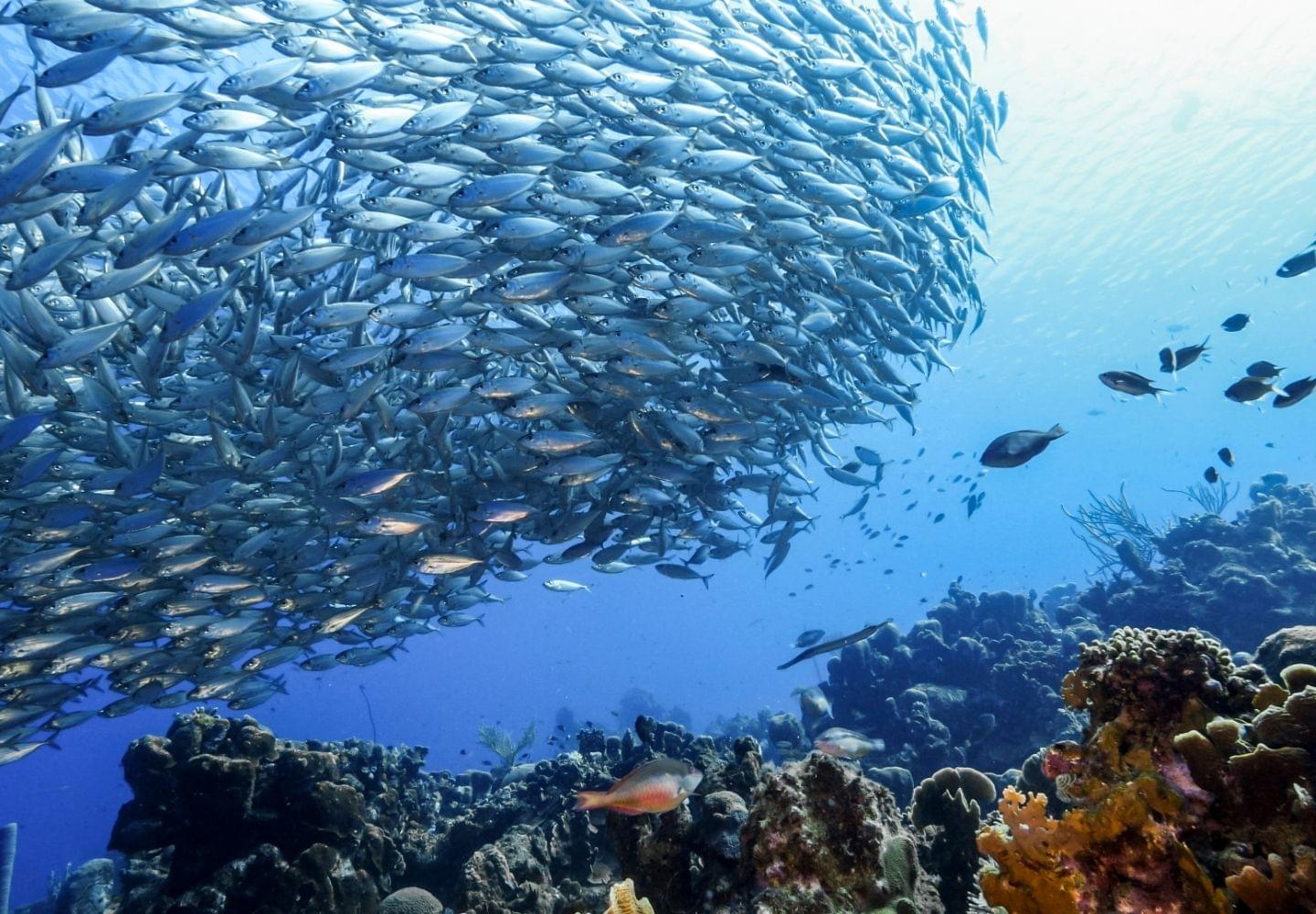
Structure has held up better than coral cover. Wrecks, rock walls, drop-offs and artificial reef modules still concentrate fish, because fish need shelter and shelter is the thing that survives a bleaching year. Wide, shallow coral gardens are where the loss shows, and they are exactly what most Curaçao photography depicts. Plan around the Tugboat, the Kalki drop-off, the Porto Mari reef balls and the Lagun cliffs, and you will have a good week. Plan around a picture of a coral field and you will be disappointed.
And the island is not passive about it. Reef Renewal Foundation Curaçao outplanted more than 2,000 coral fragments in 2025 and now runs six nurseries with 87 nursery trees, including 36 new heat-tolerant Acropora genotypes. Two of the six nurseries opened in 2025, at Playa Kalki and Cas Abao, run with the dive operations at each beach.12 Those two sites are therefore where you are most likely to swim over young staghorn and elkhorn that was planted deliberately. CARMABI’s own reading is that Oostpunt, Klein Curaçao and Kaap Marie still rank among the best reefs in the Caribbean, “though coral diseases and bleaching are visible” at all of them.11
Tugboat Beach — the one to do first
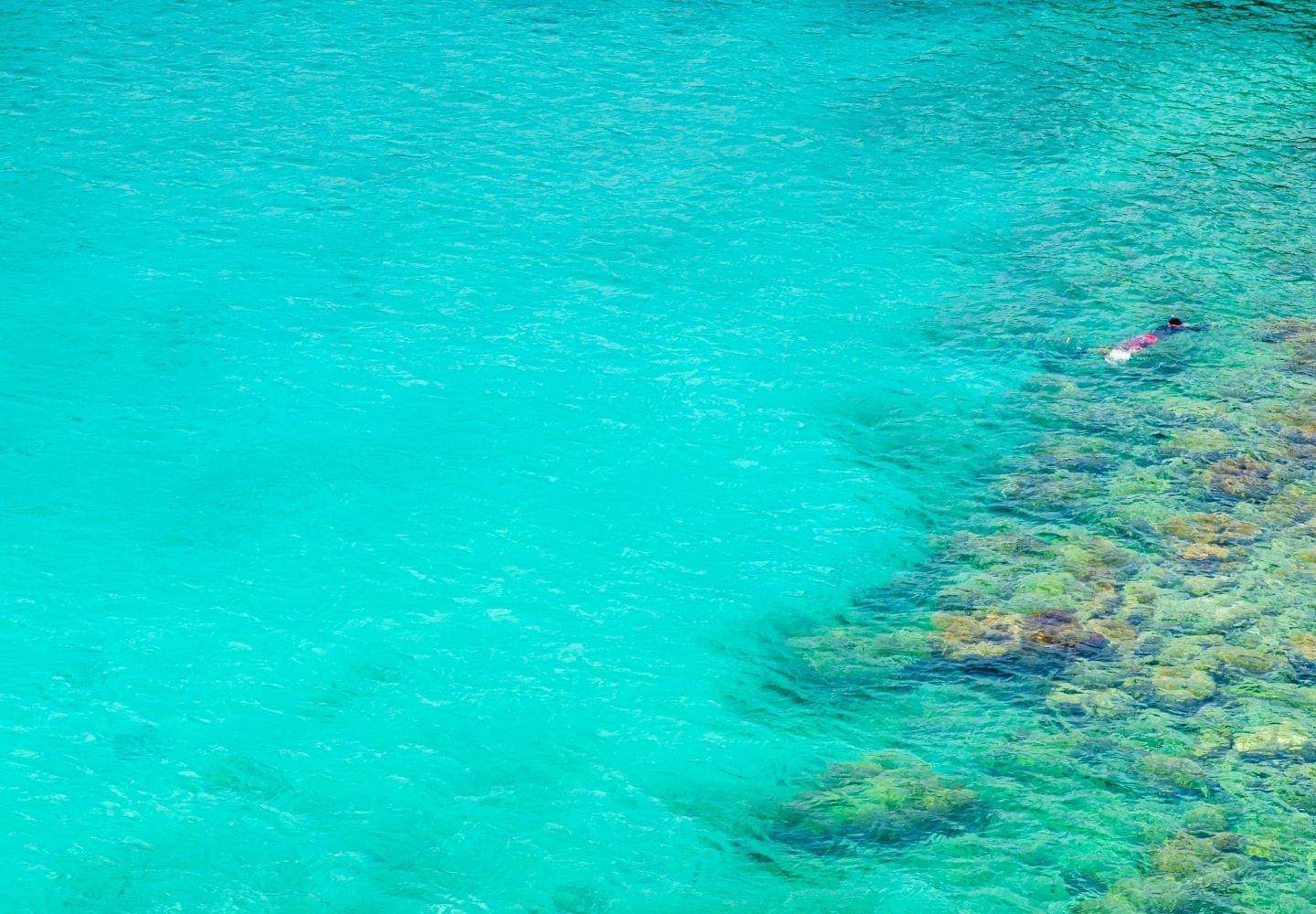
The Tugboat is the photograph that sells Curaçao, and unlike most such photographs it is honest. The wreck lies in Caracas Bay in about 5 meters of water, with the top of the hull coming within roughly 8 feet of the surface, fully intact and grown over with sponges and coral.13 From directly above, a snorkeler sees the whole boat. There is nothing else on the island that gives that much for so little skill.
The practical detail matters more here than anywhere else on the coast. The beach is free, opens 09:00 and closes 18:00, has toilets, a kiosk and a dive center that rents snorkel gear.2 It is pebble, not sand — wear something on your feet. Entry is down steps from a wooden deck; walk out until you float and then put your fins on. The wreck is roughly 500 feet from the entry, past the last mooring platform, and the prevailing current runs the helpful way, pushing you home rather than out.14 Currents in the bay are usually mild and the mornings are calmest.1
Go early. By eleven the boat trips arrive and the surface above a 5-meter wreck gets busy. If you would rather be on one of those boats than swimming out, the half-day snorkel run through Spanish Water to the Tugboat is the standard version and takes the swim out of it entirely.
Directors Bay, immediately south, is the same water with none of the infrastructure: free, open around the clock, free parking on the cliff, two palapas and no toilets, no showers, no kiosk and no dive shop.3 The wreck is a 200-meter swim from there rather than 50 from the buoys at Tugboat, so it is the harder approach to the same site — but it is also a Reef Renewal restoration site, with more than 7,000 corals replanted along this stretch of the south coast.3 Do Tugboat for the wreck and walk over to Directors for the water afterwards.
Playa Kalki — the best entry on the island, and the one that changed
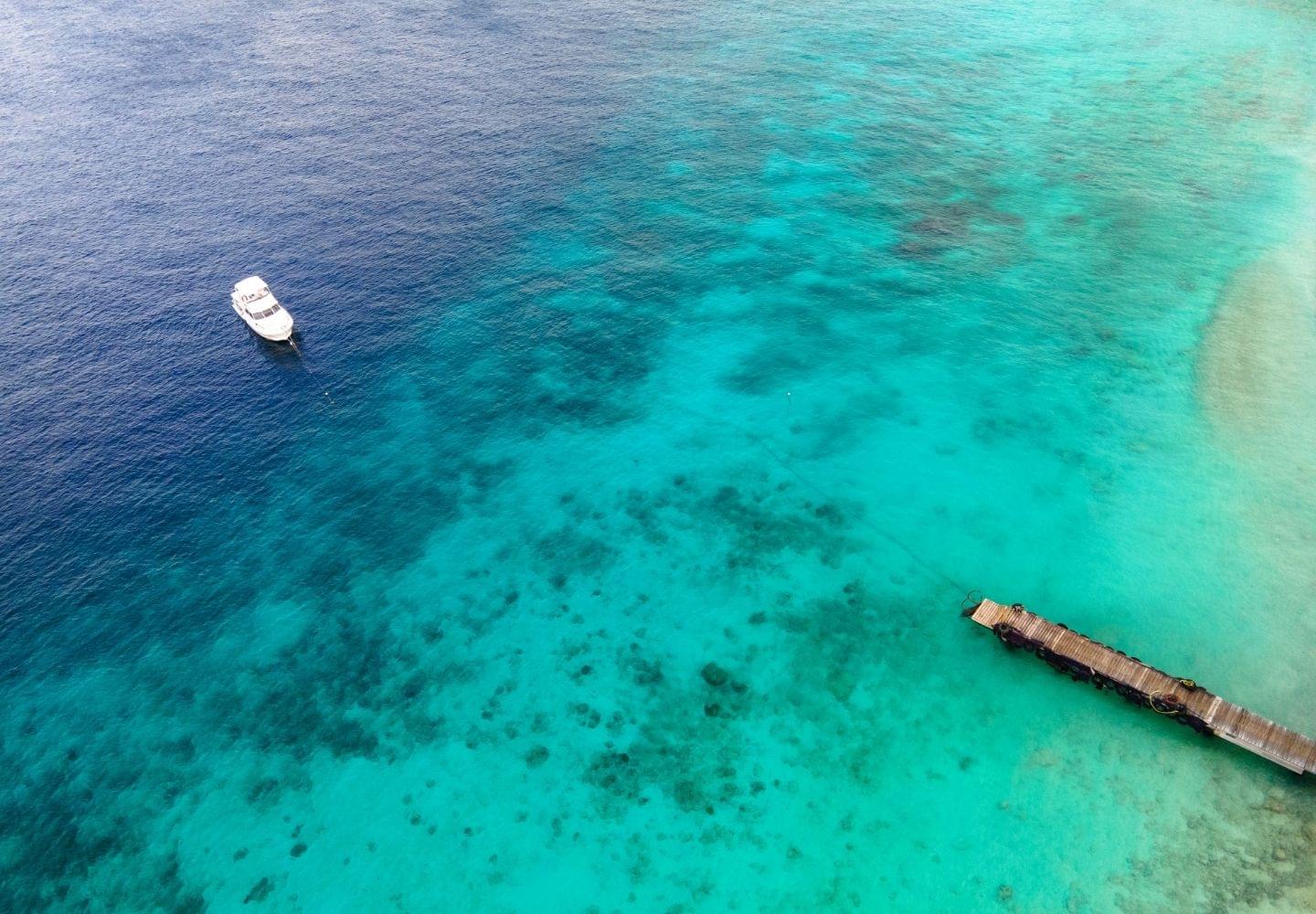
Playa Kalki at Westpunt is the site divers call Alice in Wonderland, and the reason it works for snorkelers is the pier. You walk down it, step in over deep water, and the reef starts about 30 meters out — no wading over rubble, no shore break, no guessing where the coral begins.
The 2021 version of this page told you to look for “the dock in front of the Kura Hulanda Lodge”. Do not navigate by that any more. The pier belongs to Go West Diving, which is still trading, still a PADI center, and is Reef Renewal’s partner on the coral nursery installed here in 2025.12 Above the beach, the clifftop property now operates as Playa Beach Club: free entry Monday to Friday, $10 (CG 17.50) per person aged 14 and over at weekends and on national holidays, open 10:00–18:00 on weekdays and until 19:00 at weekends.7 You do not need it to reach the water. It is worth knowing about because it is where the crowd and the parking now are.
Kalki is the deepest of the shore entries and the one that most rewards someone comfortable in water they cannot stand up in. Follow the guide rope out from the pier to the drop-off; expect hard coral, parrotfish, the occasional eagle ray, and — since 2025 — nursery-grown staghorn on the shallow shelf. If a beginner in your group is nervous, send them to Lagun and come here yourself.
Porto Mari and Cas Abao — the two managed beaches, and how to choose
These are the west coast’s paid gates, they are 20 minutes apart, and they are not interchangeable.
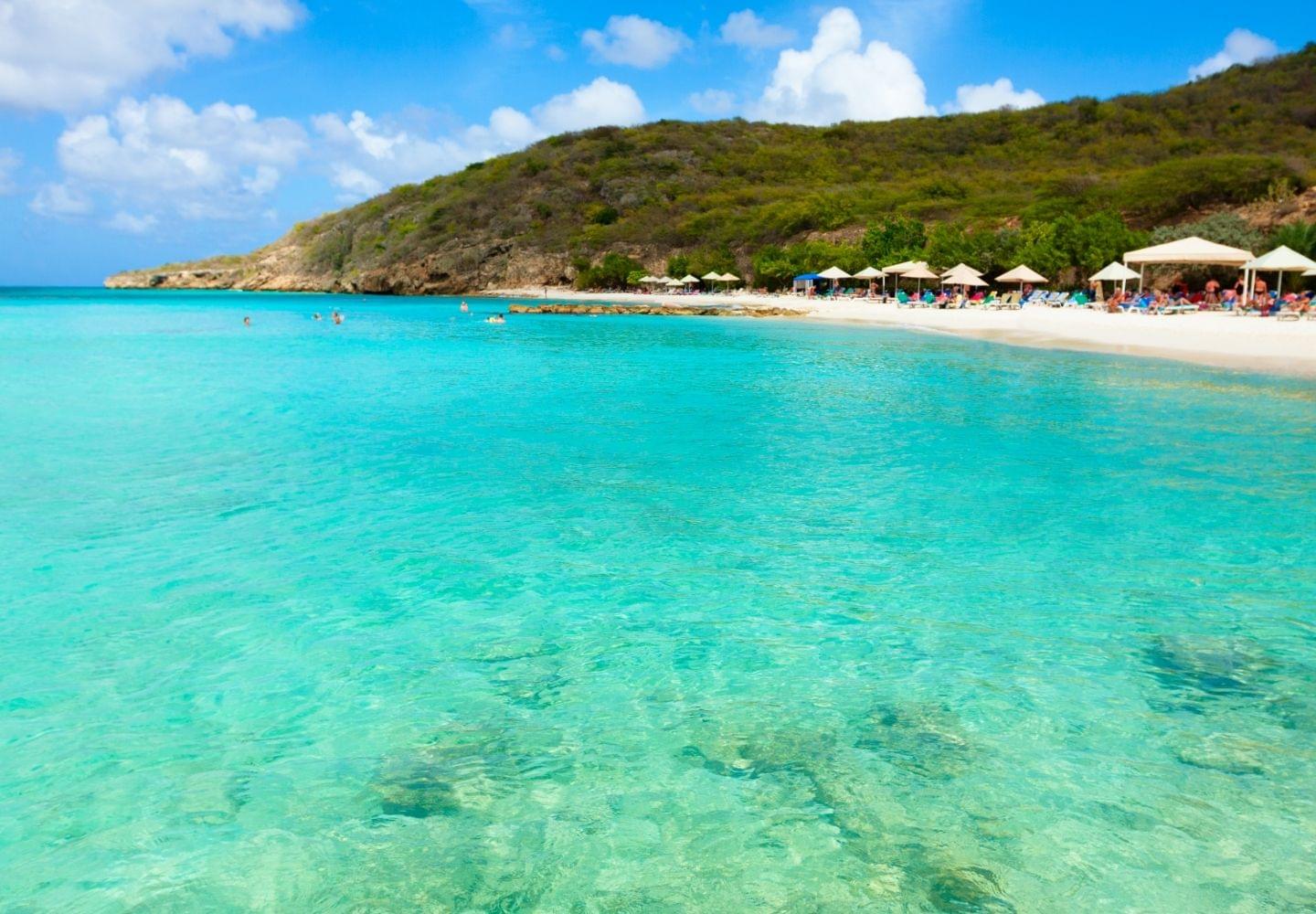
Playa Porto Mari charges $3.00 (NAf 5.00) per person, under-fours free, and is open 09:30 to 18:30 every day except 31 December and Carnival Sunday.4 Beach chairs are $3.50, first come first served, and there is a restaurant, showers, changing rooms and a dive shop.4 Its snorkeling asset is unusual: concrete reef balls were sunk in the bay decades ago to rebuild coral lost to a hurricane, and they now hold sponges, juvenile reef fish and soft coral. They are structure, which is precisely what has survived the last three years best. The cliffs at the south end of the bay are the better half — sea fans, trunkfish, French grunts, sergeant majors.
Cas Abao charges by the vehicle rather than the head — around $6 to $7 per car, more at weekends — and opens earlier, 08:00 to 18:00.5 It has the fuller set of facilities, a bar and restaurant, showers and an on-site dive shop, and the snorkeling is along the rock formations at either end of the sand.5 It is also the site of Reef Renewal’s other 2025 nursery.12
Choose on your group. Porto Mari is cheaper for two people and dearer for five; Cas Abao is the reverse, and its 08:00 opening is an hour and a half of flat morning water that Porto Mari cannot give you. If you are traveling as a family with a car, go to Cas Abao and go early.
Playa Lagun — the one for nervous swimmers
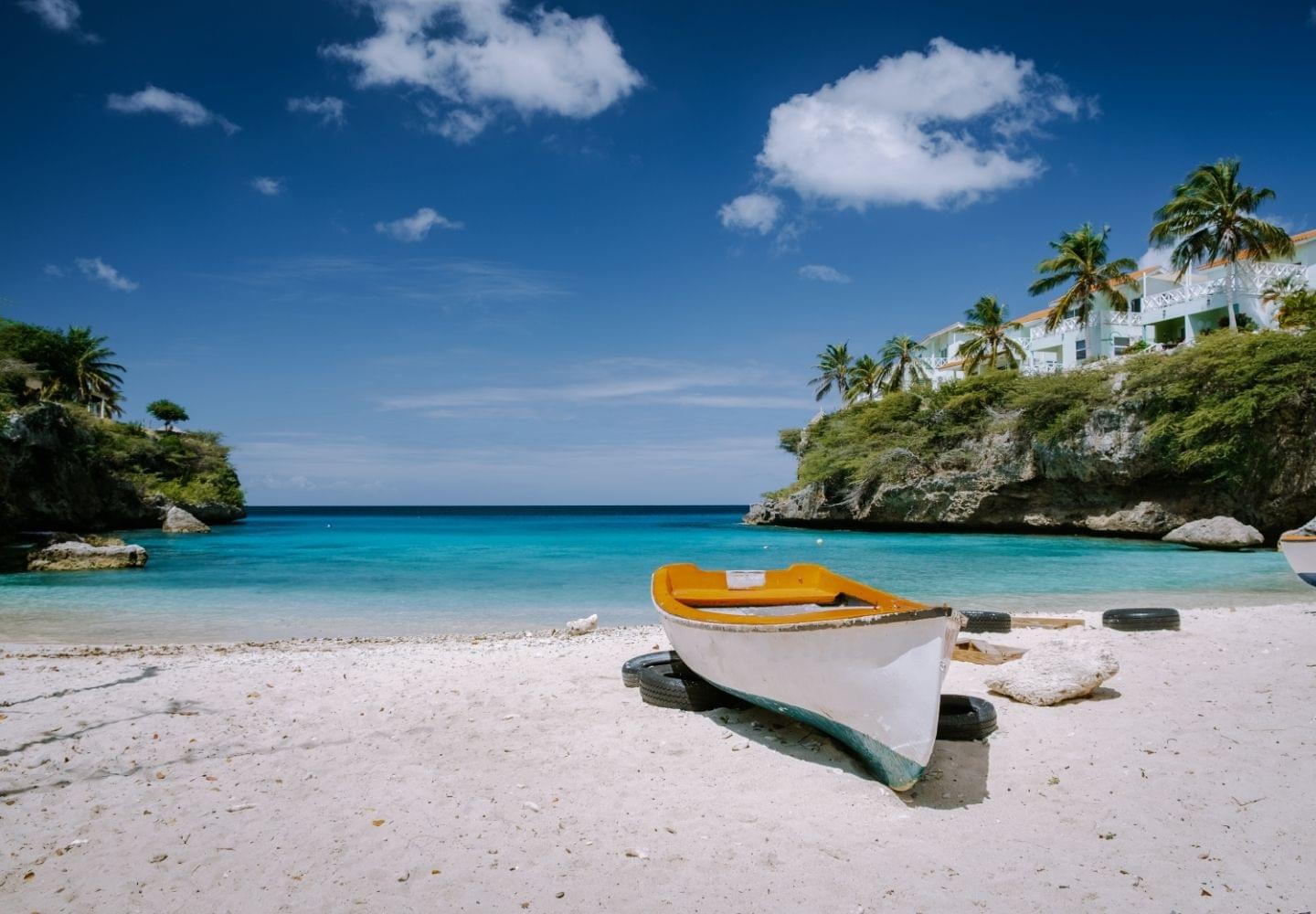
Lagun is a small cove — roughly 100 meters deep with a 40-meter mouth — walled by cliffs on both sides, and the shelter that geometry produces is the point. The water inside is calm on days when everywhere else is chopped up, which makes it the best beginner entry on the island and the most reliable place to meet a green turtle in water shallow enough to stand in.
It is free, with free parking, open 09:00 to 18:00 with security on the beach from 10:00, toilets but no showers, loungers at $5, and Bahia Diving on site.3 The marine life is on the rock walls at either side: wrasse, moray eels, butterflyfish, snapper. The drop-off out toward the cove mouth is for stronger swimmers, and there is no need to reach it — most of what people come here for is in the first thirty meters.
It gets crowded, because it is small and everybody knows. Arrive at nine. If you want to stay within walking distance of the cove, Scuba Lodge Lagun Beach sits on the bay with the dive operation attached.
Playa Piskado — the turtles, and the part nobody tells you
Playa Piskado, also called Playa Grandi, is the fishing beach at Westpunt where green turtles gather because the fishermen clean their catch there. It is free, the water is shallow and sandy, and between roughly midday and four in the afternoon you will almost certainly see turtles.6
You should also know how that happens. The turtles are there because they are fed, some of the fishermen ask for a tip, and some will charge around US$10 to draw the animals in for photographs.6 Conservationists on the island — Sea Turtle Conservation Curaçao among them — are campaigning to stop it, arguing that feeding changes the animals’ behavior and health and that the crowding on the small pier is now stressing them, with visitors chasing, touching and taking close-range selfies.6
Go, and go without paying anyone to bait them. Swim wide of the pier, stay off the animals, and do not feed them. A turtle encounter you did not buy is a better one, and Lagun and Porto Mari both produce turtles on their own terms if this one sits badly with you. If you would rather have the turtles and the Blue Room in one morning without driving the west coast yourself, the beach-hopper boat trip does exactly that run.
Klein Curaçao — worth the day, and cheaper than it was
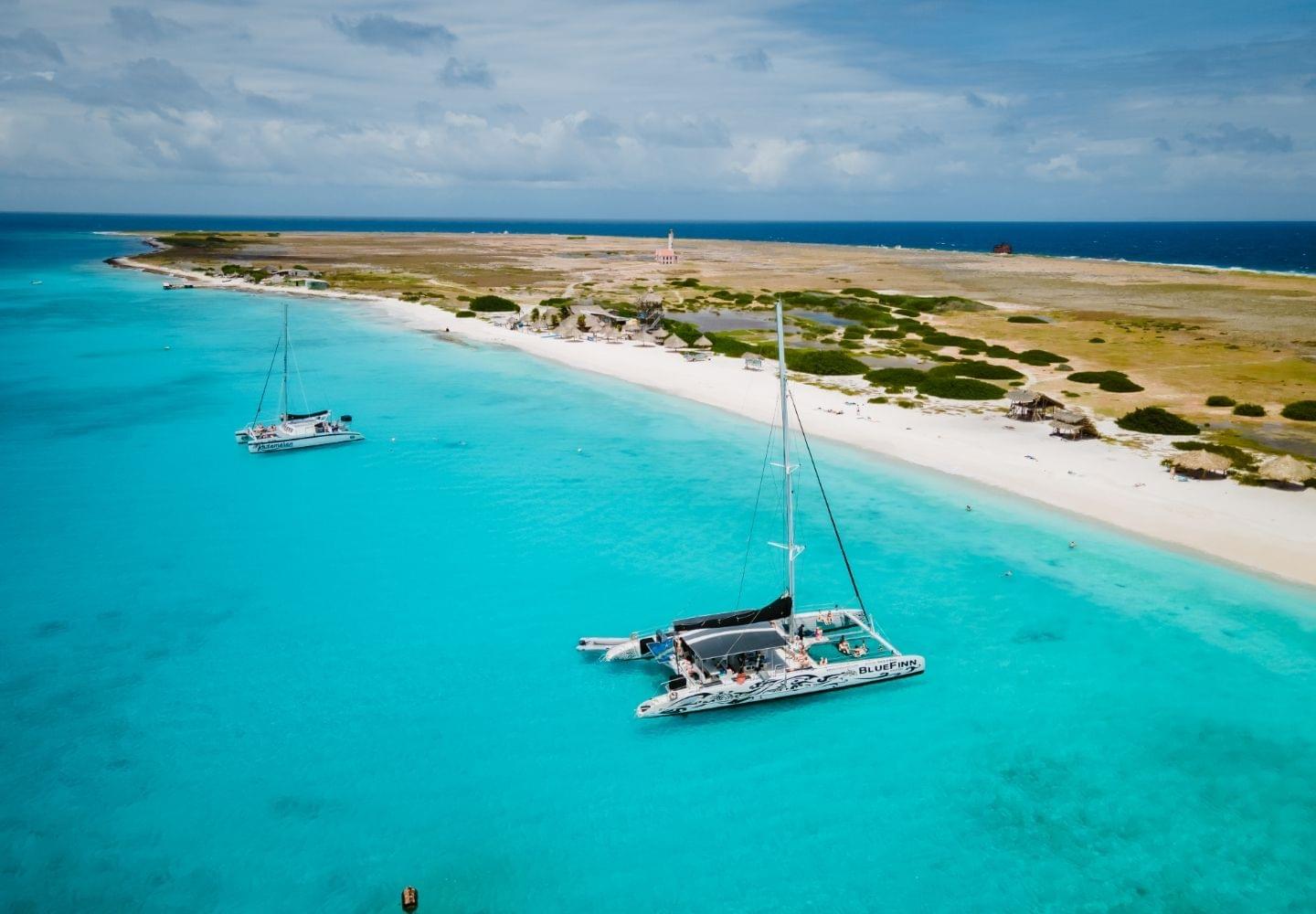
Klein Curaçao is an uninhabited sandbar off the south-east with a derelict lighthouse, a wrecked ship on the windward side and a white beach on the lee. CARMABI still rates its reef among the best in the Caribbean.11 It is boat only, and the boats have got faster since anyone last wrote this page up.
As of July 2026 six operators are selling the crossing: Mermaid at $140 from Caracas Bay in an hour and a half, BlueFinn’s sailing catamaran at $120 from Jan Thiel in an hour and three quarters, BlueFinn TopCat at $129, Miss Ann at $150 from Santa Barbara in an hour, Irie at $120, and Powerboat Caribbean at $169 in a 50-minute rib.8 All are full days and all include lunch. The old two-hour crossing no longer exists.
The choice is a stomach question, not a price question. The channel is exposed and it can be rough. If anyone in the party gets seasick, pay the extra for the rib and halve the exposure, or take the sailing catamaran, which is the steadier ride of the slow boats — the BlueFinn sailing day is the common version, and the powered day trip is the alternative. There is no shade, no shop and no drinking water beyond what the boat brings.
What to skip
The Blue Room Cave. It is a six-meter cave whose entrance is a slit at the waterline, reached by kayak, by boat, or on foot along a rough coastal trail that ends in a jump off a low cliff.15 It photographs beautifully and it is an errand, not a snorkel — thirty seconds of blue light for a half-day of logistics. Take it as a stop on a boat trip or leave it.
The Mushroom Forest. Genuinely one of Curaçao’s headline sites and genuinely a boat dive, on coral formations too deep to read from the surface.16 It appears on snorkeling lists because it appears on dive lists. Do not build a morning around it unless you are diving.
Grote Knip and Kleine Knip. Both free, both free to park, both among the most beautiful beaches in the Caribbean, and neither of them good snorkeling — there are fish along the left-hand rocks at Grote Knip and not much else.17 Go for the swim and the cliff jump. Do not go for the mask.
When to go
Water temperature is not a variable here: the sea runs in the mid-80s °F, around 29 °C, year-round, and visibility is good in every season.16 What changes is wind, rain and crowding.
| Window | What it is like |
|---|---|
| Dec–Apr | High season. Driest, busiest, dearest. Best combination of calm mornings and reliable boats |
| May–Jun | The quiet sweet spot — cheap, empty, and the trade winds ease |
| Jul–Aug | Windiest months. Afternoons chop up; swim before eleven |
| Sep–Nov | Wettest, but Curaçao’s rain is short and the sea is warmest |
| Hurricanes | Curaçao sits at the southern edge of the belt and is very rarely hit. It is not a season to plan around |
The one rule that applies in every month: swim in the morning. The trade winds build through the day on the leeward coast, and a bay that is glass at eight is choppy at two.
Aruba, Bonaire or Curaçao?
If you are choosing between the three, the short version is that they differ on exactly the axis this page is about.
Bonaire is the shore-entry island: numbered, marked roadside entries, one central fee that covers all of them, and the best walk-in snorkeling in the Caribbean if you are willing to drive a pickup to a yellow stone. Aruba is the beach island: resort strips, calm sand, boat trips and one very good wreck, and the least reef of the three.
Curaçao is between them, and the trade is variety against consistency. It has more distinct sites than Aruba and a better town than either, but its access is fragmented — gates, hours, fees, and 45 minutes of driving between the two clusters. Come here if you want a snorkeling week that is also a holiday. Go to Bonaire if the snorkeling is the holiday.
Whichever of the three you pick, bring your own mask. Rental gear on all three islands is serviceable and rarely well fitted, and on a shore-entry trip you are putting it on twice a day. Our guide to what to wear snorkeling covers the rest of the kit.
Frequently asked questions
Do you have to pay to snorkel in Curacao?
Not to enter the water, and often to reach it. Curacao has no island-wide nature fee — this is the big practical difference from Bonaire, where STINAPA charges every person entering the sea inside the marine park. On Curacao the money is collected at individual beach gates instead, and they disagree with each other. Playa Porto Mari charges $3.00 per person and opens 09:30 to 18:30. Cas Abao charges around $6 to $7 per car and opens 08:00 to 18:00. Tugboat Beach, Playa Lagun, Playa Piskado, Directors Bay and both Knip beaches are free. Budget about $20 for a week of gates and stop thinking about it.
Is the Tugboat wreck still there?
Yes. It sits on the bottom in about 5 meters of water in Caracas Bay, the top of it comes within roughly 8 feet of the surface, and it is described by the island's dive guide as fully intact and covered with sponges and coral growth. That is shallow enough that a snorkeler floating on the surface sees the whole hull, which is why it is the one photograph everybody has seen of Curacao. The swim is around 500 feet from the entry point, the beach is free, and the currents are usually mild.
What did the coral disease outbreak do to Curacao's reefs?
Stony coral tissue loss disease reached Curacao in March or April of 2023, and between the disease and the heat of that year CARMABI, the island's marine research institute, reports that about 28% of Curacao's reef died within a single year and that 19 of the island's 66 coral species are now classed as critically endangered. The practical effect for a visitor is that structure has held up better than coral cover. Wrecks, rock walls, drop-offs and the reef balls at Porto Mari still hold fish. The wide shallow coral gardens are thinner than the photographs suggest.
How long does it take to get to Klein Curacao, and what does it cost?
Between 50 minutes and an hour and three quarters each way depending on the boat, and $120 to $169 per adult. The operator comparison as of July 2026 runs from Irie and BlueFinn at $120 to Powerboat Caribbean at $169 for a 50-minute rib crossing, with Mermaid at $140 from Caracas Bay and Miss Ann at $150 from Santa Barbara. Every one of them is a full day and every one includes lunch. The 2021 advice that it is a two-hour crossing is out of date; the slowest boat now runs an hour and a half.
Which side of Curacao should I stay on for snorkeling?
The west if you want variety, the south if you only want the wreck. The good west-coast entries — Kalki, Porto Mari, Cas Abao, Lagun, Piskado — are spread across 25 miles of the island's leeward side and are 40 to 55 minutes from Willemstad, so basing yourself in Willemstad means driving that road every morning. Staying at Lagun or Westpunt puts four of them inside 20 minutes and costs you restaurants. The south coast has one great site, the Tugboat wreck at Caracas Bay, and it is ten minutes from the Jan Thiel hotel strip. A week split between the two, three nights west and four south, does everything.
Sources
Footnotes
-
“Tugboat Wreck Dive Site at Tugboat Beach.” Dive Curaçao, divecuracao.info. Wreck depth and condition, the site’s position inside the Curaçao National Marine Park, current strength and the calmest time of day. Checked 31 July 2026. ↩ ↩2
-
“Tugboat Beach.” Tugboat Beach Curaçao, tugboat-beach.com, and Relaxed Curaçao, relaxedcuracao.com. Daily 09:00–18:00, free entry, toilets, kiosk and dive center, beach beds at NAf 10, and the wreck 50 m out behind the three square steel buoys. Checked 31 July 2026. ↩ ↩2
-
“Playa Lagun” and “Directeurs Baai.” Relaxed Curaçao, relaxedcuracao.com. Lagun’s hours, security, facilities, Bahia Diving and $5 loungers; Directors Bay free and open 24/7 with no facilities, the 200 m swim, and its status as a Reef Renewal Curaçao restoration site. Checked 31 July 2026. ↩ ↩2 ↩3 ↩4 ↩5
-
“Playa PortoMari.” Playa Porto Mari, playaportomari.com. Entrance $3.00 / NAf 5.00 per person, under-fours free, daily 09:30–18:30 closed 31 December and Carnival Sunday, chairs $3.50. Checked 31 July 2026. ↩ ↩2 ↩3 ↩4
-
“Cas Abao Beach, Curaçao: A Complete Guide.” Twenty Two Apartments, 2025, twentytwoapartments.com. Entrance around $6–7 per car with higher weekend rates, daily 08:00–18:00, facilities and where the reef sits. ↩ ↩2 ↩3 ↩4
-
“Preserve Playa Piskadó: Stop Feeding Turtles in Curaçao.” Dive Curaçao, 26 February 2025, updated 4 March 2025, divecuracao.info. Feeding practice and its effects, the tipping and paid-baiting, crowding on the pier, and the conservation campaign. ↩ ↩2 ↩3 ↩4
-
“Entry Fee, Rental Prices and Reservations.” Playa Beach Club Curaçao, playabeachclub.com. Free entry Monday to Friday, $10 / CG 17.50 per person aged 14+ at weekends and on national holidays, hours 10:00–18:00 weekdays and 10:00–19:00 weekends. Checked 31 July 2026. ↩ ↩2 ↩3
-
“Klein Curaçao Trips — Compare Day Trips.” Klein Curaçao, klein-curacao.nl. Six operators with adult prices, boat types, departure points and crossing times. Checked 31 July 2026. ↩ ↩2
-
“Stony Coral Tissue Loss Disease in the Dutch Caribbean.” Dive Curaçao, 25 April 2023, divecuracao.info. SCTLD’s arrival in Curaçao in March/April 2023 and the sequence across the Dutch Caribbean islands. ↩
-
“One in Three Coral Species in Curaçao Threatened with Extinction.” CARMABI, carmabi.org. Approximately 28% of Curaçao’s reef lost in a single year, the species-level Red List breakdown of 19 critically endangered of 66, and the 30 °C bleaching threshold. ↩
-
“Report on the Status of Caribbean Reefs (1970–2024) Published.” CARMABI, 9 December 2025, carmabi.org. Caribbean coral cover 40–50% in 1970 falling to 15% by 2024, and Oostpunt, Klein Curaçao and Kaap Marie ranking among the Caribbean’s best reefs with disease and bleaching visible. ↩ ↩2 ↩3
-
“Reef Renewal Foundation Curaçao Celebrates a Decade of Progress with Major Expansion in 2025.” The Scuba News, 27 February 2026, thescubanews.com. 2,000+ fragments outplanted in 2025, six nurseries and 87 nursery trees, 36 new heat-tolerant Acropora genotypes, and the new nurseries at Playa Kalki with Go West Diving and Cas Abao with B Diving and Watersports. ↩ ↩2 ↩3
-
“Tugboat Wreck Dive Site at Tugboat Beach.” Dive Curaçao, divecuracao.info. The wreck at 5 m with the hull within roughly 8 ft of the surface, intact and covered with sponges and coral growth. ↩
-
“Snorkeling Tugboat.” Tropical Snorkeling, tropicalsnorkeling.com. The 500 ft swim from the entry steps, the helpful direction of the prevailing current, free land access, roadside parking and gear rental on the beach. ↩
-
“Blue Room Curaçao.” Relaxed Curaçao, relaxedcuracao.com. Cave depth just under 6 m, the entrance as a slit at the waterline between Boka Hulu and Playa Santu Pretu, and access from land or water. ↩
-
“Diving in Curaçao.” PADI, padi.com. Year-round air and water temperatures in the mid-80s °F / around 29 °C, consistent visibility in every season, over 70 shore-accessible dive sites, and the Mushroom Forest and Tugboat as the island’s headline sites. Checked 31 July 2026. ↩ ↩2
-
“Which Beaches in Curaçao Are Free?” Twenty Two Apartments, 2025, twentytwoapartments.com, and “Kenepa Grandi (Grote Knip),” Relaxed Curaçao, relaxedcuracao.com. Free entry and parking at Grote Knip, Playa Lagun, Playa Piskado and Daaibooi; Grote Knip’s hours, facilities and the fish along the left-hand rocks. ↩

Liz Meyer — Travel writer
Liz is a full-time traveler and a PADI Rescue Diver. She loves to explore new places in and out of the water and share her experiences with others.