Snorkeling
Snorkeling in the Cayman Islands: Stingray City and the shore sites
The Caribbean's easiest shore snorkeling is attached to its most industrialised boat excursion, and the two need opposite advice. The Sandbar as an operation, the shore entries worth your morning, and what the reef honestly holds now.
We earn a commission on purchases made through links on this page, at no extra cost to you. It never affects which products we recommend.
On this page
- Where the sites are
- What the reef is like now
- Stingray City and the Sandbar
- Eden Rock and Devil’s Grotto
- Cemetery Beach and Seven Mile’s north end
- USS Kittiwake
- Spotts Beach
- Rum Point and Starfish Point
- Cayman Brac and Little Cayman
- The cruise day, planned like a crew member
- When to go
- Cayman Islands snorkeling FAQ
- Where to go next
The Cayman Islands run both extremes of Caribbean snorkeling at once. On one side, the easiest shore snorkeling in the region: a flat west coast sitting in the lee of the trade winds, limestone ironshore that puts living reef a few fin kicks from the steps, and water so clear that forty feet of depth reads like an aquarium. On the other, Stingray City’s Sandbar — the most industrialised boat excursion in the Caribbean, run to the cruise-tender schedule, priced per head, licensed and regulated down to who is allowed to hold the squid.
Both are worth your time. But they need opposite advice, and most guides give neither. The shore half needs entries, distances and a wind forecast. The boat half needs an operator’s-side read — which boat, which hour, which day — and after more than ten years in the Key West charter industry running shallow-water, schedule-driven trips of exactly this species, that half is my trade. Everything below that can be checked has been: every fee, depth and rule on this page was verified on 8 August 2026.
One more thing belongs in the first hundred words, because the brochures will not say it: Cayman’s coral has just been through the worst decade in its recorded history. The fish, the rays and the visibility have not. The honest numbers are below.
Where the sites are
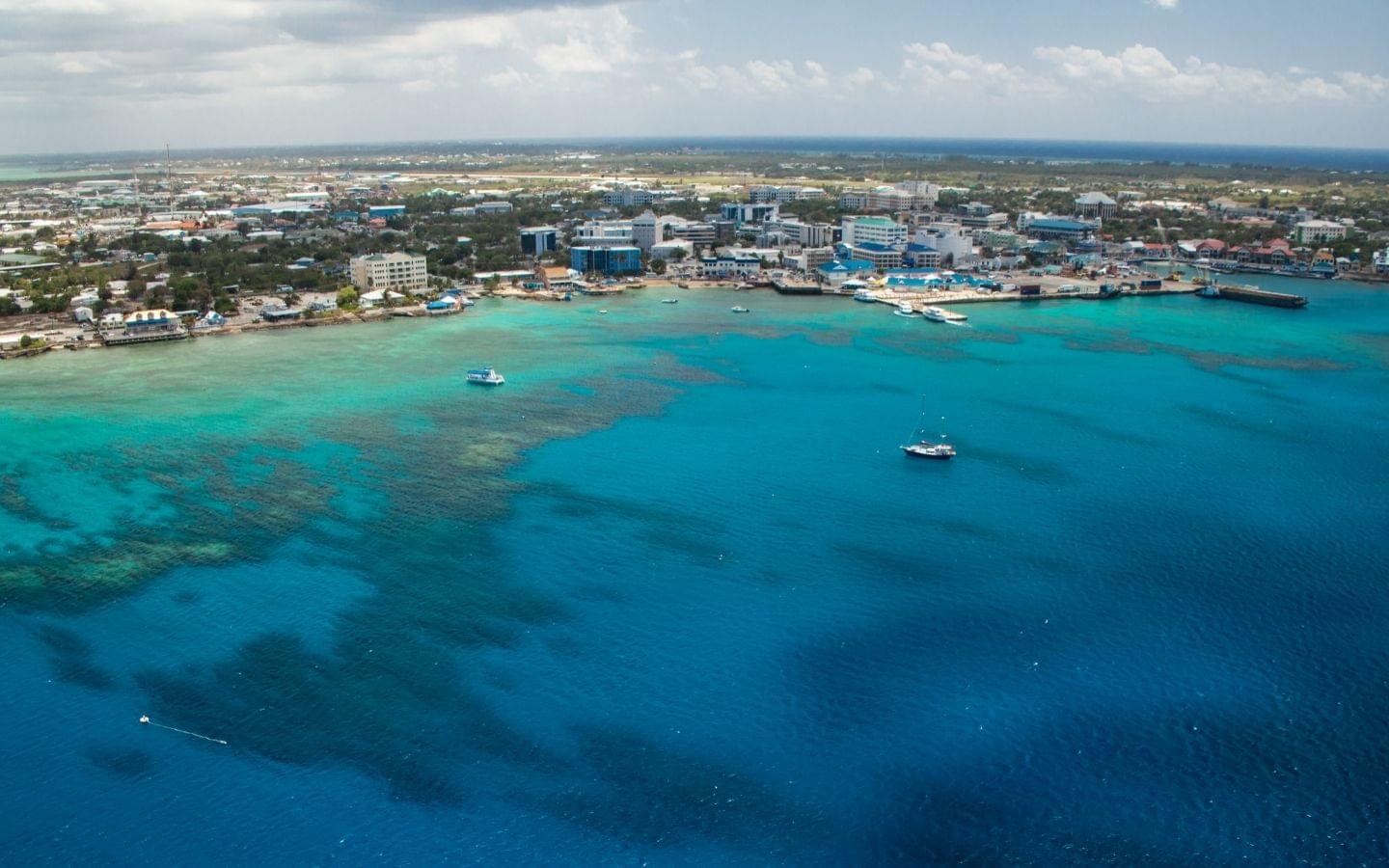
Grand Cayman lies long and low, east to west: George Town and the cruise anchorage on the south-west corner, Seven Mile Beach running north from it up the sheltered lee coast, the huge reef-enclosed North Sound cut into the middle of the north shore (Stingray City sits on its outer lip), Spotts on the south coast east of town, and Rum Point across the Sound. Cayman Brac and Little Cayman, the Sister Islands, are a Cayman Airways flight north-east.1
| Site | Where | Getting in | Depth | Cost | Best for |
|---|---|---|---|---|---|
| The Sandbar (Stingray City) | North Sound | Licensed boat, 3–4 h tour | 2–4 ft, standing | US$60–100 pp23 | Everyone, incl. non-swimmers |
| Stingray City proper | North Sound | Same boats, deeper stop | ~12 ft2 | inside tour | Confident snorkelers |
| Eden Rock & Devil’s Grotto | George Town | Shore, off South Church St | to ~40 ft4 | Free | The cruise-day snorkel |
| Cali wreck & Cheeseburger Reef | George Town harbor | Shore or town operator | 10–30 ft5 | Free | Wreck-curious swimmers |
| Cemetery Beach & Reef | North Seven Mile | Shore, ~60 yd swim | to ~20 ft6 | Free | Competent swimmers |
| USS Kittiwake | Off north Seven Mile | Licensed boat only7 | 15–64 ft8 | US$25 fee7 | Divers first, snorkelers second |
| Spotts Beach | South coast | Shore | 6–10 ft9 | Free | Turtles from the sand |
| Rum Point & Starfish Point | North Side | Shore | 2–10 ft510 | Free | Families, beach day |
| Sister Islands | North-east, by air | Fly, then shore | varies | Free from shore | Quiet water, dive add-ons |
What the reef is like now
Four or five years of snorkeling and spearfishing the Florida Keys reef taught me to judge a reef by its fish before its coral. Hold that thought, because Cayman’s coral numbers are brutal and the fish have not read them.
The Department of Environment has surveyed these reefs since 1997, when live coral cover averaged about 25 percent across the three islands. By 2023 that average was 11 percent, and Grand Cayman fell to roughly 6 percent in 2024 — the 2023 marine heatwave dumped 19 degree-heating-weeks on reefs in a matter of weeks, past anything in the record.11 On Little Cayman, the healthiest reef system in the country, 90 percent of corals bleached and more than half died;12 cover that stood near 20 percent before the event was measured at 10 percent by mid-2025.13 Stony coral tissue loss disease arrived in June 2020, circled Grand Cayman inside eighteen months, and reached Little Cayman in August 2025.11
So the wall-to-wall color is gone, and anyone who sells you 1995 is lying. Here is what is intact: the limestone architecture — the spurs, tunnels and mini-walls that make sites like Devil’s Grotto worth swimming — the rays, turtles, tarpon and reef fish, and visibility that never depended on live coral in the first place. Cayman remains a spectacular place to put your face in the water. It is just honest now to say you are coming for the animals and the clarity, not the garden. Do your part: disinfect mask, snorkel and wetsuit between islands — SCTLD travels on wet gear, and the DoE asks every visitor to help slow it.11
Stingray City and the Sandbar
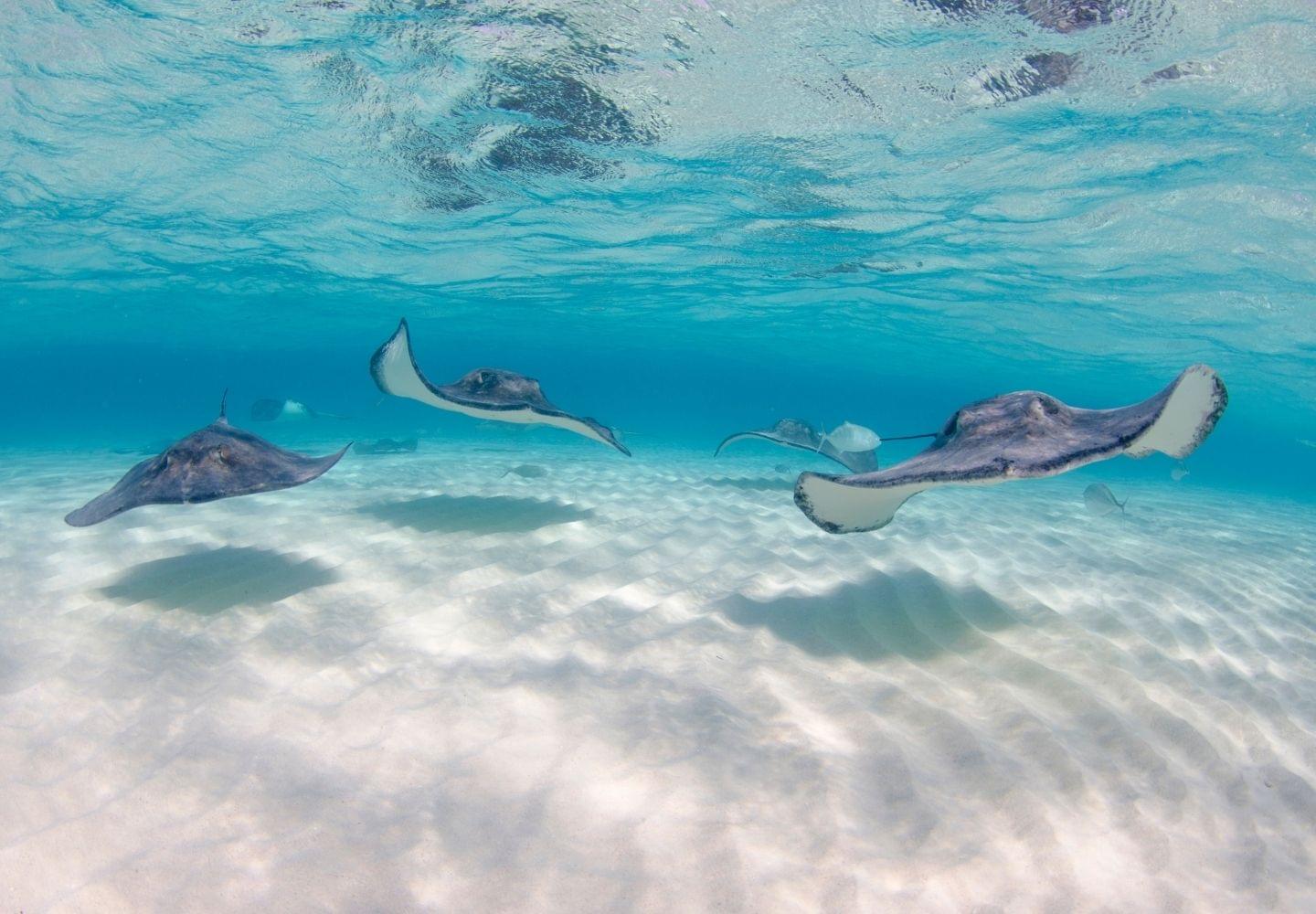
First, untangle the name, because the difference decides who in your family can do this. Stingray City proper is a line of coral heads in about 12 feet of water — a genuine snorkel, best for confident swimmers. The Sandbar is a different spot on the same reef lip: two to four feet of gin-clear water over firm sand, where you stand, and the rays come to you.2 When a tour says “Stingray City,” it almost always means the Sandbar. Take children there without hesitation; it is the rare marquee Caribbean attraction where a non-swimmer gets the full experience.
Both sites sit inside a Wildlife Interaction Zone — the only places in Cayman waters where feeding marine life is legal at all, under operator licences enforced since 2007.14 The wider marine park system matters to you too: first drawn in 1986 over about 15 percent of coastal waters, it was rebuilt in 2021 to cover roughly half of them, and taking any marine life, alive or dead, inside a park is prohibited.15
Now the operator’s-side read. I spent a decade putting charter guests onto shallow, protected water on a clock ruled by other people’s schedules, and the Sandbar is that trade exactly — the schedule that rules it is the cruise tenders. Ships anchor at 7–8am, passengers get bussed across the island and boated out, and the recall to the tenders lands around 2pm — so the Sandbar boils from about 11am and empties by mid-afternoon.216 Book 3pm or later, or book a weekend, when few ships call; you will share the sandbar with rays instead of crowds. The crossing from the Rum Point/Kaibo side is 20–25 minutes,3 trips run three to four hours, and the standard second stop — Coral Gardens, on the North Sound reef — turns the ray photo-op into an actual snorkel.23
Group boats run US$60–75 per person on the big catamarans and US$75–100 on smaller boats; private charters start around US$800 and are the better deal from three people up, because you choose the hour — which, at this site, is the whole game.23 Compare the current crop of Sandbar trips on Viator and pick by departure time and group size, not price: the rays cannot tell a $60 boat from a $100 one. Antigua’s smaller stingray site runs one operator and one boatload at a time.
Eden Rock and Devil’s Grotto
The best cruise-day snorkel in the Caribbean is a five-minute walk from the George Town tenders, and most passengers sail past it to pay for something worse. Eden Rock and Devil’s Grotto are two reef formations rising from a 40-foot sand bottom to within a few feet of the surface, laced with tunnels and overhangs, directly off the waterfront at Eden Rock Diving Center on South Church Street.4 You gear up on their deck, swim out to the mooring balls — the Grotto is the left-hand one as you face the water — and you are on the site.54 Tarpon hold in the shadows year-round; in summer the caves fill with silversides in their millions, one of the great free spectacles in the region.5 The deep swim-throughs are dive territory; from the surface you watch the theater from the balcony, and the balcony is good.
Two more wrecks-and-reef stops sit in the same half mile. The Wreck of the Cali, a freighter down since 1948, lies in 20–30 feet barely 70 feet off the waterfront — but it is inside the working harbor anchorage, so go with a George Town operator or get the Port Authority’s blessing rather than freelancing across the tender lanes.5 Cheeseburger Reef — yes, that is its name, for the Burger King it fronts — starts from a small sandy patch north of the restaurant, with coral heads standing to within about ten feet of the surface a hundred-plus yards out.5 It earns its cult following, but that is a real swim in trafficked water: tow a flag buoy.
South of town, Smith Cove scatters coral heads over shallow sand between ironshore fingers — the prettiest easy entry on the island, 1.8 miles from the terminal, which is a 35-minute walk in full sun or a short taxi.16 Basing in town puts all of this on foot: George Town hotels run cheaper than Seven Mile and nobody tells you that.
Cemetery Beach and Seven Mile’s north end
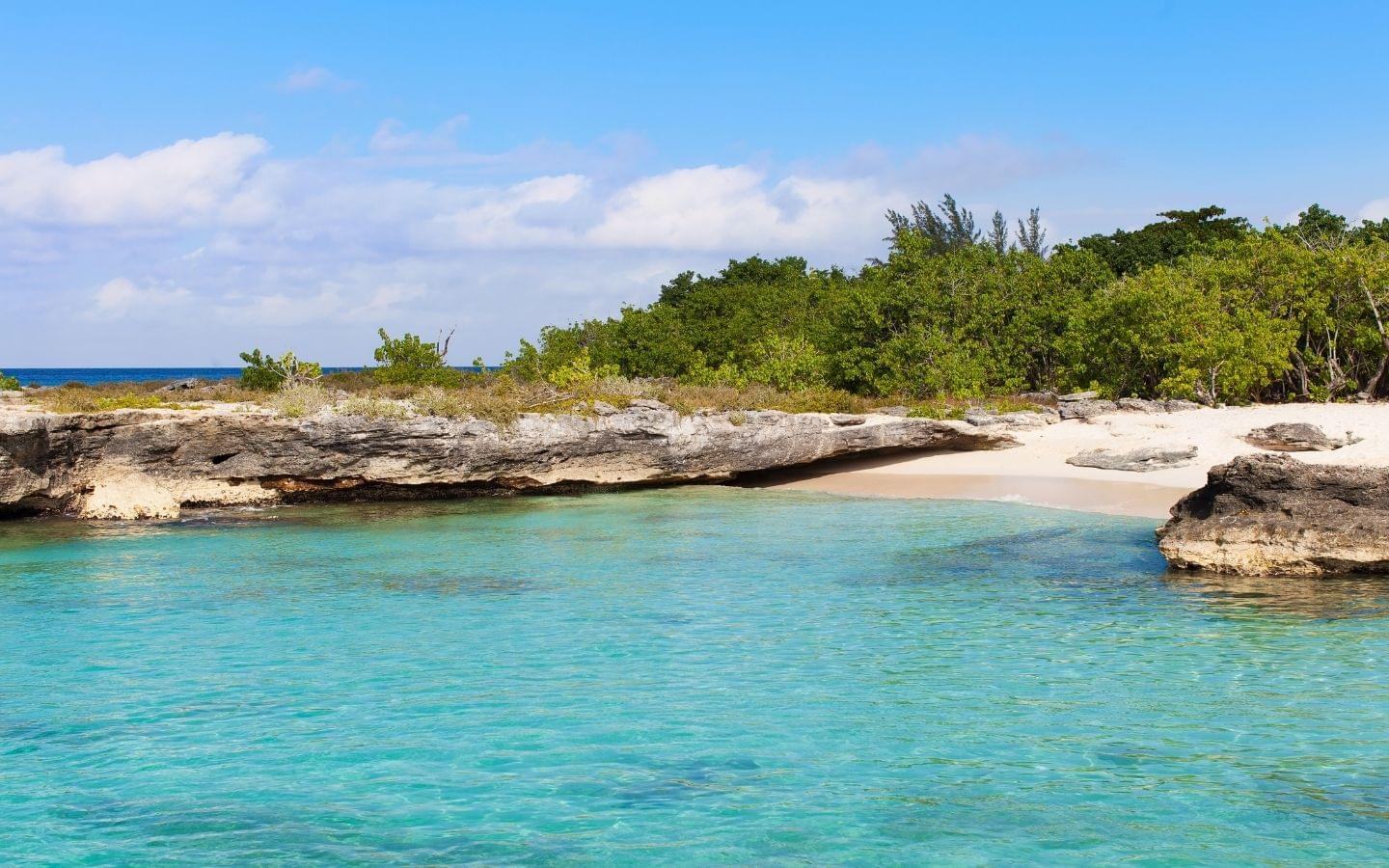
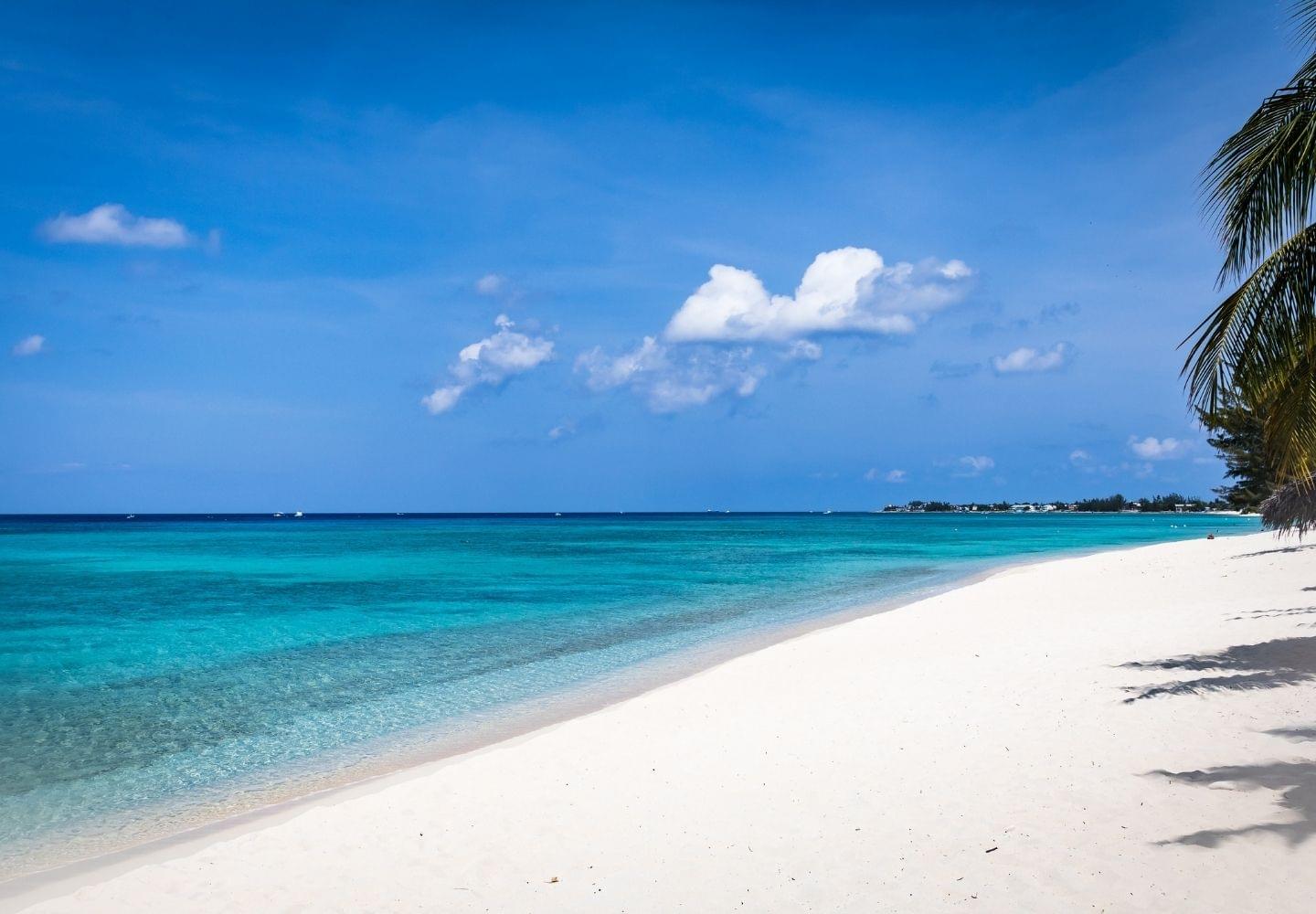
Seven Mile Beach is the postcard, but its snorkeling lives at the quiet north end. Cemetery Reef sits about sixty yards off Cemetery Beach — named for the West Bay graveyard behind it — across water that starts at wading depth and reaches about twenty feet at the reef line. It is the most coral and the most fish you will find off this beach, and the emptiest sand: no bars, no loungers, no rental desks, just a public walkway, free parking on the grass across the road, and the $2.50 public bus if you are coming up without a car.6
The sixty yards is the filter. This is the island’s best beach snorkel for a competent swimmer and the wrong first-timer site; tow a swim buoy for the boat traffic, go in the morning before the sea breeze builds, and bring your own kit — there is nothing to rent on the sand, which is precisely why it stays good. (A mask that travels well solves this whole island; see the travel snorkel gear that earns its bag space.) Recent visitor reports from Cemetery Beach are worth a skim the week you go — they will tell you what the swell has been doing.
Base at this end and you can walk to the water that matters: West Bay stays put Cemetery Reef, the Kittiwake boats and the calm end of Seven Mile inside a ten-minute radius, away from the hotel-row crowds.
USS Kittiwake
The Kittiwake is the Caribbean’s best-known artificial reef and an honest guide has to tell you what it now is. The 251-foot submarine rescue ship was scuttled upright off northern Seven Mile Beach on 5 January 2011; in October 2017 Tropical Storm Nate’s ground swell snapped her moorings and rolled her onto her port side, where she lies in about 64 feet of water with the shallowest steel roughly 15 to 20 feet down.817 In Cayman visibility you float over the whole ship and watch divers thread her decks below you — from the surface she reads as a shape, not a shipwreck you explore.
So here is the verdict the tour pages will not give you: the Kittiwake is a dive story now. As a snorkeler, take her as the bolted-on second stop of a reef trip — worth twenty minutes of anyone’s day — and do not build the day around her. Access is by CITA-licensed operator only, the US$25 wreck fee rides inside your boat’s rate, and swimming out from shore is prohibited.7 If she is the reason you came, that is the day you book a discover-scuba dive instead: 15 feet of separation is the difference between seeing the wreck and meeting her.
Spotts Beach
Spotts is the island’s turtle appointment. Turtles graze the seagrass just off this small south-coast beach, close enough that you will often spot heads breaking the surface before you have your fins on; in the water you hang above them at a polite distance while they feed.9 The rules are the same as everywhere in Cayman waters — no touching, no chasing, no riding, and taking any marine life is prohibited inside the parks15 — and the turtles reward the restraint by simply not leaving.
Respect the site’s two moods. On a settled morning the inner seagrass is easy 6–10-foot snorkeling and the barrier reef a hundred yards out is there for strong swimmers; when a swell runs, the shore break gets punchy and the current means business, so this becomes a watch-from-the-sand day.9 There is free shaded parking, covered tables, and rarely a crowd — check the latest Spotts Beach reports for what the turtles and the swell have been doing this week.
One more thing about Spotts that no snorkel guide mentions: it is the cruise port’s foul-weather bolt-hole. When winter swell shuts George Town harbor, ships re-anchor here and tender passengers in at Spotts jetty — announced the morning of, to widespread grumbling about the longer taxi to Seven Mile.16 If that happens to your ship, stop grumbling: you have been delivered to the turtles.
Rum Point and Starfish Point
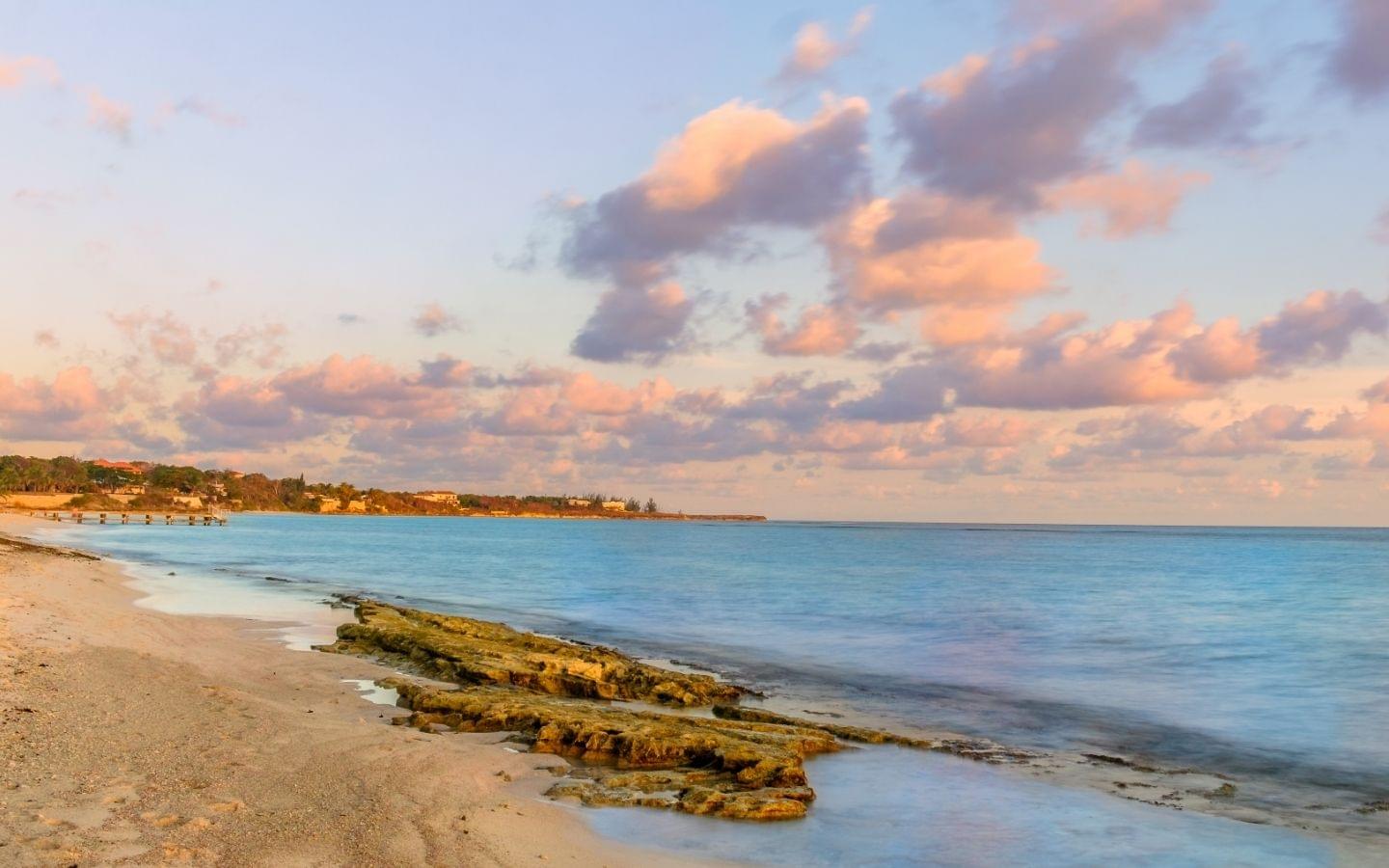
I am going to save you a ninety-minute round trip made on a false premise: Rum Point is not a snorkel site. It is a lovely one-time beach day — calm, shallow 3-to-10-foot water inside the North Sound reef, loungers, a bar, food — with next to nothing living on the sand below it.5 Go for lunch after a Sandbar morning, not for the mask. Starfish Point, five minutes away, is the actual attraction for anyone under twelve: sea stars scattered across knee-deep shallows and the seagrass drop-off beyond. The one rule is absolute — starfish stay under the water. Lifting them out for photos kills them, and it is illegal to remove them.10
This side of the island is also the smart base for the boat half of your trip: the Sandbar sits twenty minutes off this shore,3 and North Side and Cayman Kai stays mean you can take the 3pm departure and be rinsing gear at your villa while the cruise crowds are still queueing for tenders on the other coast.
Cayman Brac and Little Cayman
Say it honestly: Bloody Bay Wall is a dive story. Little Cayman’s famous wall starts shallow and then drops past a thousand feet, and the drama — the part on the posters — happens where snorkelers cannot follow. If you dive, or you are ready to try diving, it belongs on your list. As a pure snorkeler, fly over for the quiet instead: Jackson Bay and Preston Bay put you over the top lip of that same drop-off from shore, on very calm days only — this is open-ocean shoreline with nothing to windward of it.5 Little Cayman’s reefs also took the bleaching harder than anywhere in the country, and its recovery is being measured coral by coral;1213 the fish life and the fifty-shades-of-blue water are why you still go.
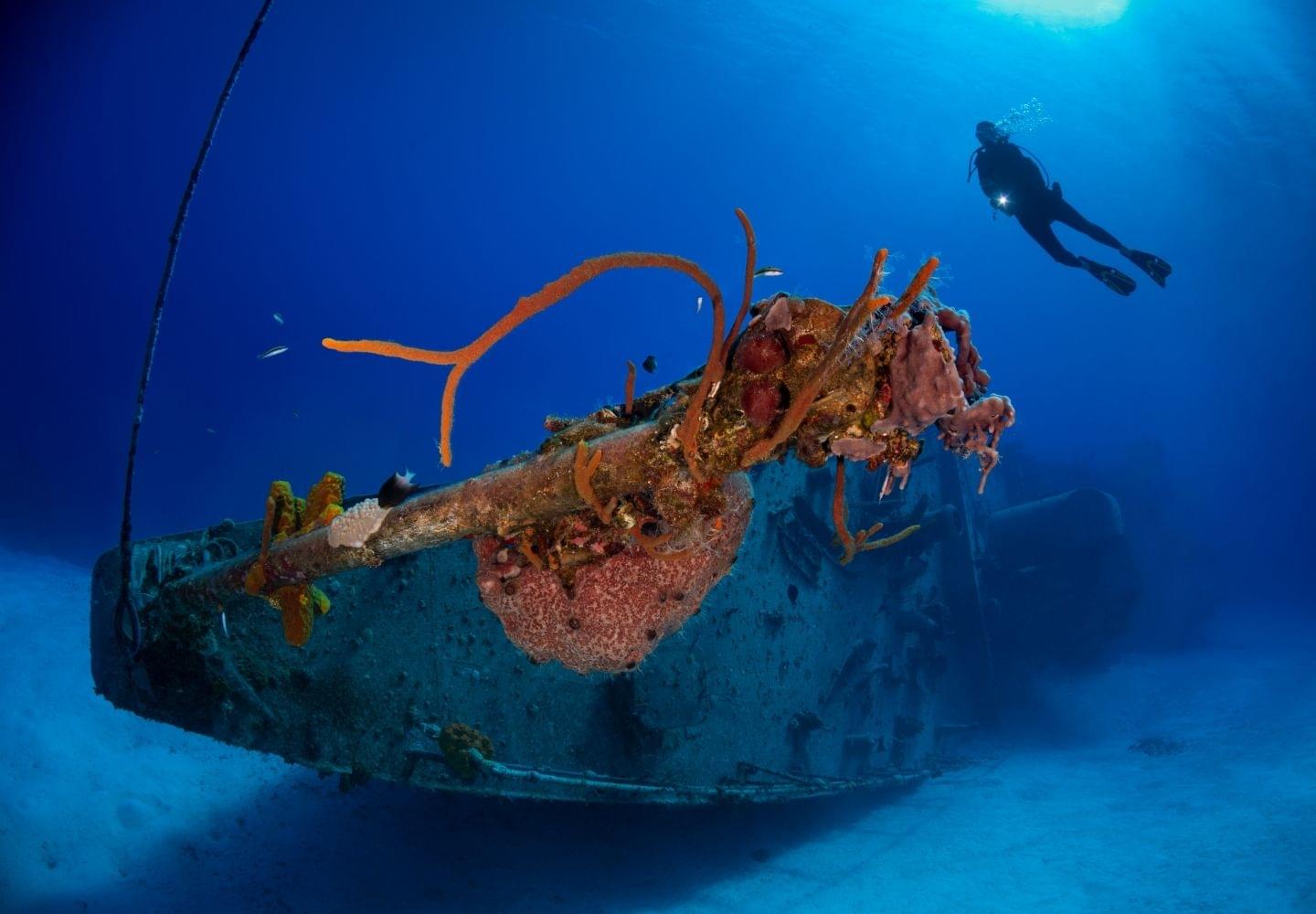
Cayman Brac is the sleeper for shore snorkeling. The north shore, weather permitting, has real entries: Radar Reef off Stake Bay, and the ladder entry at Buccaneer’s near the West End.5 The 330-foot Russian frigate Captain Keith Tibbetts — the wreck in the photo below — is a dive, full stop, and the Brac wears that proudly. Cayman Airways flies to both islands from Grand Cayman,1 and the case for going is the case for the Brac itself: the same clear water with one percent of the people.
The cruise day, planned like a crew member
Grand Cayman is a tender port — no pier, ships at anchor, a ten-minute shuttle to the George Town waterfront — and most ships give you seven to nine hours ashore, arriving 7–8am and sailing 3–5pm.16 Tender math is the whole game, and I have run enough guests against boat schedules to give it to you straight:
If you want maximum water for zero risk, walk. Eden Rock and Devil’s Grotto are minutes from the tenders; the Cali and Cheeseburger Reef fill the same morning; Smith Cove is a short taxi. No excursion, no countdown, world-class site. This is the single best effort-to-reward snorkel call in the cruise Caribbean.
If the Sandbar is the mission, buy the time honestly. A proper trip is three to four hours plus transfers across the island,2 so on a short port day book it as a ship excursion or with an operator who guarantees your sailing — and be back at the terminal thirty minutes before all-aboard, because the last tender does not negotiate.16 The bitter irony of a cruise-day Sandbar trip is that you visit at the hour the site is busiest; if your itinerary gives you a weekend call, that is the one to book. Taxi to Seven Mile runs about CI$20/US$25 per carload if you would rather trade snorkeling for sand.16
And if the captain announces Spotts, your west-side plan is dead anyway — the swell that moved the ship has already blown out Eden Rock. Walk to the turtles and take the better morning.
When to go
Water temperature is never the problem here — the question is wind, and in autumn, weather.18
| Month | °F | Month | °F |
|---|---|---|---|
| January | 81 | July | 86 |
| February | 81 | August | 86 |
| March | 81 | September | 86 |
| April | 82 | October | 86 |
| May | 84 | November | 84 |
| June | 86 | December | 82 |
December through April is the answer: dry season, settled trades, and 81-degree water — the same winter sea I grew up with in Puerto Rico — that asks for nothing more than a rash guard. What to wear snorkeling settles the packing in one read. The winter caveat is the nor’wester: a cold front’s swell can shut the whole west coast — George Town, Seven Mile, the Kittiwake boats — for a day or two while the sky stays postcard blue. That is a sailor’s lesson as much as a snorkeler’s: swell is not weather, and it travels. When the west side dies, Spotts and the North Side are your morning, which is precisely the logic the cruise fleet applies when it moves its own tenders to Spotts.16
Hurricane season runs 1 June to 30 November.18 Cayman’s record inside it is lucky but not charmed: no direct hit since Ivan devastated Grand Cayman in 2004,18 but near misses still tax the water — Hurricane Melissa passed 247 miles from Grand Cayman in October 2025 and pushed ten-foot swell into West Bay and the north coast anyway.19 September and October are the months I would not book flights around: the odds are still decent, but every plan needs a south-coast day in its pocket.
Cayman Islands snorkeling FAQ
Frequently asked questions
Is Stingray City actually snorkeling?
Mostly it is standing. There are two sites and the difference decides your booking: Stingray City proper is a roughly 12-foot-deep site that suits confident snorkelers and divers, while the Sandbar — where nearly every tour goes — is 2 to 4 feet of clear water over hard sand, shallow enough for a non-swimmer to stand with rays brushing past their knees. Take small children to the Sandbar and save Stingray City proper for the adults in the group who want to swim with the animals rather than stand among them. Both sit inside a Wildlife Interaction Zone, so the feeding is done by licensed guides, not by you.
Can you snorkel in the Cayman Islands without a boat?
Yes — better than almost anywhere else in the Caribbean. Eden Rock and Devil's Grotto are a short swim off the waterfront in downtown George Town, Cemetery Reef sits about sixty yards off the north end of Seven Mile Beach, Smith Cove's coral heads are a short ride south of town, and the turtles at Spotts Beach graze seagrass within sight of the sand. The only major sites that genuinely require a boat are the Sandbar, the Kittiwake wreck (swimming out from shore is prohibited) and the North Sound reefs. Bring your own mask and you can fill a week from shore for the cost of parking, which is free.
How much does snorkeling in the Cayman Islands cost?
Shore snorkeling is free everywhere — no beach fees, no marine park fees for swimming in from the sand. Sandbar group boats run about US$60–100 per person for a three-to-four-hour trip with gear, and private charters start around US$800 (both checked August 2026). The Kittiwake carries a US$25 wreck fee collected through your operator's rate, and you must go with a licensed boat. The gap between a $60 boat and a $100 boat is usually group size and time on the water, not the stingrays — the rays cannot tell the boats apart.
Is the snorkeling still good after the coral bleaching?
Go clear-eyed. The Department of Environment's own monitoring puts average coral cover at 11 percent by 2023 and around 6 percent on Grand Cayman in 2024, after the worst heat stress ever recorded here — see doe.ky for the honest account. What that number does not measure is everything else: the visibility is as absurd as ever, the reef structure and swim-throughs stand, the fish, rays, turtles and tarpon are all still on station. Judge a snorkel day here by the animals and the water, not the color chart, and you will still have one of the Caribbean's best. Disinfect your gear between islands — coral disease travels on wet neoprene.
When is the best time to snorkel in the Cayman Islands?
December through April: dry, settled, and the water still a comfortable 81–82 °F. Summer runs warmer (86 °F) and calmer between systems, but June through November is hurricane season, and its later months are the risky ones this far west. The one winter catch is the nor'wester — a cold front that sends swell into the west coast and can shut George Town and Seven Mile sites for a day or two. When that happens, go south and east: Spotts and the Rum Point side often work when the west side does not, which is exactly why the cruise ships themselves shift their tenders to Spotts on rough mornings.
Where to go next
- Comparing islands first: the Caribbean’s best snorkeling, island by island — where Cayman’s shore access ranks against the field
- Same flight corridor, different trip: snorkeling in Jamaica — Cayman’s neighbor across the channel
- Same western-Caribbean water, half the price: snorkeling in Roatán — the barrier-reef alternative
- Packing for either: travel snorkel gear that earns its bag space
Sources
Footnotes
-
Destinations served, including Cayman Brac (CYB) and Little Cayman (LYB). Cayman Airways, checked 8 August 2026. caymanairways.com. ↩ ↩2
-
“Stingray City, Grand Cayman — Tours & Charters.” Explore Cayman, checked 8 August 2026. explorecayman.com. Stingray City proper at ~12 ft against the Sandbar’s 2–4 ft; 3–4-hour tours from US$60–75, private charters US$450–2,800; departures including Kaibo and Camana Bay; the after-3pm and weekend crowd pattern; the no-fins rule at the Sandbar. ↩ ↩2 ↩3 ↩4 ↩5 ↩6 ↩7 ↩8
-
“How Much Does It Cost to Visit Stingray City?” Crazy Crab (Grand Cayman operator), published 12 December 2025, checked 8 August 2026. crazycrabcayman.com. Group boats US$75–100, private charters from ~US$800 including gear and squid; the 20–25-minute crossing; no entrance fee at the site itself. ↩ ↩2 ↩3 ↩4 ↩5
-
“Snorkeling a Marine Park.” Eden Rock Diving Center, George Town, checked 8 August 2026. edenrockdivingcenter.com. Both reefs rise from a 40-foot sand bottom to within a few feet of the surface, a short swim from the center’s South Church Street waterfront; Devil’s Grotto is the southern of the two. ↩ ↩2 ↩3
-
“The Best Places to Snorkel in the Cayman Islands.” Explore Cayman, checked 8 August 2026. explorecayman.com. Eden Rock/Devil’s Grotto mooring-ball access off South Church Street and the summer silversides; the Cali at 20–30 ft under Port Authority jurisdiction; Cheeseburger Reef’s entry north of the restaurant; Smith Cove’s coral heads; Rum Point’s 3–10 ft; Radar Reef and the Buccaneer’s ladder on Cayman Brac; Jackson Bay and Preston Bay on Little Cayman in calm seas only. ↩ ↩2 ↩3 ↩4 ↩5 ↩6 ↩7 ↩8 ↩9
-
“Cemetery Beach Grand Cayman Snorkel Review.” Things To Do Cayman, 2026, checked 8 August 2026. thingstodocayman.net. The ~60-yard swim to ~20 ft at the reef; free grass parking opposite; the US$2.50 public bus; no amenities; swim-buoy advice. ↩ ↩2
-
“Wreck of the Kittiwake Diving & Snorkeling.” Explore Cayman, checked 8 August 2026. explorecayman.com. The US$25 wreck fee inside CITA-licensed operator rates; shore swimming prohibited. ↩ ↩2 ↩3
-
“The History of Grand Cayman’s USS Kittiwake Wreck.” Sunset House, checked 8 August 2026. sunsethouse.com. Scuttled 5 January 2011; Tropical Storm Nate’s 2017 shift onto her side; top ~15 ft, sand ~64 ft. ↩ ↩2
-
“Spotts Beach Grand Cayman Snorkel Review.” Things To Do Cayman, 2026, checked 8 August 2026. thingstodocayman.net. Turtles over the nearshore seagrass; 6–10 ft; the reef ~100 yards out for experienced swimmers; free shaded parking; current and conditions cautions. ↩ ↩2 ↩3
-
“Starfish Point Grand Cayman Review.” Things To Do Cayman, 2026, checked 8 August 2026. thingstodocayman.net. Depths from 2–3 ft to the ~10 ft drop-off; removing starfish from the water is illegal and handling above water harms them. ↩ ↩2
-
“Cayman’s Coral Reefs Are Dying: A Crisis Beneath the Waves.” Cayman Islands Department of Environment, 24 September 2025. doe.ky. Coral cover ~25% (1997) → 11% (2023) → ~6% Grand Cayman (2024); the 2023 heatwave’s 19 degree-heating-weeks; SCTLD’s arrival June 2020, spread around Grand Cayman in 18 months, confirmation on Little Cayman August 2025; the gear-disinfection request. ↩ ↩2 ↩3
-
“Bleached but not broken.” Central Caribbean Marine Institute, 18 June 2024. reefresearch.org. 90% of Little Cayman corals bleached in 2023, more than half died; ~20% pre-event cover; boulder species recovering best. ↩ ↩2
-
“Little Cayman reef coral cover plummets to 10% after bleaching.” Cayman Compass, 1 July 2025. caymancompass.com. ↩ ↩2
-
“Wildlife Interaction Zones” and “Mind Your Marine Manners.” Cayman Islands Department of Environment, checked 8 August 2026. doe.ky/…/wildlife-interaction-zones, doe.ky/marinemanners. The WIZ as the only legal feeding areas, operator licensing enforced since 2007; guides-only feeding, no lifting rays, the stingray shuffle, reef-safe sunscreen 30 minutes before entry. ↩ ↩2
-
“Marine Parks.” Cayman Islands Department of Environment, checked 8 August 2026. doe.ky. Parks established 1986 over ~15% of coastal waters, enhanced in 2021 to around 50% under the National Conservation (Marine Parks) Regulations, 2021; no take of marine life. ↩ ↩2
-
“A Cruise Visitor’s Day in Grand Cayman.” Daily.ky, 2026, checked 8 August 2026. daily.ky. Tender-only operations and the ~10-minute ride; 7–9 hours ashore against 7–8am arrivals and 3–5pm departures; the 30-minutes-before-all-aboard rule; the CI$20/US$25 taxi to Seven Mile Beach; Smith Cove at 1.8 miles/35 minutes on foot; the Spotts substitution announced the morning it is needed. ↩ ↩2 ↩3 ↩4 ↩5 ↩6 ↩7
-
“USS Kittiwake Grand Cayman Snorkel & Dive Review.” Things To Do Cayman, 2026, checked 8 August 2026. thingstodocayman.net. ~20 ft from the surface to the top of the wreck, ~65 ft maximum; the dive-first assessment. ↩
-
Sea temperatures: “Average monthly water temperature, George Town (Grand Cayman).” weather-and-climate.com, checked 8 August 2026. weather-and-climate.com. Hurricane season dates and the 2004 Hurricane Ivan record: NOAA National Hurricane Center, nhc.noaa.gov/climo and the Tropical Cyclone Report archive, nhc.noaa.gov/data/tcr. ↩ ↩2 ↩3
-
“Category 5 Hurricane Melissa south of Jamaica; Cayman likely spared the worst” and 2025 season coverage. Cayman Compass, October 2025. caymancompass.com. Melissa’s pass 161 miles south-west of Cayman Brac and 247 miles from Grand Cayman; 10-foot swell into West Bay and the north coast. ↩
Nick Brisson — Co-founder, OutsiderView
Nick was born in Florida and grew up in Puerto Rico. He spent over ten years in Key West working in the boat charter industry, put four to five years into snorkeling and spearfishing the Florida Keys reef, and lives in Jacksonville Beach now, where he surfs year-round.