Snorkeling
Snorkeling in Florida: the bridge, springs and manatees
Most Florida snorkeling writing is really about the Keys. This is the rest: the Blue Heron Bridge tidal window, Devil's Den, the springs and the manatees.
We earn a commission on purchases made through links on this page, at no extra cost to you. It never affects which products we recommend.
On this page
- What is first-hand here, and what is sourced
- The Keys, in one paragraph
- Blue Heron Bridge and Phil Foster Park
- The rest of Palm Beach County
- Devil’s Den
- Ginnie Springs and the Santa Fe
- Crystal River and the manatees
- The Ocala National Forest springs
- The Panhandle
- The Fort Lauderdale reef
- When to go
- What to bring
- Where to base yourself
- Frequently asked questions
Almost everything written about snorkeling in Florida is really written about the Keys, and the Keys are a boat trip. That is worth saying in the first line, because it means most of what you read does not apply to the four fifths of the state where the other fourteen million of us live.
Away from the reef, Florida is two completely different kinds of water. There is the Atlantic side — an estuary and nearshore system that you can walk into, and that is clear or filthy depending entirely on what the tide is doing that hour. And there are the springs: limestone vents in the middle of the state pushing out water at a constant 72°F, every day of the year, in January and in August alike.
Which produces the thing that actually organizes a Florida snorkeling trip once the Keys are off the table. Away from the reef, the season barely matters. What decides whether your morning works is a tide table, a booking page, or a federal closure. Almost nothing written about this state tells you that, and it is the whole of this guide.
What is first-hand here, and what is sourced
I was born in Florida and I live on the coast here now, at Jacksonville Beach. The seasons, the heat, the storms that build over the peninsula every summer afternoon, how far it really is from Orlando to the Gulf — that is home, and where this page reads like judgement rather than data, that is where it comes from. So is the Keys handoff below: I spent years in Key West working in the boat charter industry.
Every fee, opening hour, booking rule, closure, depth and dimension on this page carries a footnote to the county, agency or operator that publishes it, checked on 31 July 2026. Where a number matters, it is somebody’s published number.
The Keys, in one paragraph
Florida’s coral reef lies miles offshore down the entire length of the Keys, which is why the beaches there disappoint people and why nearly every site worth swimming needs a boat. That is a different holiday from the one this page describes — you are choosing an island to sleep on and a captain to go out with, not a car park and a tide. We have written it up separately: start with our guide to snorkeling the Florida Keys for the chain as a whole, and our Key West guide if that is where you are based. Everything below is the rest of the state.
Blue Heron Bridge and Phil Foster Park
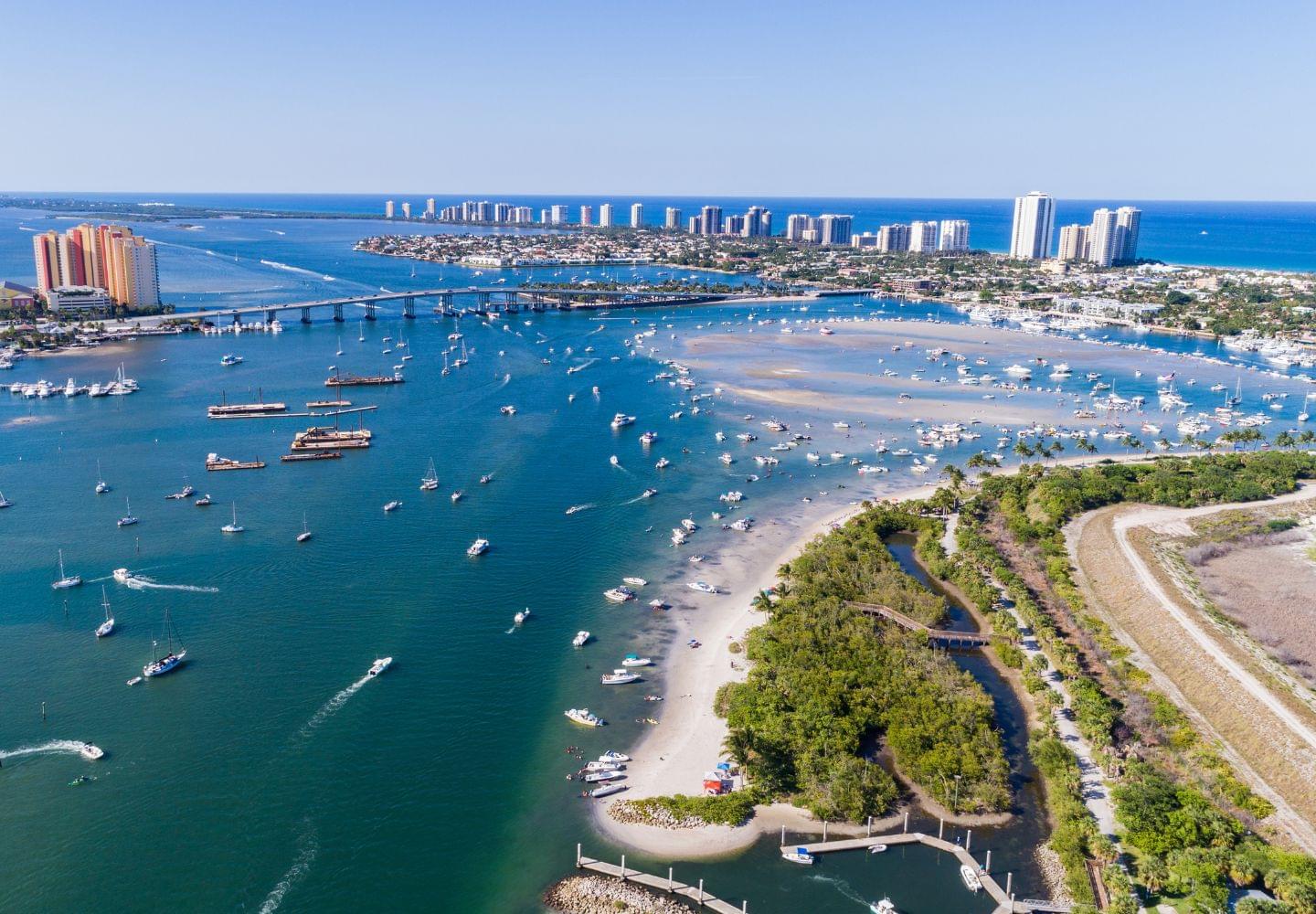
This is the best shore snorkeling in Florida and one of the few places in the state where the water genuinely rewards a mask without a boat ride first. It is also the one that punishes you hardest for turning up at the wrong hour.
Phil Foster Park sits on a spoil island in the Intracoastal at Riviera Beach, under the Blue Heron Bridge, just inside the Lake Worth Inlet. In 2013 Palm Beach County sank an artificial reef and snorkel trail there. The county’s own description: it spans a two-acre area in 6 to 10 feet of water and used 600 tons of rock.1 The shop that operates at the park calls it an 800-foot-long tract of artificial reef built from more than 600 tons of Anastasia rock boulders, with shark statues and sunken boats among them.2
The tide is the whole thing
The site sits in a tidal estuary beside an ocean inlet. On the flood, clean Atlantic water pushes in through the inlet and the visibility is extraordinary for an estuary. On the ebb, the lagoon drains back out and takes its silt with it. In between, at the top of the tide, the water stops moving.
Force-E Scuba Centers, a Palm Beach County dive shop, puts the window at “between an hour before and after high tide.”3 Pura Vida Divers, which operates at the park itself, narrows the best of it to about 30 minutes before high slack tide, and is blunt about the alternative: “Low slack tide often brings murky water, resulting in poor visibility.”2
Depths run from about 5 to 20 feet overall,32 with the snorkel trail itself in the shallower six to ten.1 It is sheltered, close to the beach and easy — the difficulty here is timing, not water skill.
The rule people get ticketed for
Florida law requires a divers-down warning device, and — this catches snorkelers out — the statute defines a diver as “a person who is wholly or partially submerged in the waters of the state and is equipped with a face mask and snorkel or underwater breathing apparatus.” A mask and snorkel is enough to make you a diver in the eyes of the law. Divers must make reasonable efforts to stay within 100 feet of the device on rivers, inlets and navigation channels, and within 300 feet on all other waters; the flag must be at least 12 inches by 12 inches when displayed from the water.4 Phil Foster sits on the Intracoastal beside an inlet, so assume the tighter number.
Pura Vida’s warning is worth repeating in full: “Florida law requires you to carry a dive flag at all times. Local authorities regularly patrol the area and will ticket divers without one.”2
Getting in, and getting parked
The beach and playground are open sunrise to sunset, and diving outside those hours needs a special county permit — Pura Vida holds the only one, for night dives.21 The park has 206 regular parking spaces and 127 boat-and-trailer spaces, and when it fills, “enforcement staff will temporarily close access to the park.”1 A slack-high tide on a Saturday morning is exactly when that happens. There are restrooms and outdoor showers.1
What is down there is the reason people fly in for it: seahorses and pipefish, octopus, batfish, flying gurnards, stargazers, and — Pura Vida counts them — over 100 species of nudibranch.2 It is a muck-diving site rather than a reef, which is to say the interest is small, strange and close up rather than panoramic. Bring patience and look at the rubble.
The rest of Palm Beach County
If you have more than a morning in the area, two more places are worth the drive.
Peanut Island is in the same inlet and is boat access only — a shuttle, a water taxi or your own hull; there is no bridge.5 The county lists a snorkeling lagoon along with guarded and unguarded swimming beaches, day use from sunrise to sunset, and 17 reserved tent sites for anyone wanting to camp on it. Two things to plan around: there is no food or rental concession on the island, so everything you need arrives with you, and the swimming area is currently unguarded during the week.5
John D. MacArthur Beach State Park in North Palm Beach gives you rocky nearshore outcrops and a proper state-park setting, and it is the calmer alternative when the bridge is on the wrong tide. We have not quoted its fee or hours: the Florida State Parks site would not answer on the day we checked, and a gap is better than a number we could not verify.
Devil’s Den
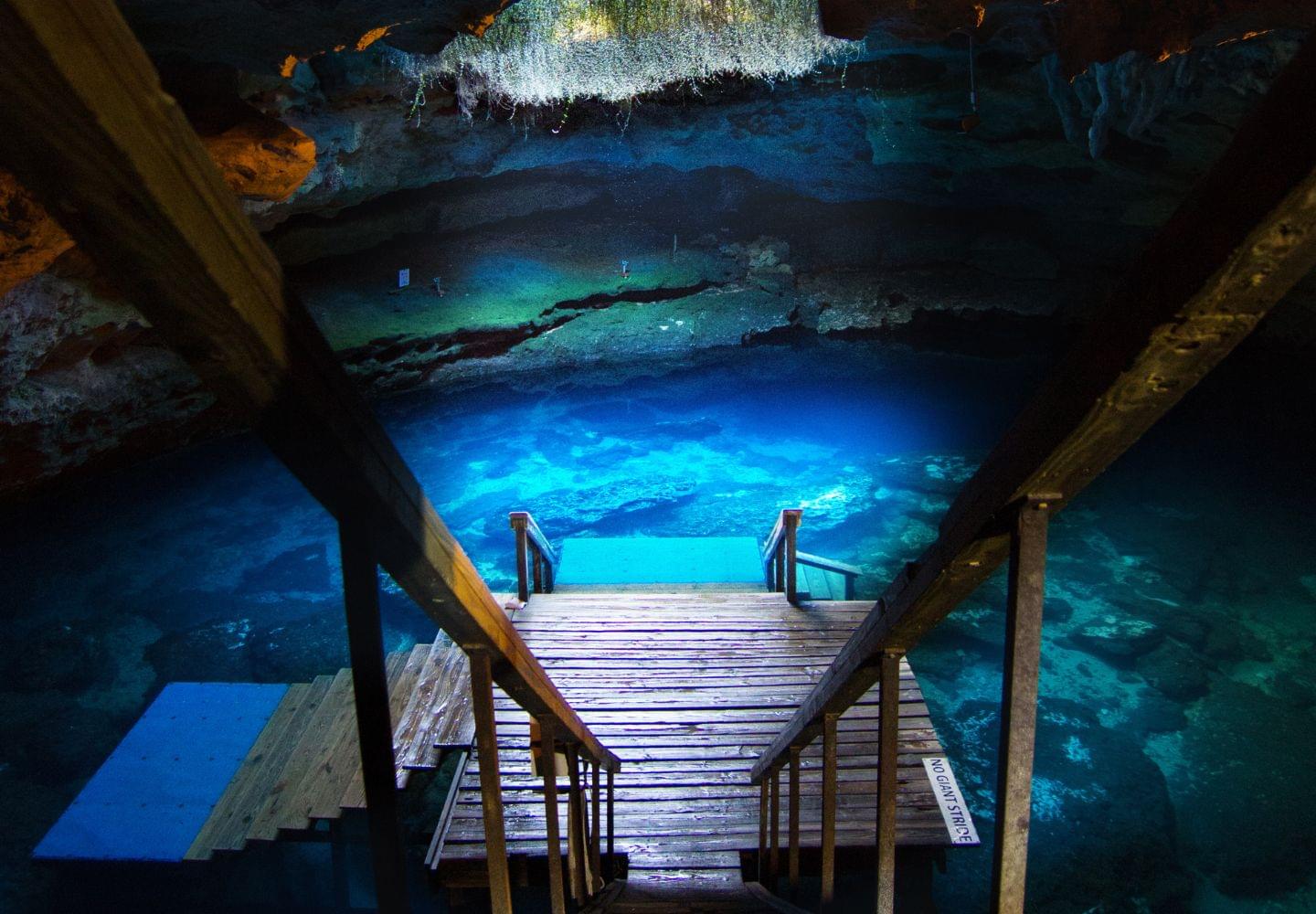
An underground spring in a collapsed limestone chamber near Williston, south of Gainesville, lit through a hole in the roof. It is on private land, it is genuinely unlike anything else in the state, and it is the site on this page most likely to turn you away at the door if you have not planned it.
The operator’s own terms, checked on 31 July 2026:6
- Snorkeling is $30.00 per person for a 90-minute time slot. A walk-through, if you only want to look, is $15.00.
- Payment splits: a $5 non-refundable deposit per person when you book, and $25 on arrival.
- “Snorkeling is by reservation only, each time slot is 90 minutes long.” Reservations are non-refundable; you may change one once at no cost with at least 72 hours’ notice.
- Hours are Monday to Thursday 9 a.m. to 4.30 p.m., Friday to Sunday 8 a.m. to 5 p.m.
- “Mask, snorkel, and fins are required at all times.” Not recommended — required. Freediving fins are not permitted, and there are no flotation devices unless medically necessary.
- Hire is $15.00 for the bundle or $5.50 per item.
- Children under six are not admitted. Under-18s need a guardian on site or a notarised consent form.
- The operator states plainly that snorkeling here “does require you to be a strong swimmer.”
That last pair is the part to take seriously. A ticketed attraction that bans buoyancy aids and asks for a strong swimmer is telling you something about itself. If you or anyone in your group is not comfortable in deep water without a vest, this is not the introduction to snorkeling to pick — read our guide to snorkeling when you cannot swim and go to a spring run with a shallow end instead.
The water holds a constant 72°F year-round.7 That sounds mild and it is not: in a still, sunless chamber, ninety minutes at 72°F will cool you further than you expect. Bring more neoprene than the number suggests — our guide to what to wear snorkeling has the thicknesses.
Ginnie Springs and the Santa Fe
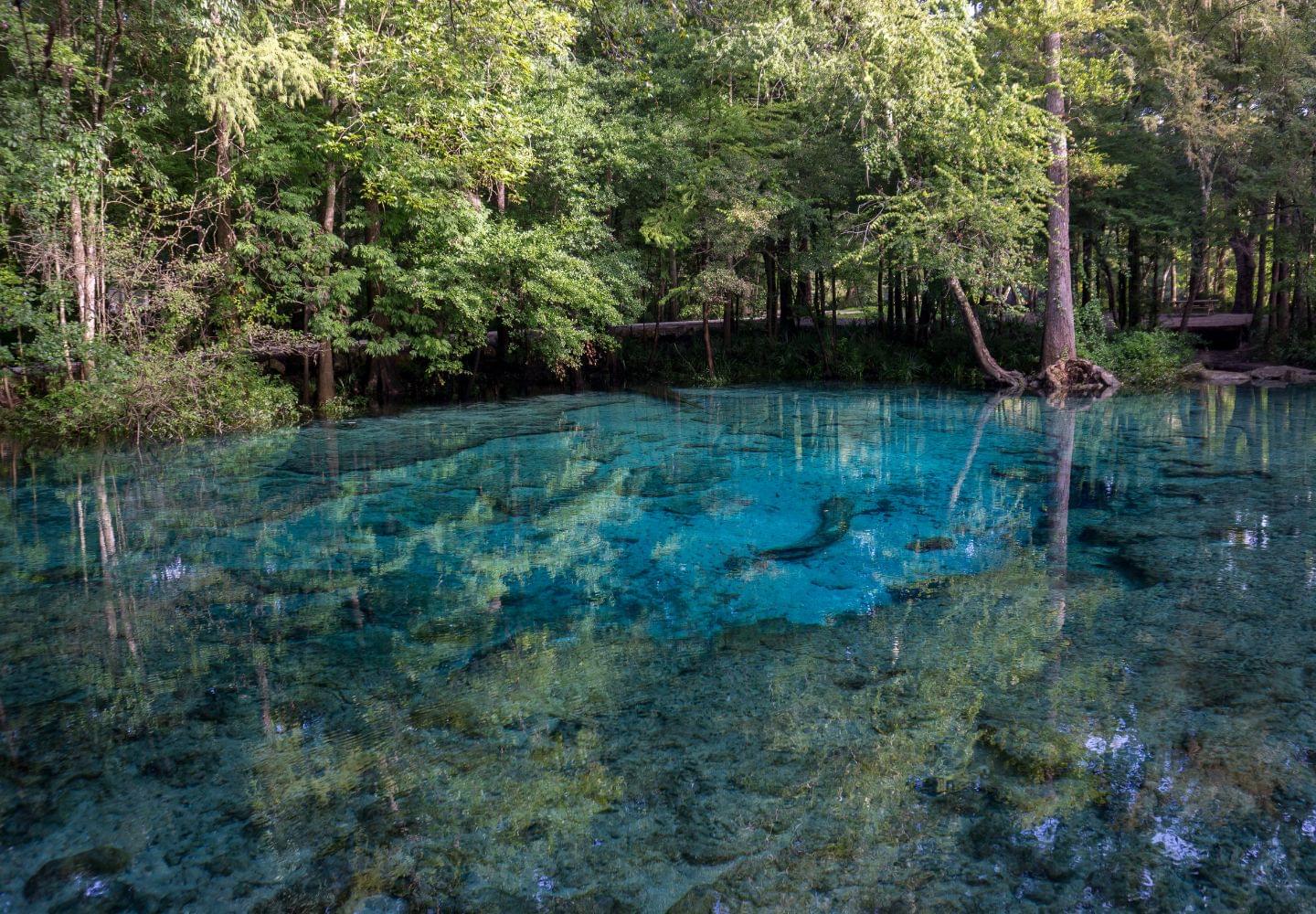
Seven springs on the Santa Fe River northwest of Gainesville, on private land, with water the color of bottle glass. The park’s own line: “Our seven crystal clear springs are 72 degrees year-round.”8
The published terms, checked on 31 July 2026:8
- Day admission is $20.00 for adults in the off-season (November to February) and $25.00 in season (March to October). Ages 4 to 12 are $5.00 and $6.00 respectively; three and under are free.
- “We stop issuing day passes after 3 PM. Day admission passes expire at sunset.”
- Gate hours are Monday to Thursday 8 a.m. to 5 p.m., Friday and Saturday 8 a.m. to 7 p.m., Sunday 8 a.m. to 6 p.m. Only campers have 24-hour access.
- A new alcohol and open container policy took effect on 21 April 2026.
That last item is the honest guide to what Ginnie Springs is. It is a beautiful piece of water and it is also Florida’s best-known river party, and a park that had to write a new drinks policy in 2026 is telling you which of the two it spends its weekends managing. Go midweek, in the off-season, early — and note that the 3 p.m. cut-off makes a late start not a short visit but no visit.
For snorkelers the appeal is clarity and freshwater life — turtles, catfish, bass, mullet — rather than reef spectacle. The cave systems below are a separate sport with a separate fatality record and are not something we cover.
Crystal River and the manatees
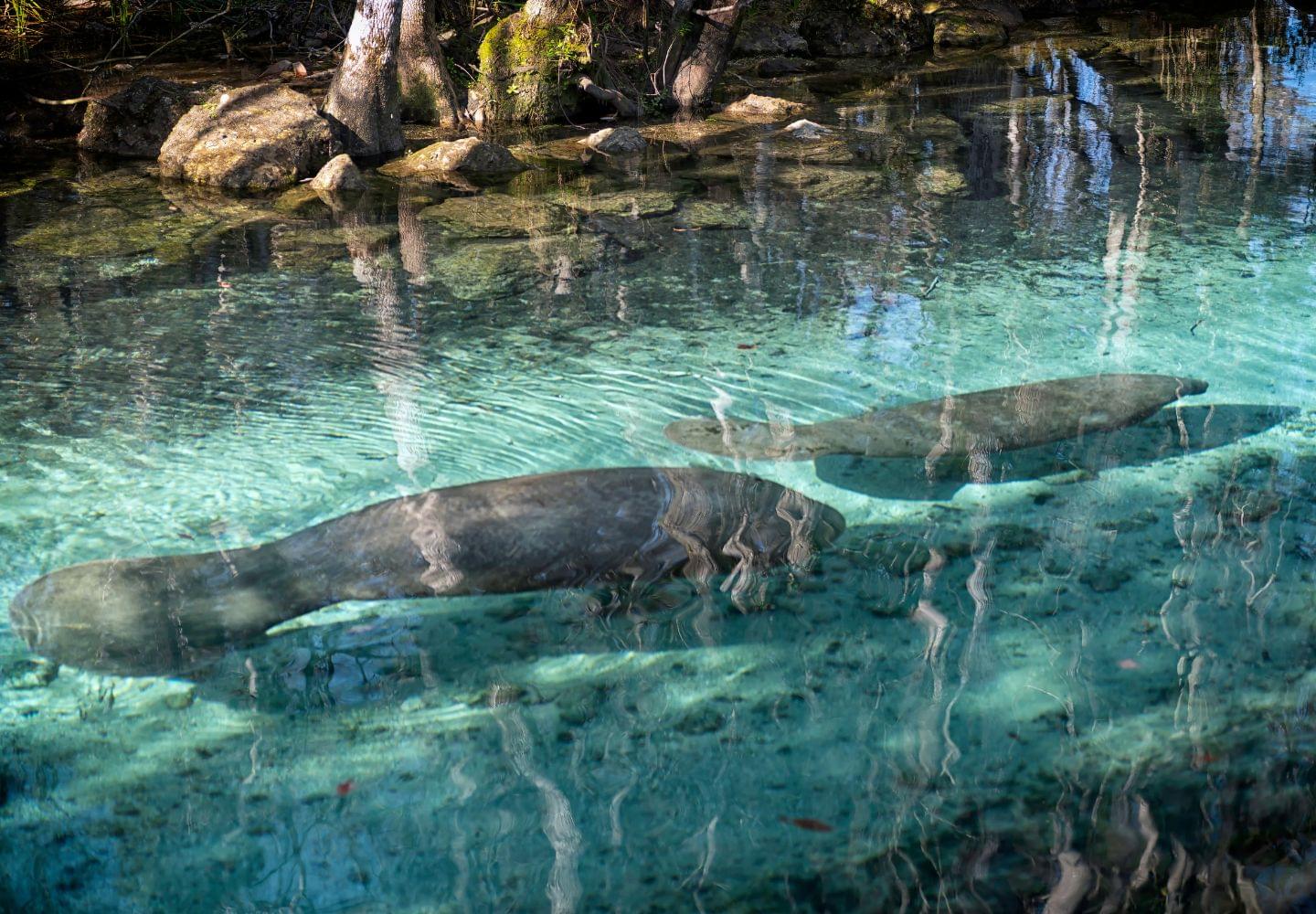
Kings Bay at Crystal River is where Florida’s manatees go when the Gulf turns cold, and it is the most regulated water on this page. Get the rules first and the trip second, because the rules move the trip.
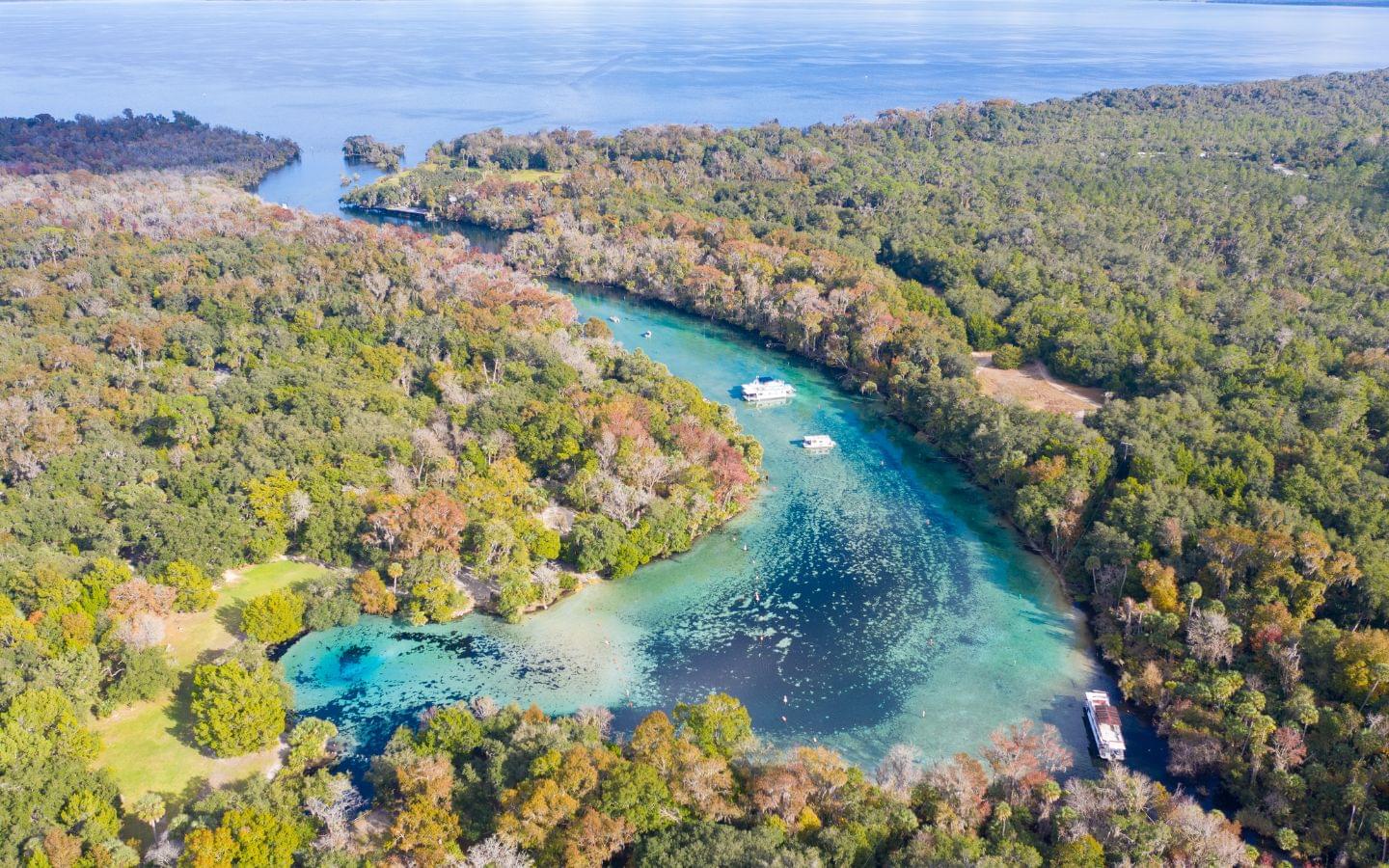
Seven areas of Kings Bay are designated federal manatee sanctuaries — including one at Three Sisters Spring — and the regulation is unambiguous: “All waterborne activities are prohibited in these areas during the period November 15–March 31 of each year.”9 That is the peak of manatee season and the peak of the closure at the same time, by design. The sanctuaries are posted and buoyed. Outside their boundaries the bay stays open, which is why permitted tour operators exist and why they matter.
Where in-water viewing is allowed, Florida’s wildlife agency asks for passive observation: “Look, but don’t touch manatees” and “Do not pursue or chase a manatee.” Snorkel gear floating at the surface is the recommended way to watch — SCUBA bubbles frighten them off. Harassing a manatee carries a state penalty of up to $500 and 60 days, and a federal one of up to $50,000 and a year.10
Read together, those two sources give you the honest planning answer that the tourism copy does not. The animals are most concentrated exactly when the best water is closed to you, so a winter Crystal River trip is a boat, a guide who knows where the sanctuary lines are, and a lot of floating still. A guided manatee snorkeling tour is the straightforward way to do it, and the good operators will tell you when conditions are wrong.
If you are building a winter trip around this, our guide to snorkeling in winter makes the point that the same cold front that ruins a reef day is the one that fills Kings Bay.
The Ocala National Forest springs
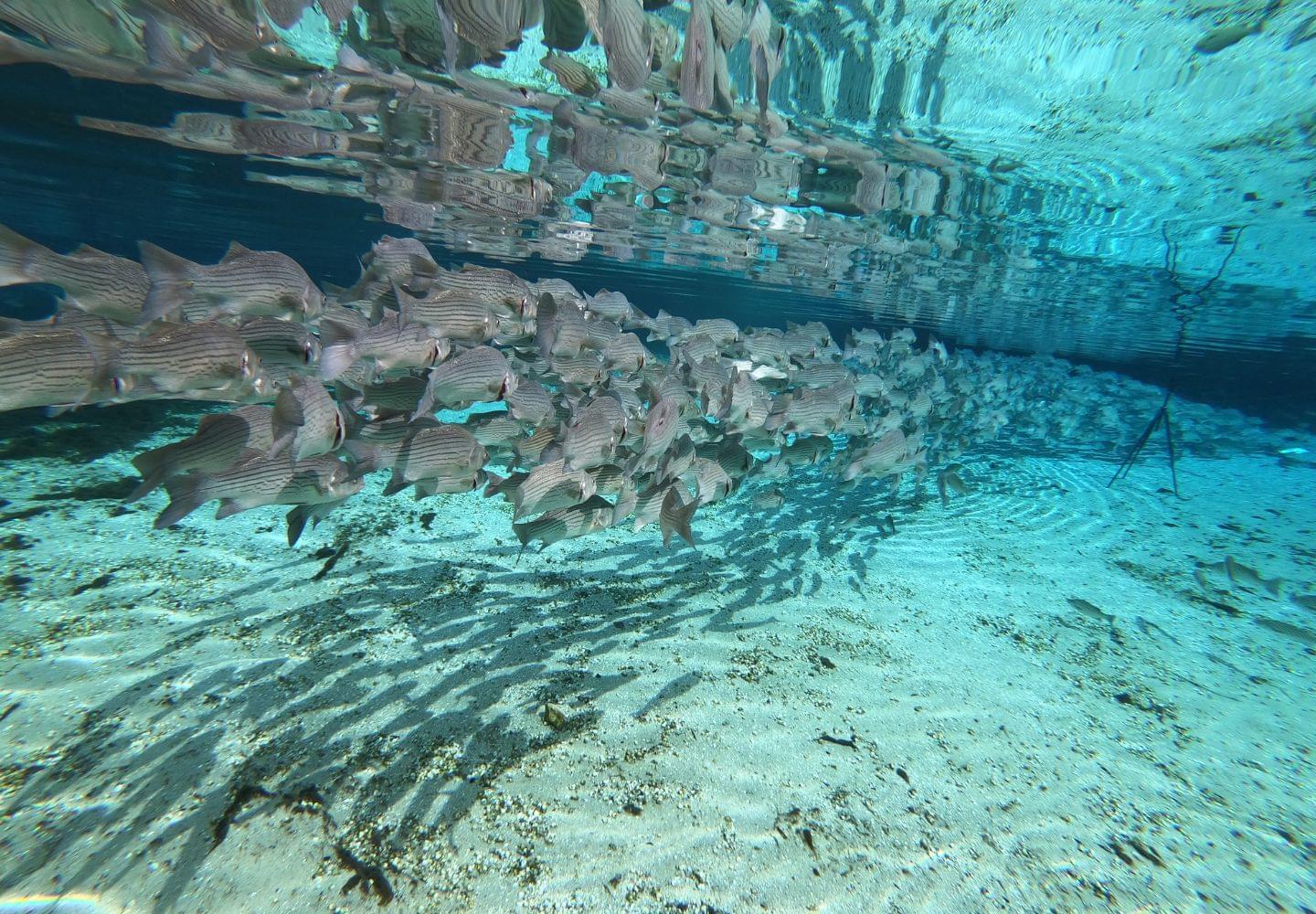
An hour or so from Orlando, Silver Glen Springs opens into a shallow run off Lake George with schooling striped bass over the boil and the occasional manatee in winter. Alexander Springs, further south in the same forest, is the easiest swim of the group — a wide, shallow, sandy-bottomed pool you can wade into.
The thing to know is administrative and it will ruin a Saturday if you miss it. Both sites require a timed vehicle reservation on every Saturday, Sunday and holiday from Memorial Day weekend, 23 May, through Labor Day weekend, 7 September 2026. Passes go on sale up to 14 days ahead and had to be bought online from 9 May 2026.11 The vehicle pass is not the entry fee: “The 1-Day Personal Vehicle Reservation pass reservation DOES NOT INCLUDE the per person entry fee”, which is charged per head at the gatehouse on the day.12
We have not printed a day-use price: the Forest Service pages would not answer when we checked, and the reservation site says fees are paid at the gate on the day. Midweek, none of this applies and the forest is close to empty.
The Panhandle
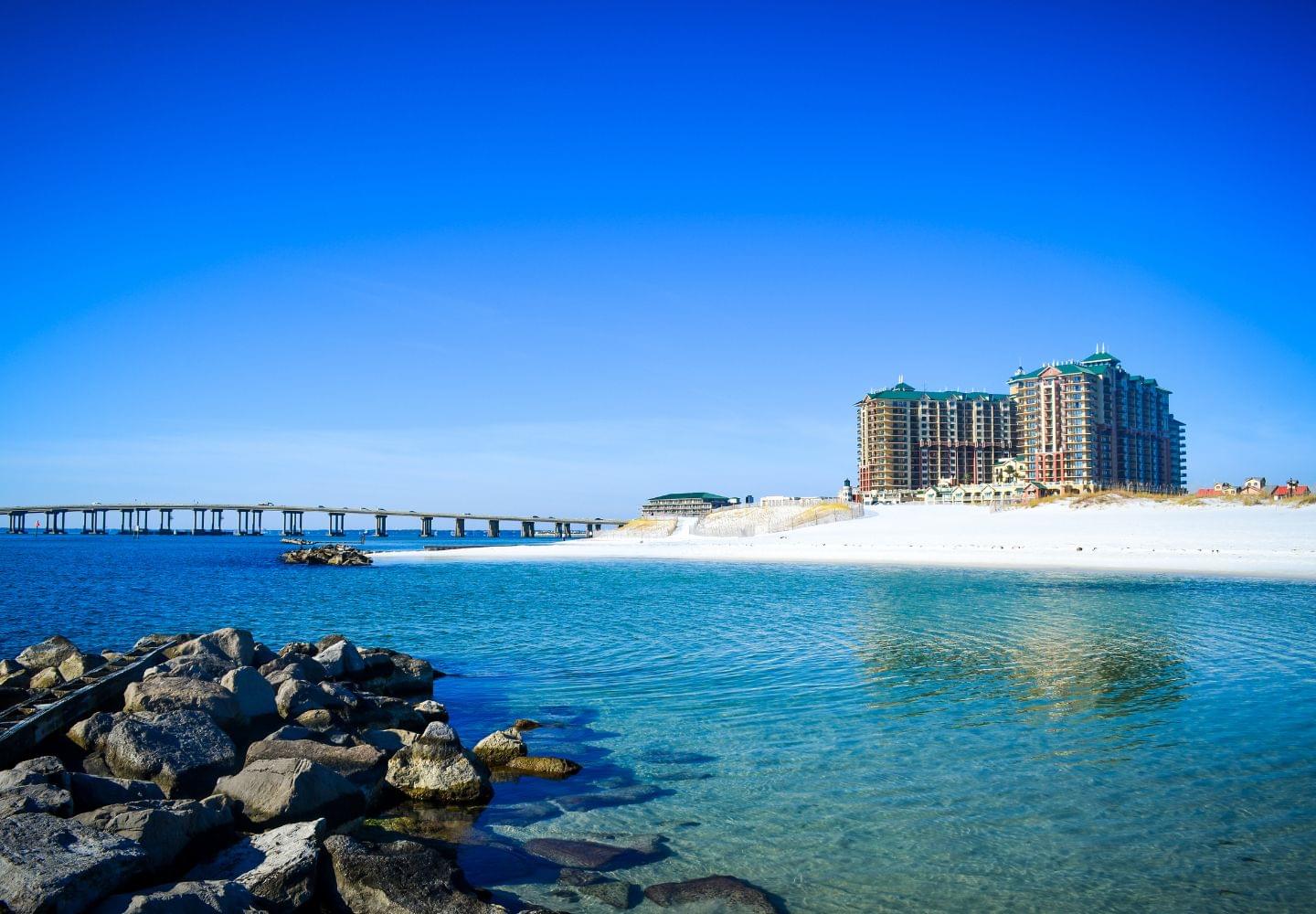
Destin and the Emerald Coast have the clearest open water on the Gulf side of the state, and the snorkeling is around structure rather than reef — the jetties at East Pass, which work as an artificial reef, and the sheltered water at Norriego Point.
East Pass is a tidal inlet with the same arithmetic as Riviera Beach and it can run hard, so plan for slack water and treat the current as the limiting factor rather than the visibility. Norriego Point is the protected side of the same spit and the better choice for children and nervous swimmers.
This is also where Florida’s summer works in your favor: the Gulf goes flat and warm from late spring, and there is no tidal drain-and-fill dictating the hour.
The Fort Lauderdale reef
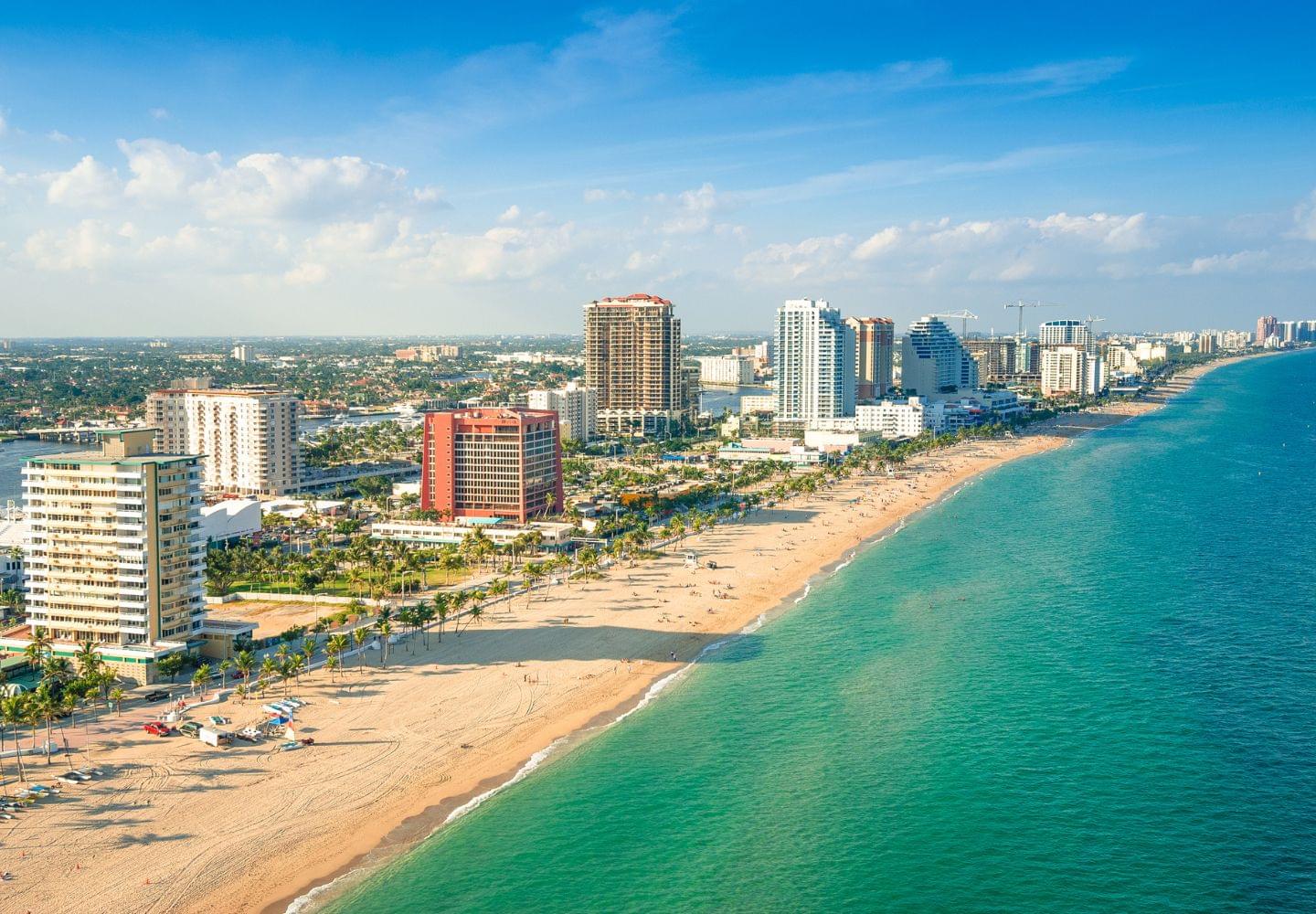
Florida’s reef tract does not stop at the Keys — it runs north along the southeast coast, and off Fort Lauderdale there are shallow ledges close enough to be a short boat ride rather than an expedition. Twin Ledges is the best known, with nurse sharks, snapper, hogfish and grouper on it.
It is not a shore swim, and it is far enough out that the honest advice is to go with somebody who does it daily; several outfitters run guided reef trips off the beach. Boat traffic here is heavy and a dive flag is not optional.4 Port Everglades in Fort Lauderdale is also where the two-hour fast ferry leaves for Bimini in the Bahamas.
When to go
Florida is sold as a winter destination and for snorkeling that is only half right, because the answer depends on which water you are getting into.
The springs have no season. Devil’s Den and Ginnie both run at 72°F every day of the year.78 What changes is the crowd, not the water — the springs are busiest in the Florida summer, when they are also the only comfortable thing to do outdoors, and quietest from November to February when locals think 72°F is cold.
The manatees have a season and a closure, and they are the same months. Peak concentration in Kings Bay is winter; the sanctuaries are shut to all waterborne activity from 15 November to 31 March.9
The Atlantic side has a tide, not a season. Blue Heron Bridge is as good in January as in July if you are there on the right hour, and useless in either month if you are not.32
And the whole state has a hurricane season, which NOAA puts at 1 June to 30 November, peaking on 10 September with most activity between mid-August and mid-October.13 That is a boat-trip risk more than a springs risk — a storm three hundred miles offshore will cancel a Fort Lauderdale reef trip and will not touch Ginnie Springs.
If somebody made me pick one window for the whole state, it would be late March into early May: the manatee closure has just lifted, the springs are quiet before the school holidays, the Atlantic has settled out of the winter fronts, and hurricane season has not started.
What to bring
Nothing here needs specialist kit, but two Florida-specific points are worth making.
The springs are freshwater and cool. You float less in fresh water than in salt, so bring more thermal protection than 72°F sounds like it warrants and expect to work slightly harder to stay up; our guide to what to wear snorkeling covers the thicknesses.
And carry your own divers-down float. It is a legal requirement whenever you are in the water with a mask and snorkel,4 rental is not universal, and it is genuinely useful on a coastline this busy with boats. If flotation is the worry rather than the law, our comparison of a snorkel vest against a life jacket is the place to start — but note that Devil’s Den permits neither.6
Where to base yourself
Florida is bigger than it looks on a map and these sites are not a circuit. Pick one and stay near it.
Riviera Beach or West Palm Beach for the bridge — you want to be twenty minutes away, not two hours, because you are chasing a tide that moves daily. Crystal River for the manatees, on the Gulf side, three hours from the Atlantic. High Springs or Gainesville for the springs belt, which puts Ginnie, Devil’s Den and the Santa Fe within half an hour. Destin for the Panhandle, where the Hampton Inn and Suites sits next to Henderson Beach State Park and is a straightforward family base.
For the springs in particular, camping is the better answer than a hotel. Ginnie Springs has its own campground with 24-hour access for campers, which is worth more than it sounds when day passes stop at 3 p.m.8
And if what you actually want is coral, go to the Keys and read the Florida Keys guide first. This state has both. They are just not in the same place, and pretending otherwise is how people end up disappointed on a beach in Key Largo.
Frequently asked questions
Where can you snorkel in Florida without a boat?
Almost everywhere except the reef. The best shore snorkeling in the state is the artificial reef and snorkel trail at Phil Foster Park in Riviera Beach, under the Blue Heron Bridge, which sits in six to ten feet of water and is walked into from the beach (Palm Beach County, checked 31 July 2026). After that it is the springs — Devil's Den, Ginnie Springs, Silver Glen, Alexander — which are inland, ticketed and 72°F all year. The one thing you cannot reach on foot is Florida's coral reef, which lies offshore down the whole length of the Keys and is covered in our Florida Keys guide.
What is the best time of day to snorkel the Blue Heron Bridge?
The hour either side of high tide, and the window moves every day. Force-E Scuba Centers, a Palm Beach County dive shop, puts it at between an hour before and after high tide; Pura Vida Divers, which operates at the park, narrows the best of it to about 30 minutes before high slack and warns that low slack tide brings murky water and poor visibility. Look up the day's high tide before you drive, not after. Both sources checked 31 July 2026.
Do you need a reservation to snorkel Devil's Den?
Yes. Devil's Den is private land near Williston and its own booking page states that snorkeling is by reservation only, in 90-minute time slots, at $30.00 per person — a $5 non-refundable deposit when you book and $25 on arrival. Mask, snorkel and fins are compulsory and can be hired for $15.00 as a bundle, children under six are not admitted, and the operator says the swim does require you to be a strong swimmer (Devil's Den, checked 31 July 2026).
When can you swim with manatees in Crystal River?
Manatee numbers in Kings Bay peak in winter, which is also when the rules bite hardest. Seven areas of Kings Bay are designated federal manatee sanctuaries, including one at Three Sisters Spring, and all waterborne activities are prohibited inside them from 15 November to 31 March each year (50 CFR 17.108). Outside the sanctuary boundaries, in-water viewing is passive — Florida's wildlife agency asks snorkelers to float at the surface, not to pursue or chase an animal, and not to touch one (FWC).
Resources
Footnotes
-
“Phil Foster Park.” Palm Beach County Parks and Recreation, snorkel trail dimensions, hours, parking and facilities checked 31 July 2026. discover.pbcgov.org. ↩ ↩2 ↩3 ↩4 ↩5
-
“Dive Blue Heron Bridge — Phil Foster Park.” Pura Vida Divers, Riviera Beach, tide guidance, depths, dive-flag notice and night-dive permit checked 31 July 2026. puravidadivers.com. ↩ ↩2 ↩3 ↩4 ↩5 ↩6 ↩7
-
“Blue Heron Bridge at Phil Foster Park.” Force-E Scuba Centers, tide window and depth range checked 31 July 2026. force-e.com. ↩ ↩2 ↩3
-
“Divers.” 2024 Florida Statutes, Title XXIV Chapter 327 Section 331. flsenate.gov. ↩ ↩2 ↩3
-
“Peanut Island Park.” Palm Beach County Parks and Recreation, access, hours, camping and concession notice checked 31 July 2026. discover.pbcgov.org. ↩ ↩2
-
“Snorkeling.” Devil’s Den Prehistoric Spring, Williston, prices, hours, reservation terms and equipment rules checked 31 July 2026. devilsden.com. ↩ ↩2
-
Devil’s Den Prehistoric Spring, water temperature, checked 31 July 2026. devilsden.com. ↩ ↩2
-
“Admission & Pricing” and park hours. Ginnie Springs Outdoors, High Springs, checked 31 July 2026. ginniespringsoutdoors.com. ↩ ↩2 ↩3 ↩4
-
“List of designated manatee protection areas.” Code of Federal Regulations, 50 CFR § 17.108(a). ecfr.gov. ↩ ↩2
-
“Manatee Viewing Guidelines.” Florida Fish and Wildlife Conservation Commission. myfwc.com. ↩
-
“Vehicle Reservations.” Reserve Ocala, National Forests in Florida, 2026 dates checked 31 July 2026. reserveocala.com. ↩
-
“Silver Glen Springs Recreation Area Vehicle Reservations.” Recreation.gov, National Forests in Florida, checked 31 July 2026. recreation.gov. ↩
-
“Tropical Cyclone Climatology.” NOAA National Hurricane Center. nhc.noaa.gov. ↩

Nick Brisson — Co-founder, OutsiderView
Nick was born in Florida and grew up in Puerto Rico. He spent over ten years in Key West working in the boat charter industry, put four to five years into snorkeling and spearfishing the Florida Keys reef, and lives in Jacksonville Beach now, where he surfs year-round.