Snorkeling
Snorkeling in the Dominican Republic: which coast, which boat
Dominican snorkeling is sold as a catamaran excursion, and the coast you leave from decides everything. Why Bayahibe is the honest capital, what Saona and Catalina cost in 2026, what the Punta Cana strip really delivers, and where the whales fit.
We earn a commission on purchases made through links on this page, at no extra cost to you. It never affects which products we recommend.
On this page
- Where the snorkeling actually is
- Bayahibe, the honest capital
- Catalina Island and The Wall
- Saona, the Piscina Natural and Catalinita
- Punta Cana: what “snorkeling included” actually buys
- Sosúa and the north coast
- Samaná: whales first, snorkeling second
- La Caleta, the Santo Domingo wildcard
- When to go
- Dominican Republic snorkeling FAQ
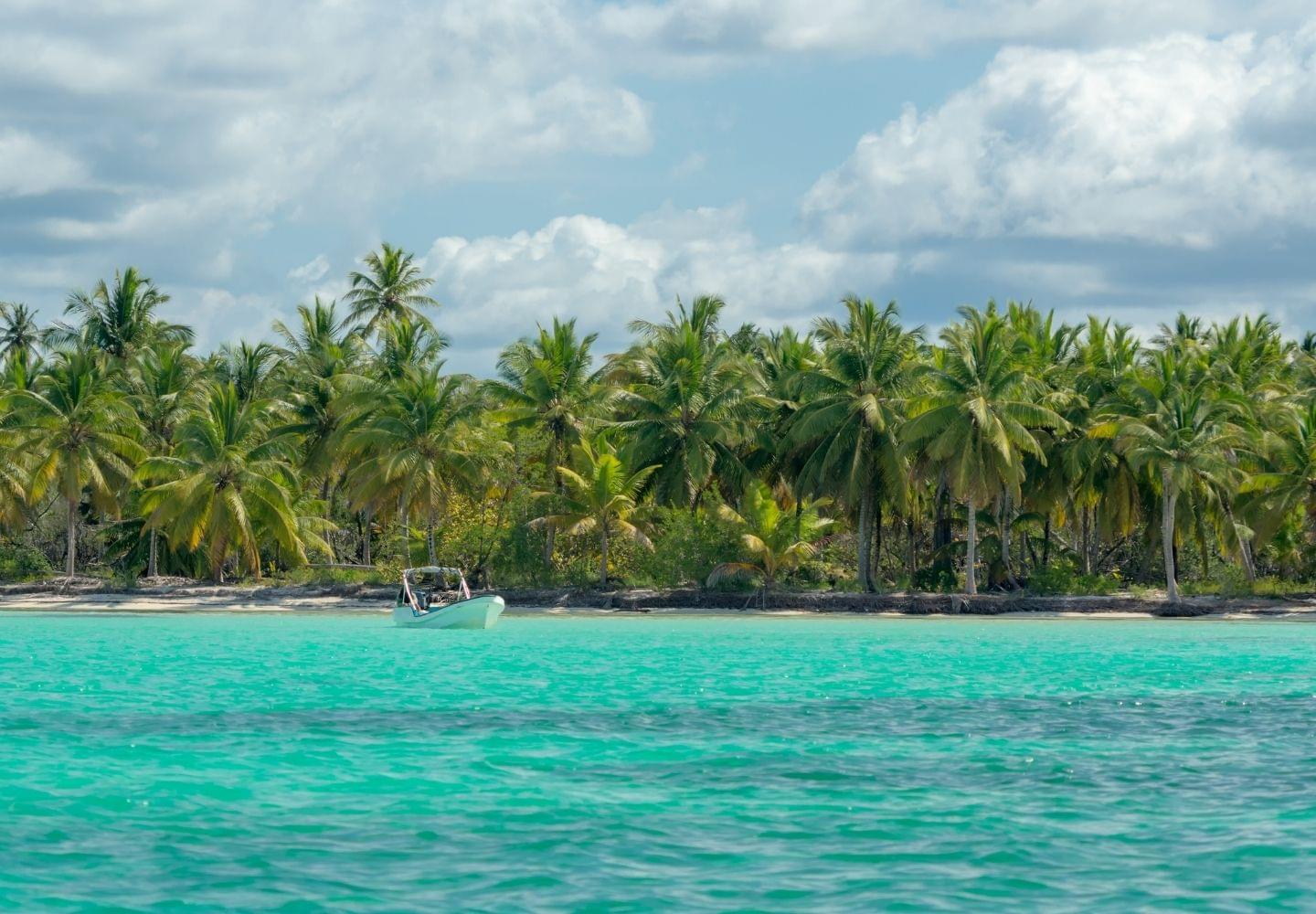
Nobody wades into the Dominican Republic’s best snorkeling. You board a boat for it — usually a catamaran with a bar and a schedule, sold through a resort activities desk — because the DR is not a shore-reef island like Bonaire. It is the Caribbean’s busiest resort country, its snorkeling is packaged as excursions, and the whole game is knowing which excursion, from which coast, deserves your one morning of good light.
That is a game I know from the selling side. I spent over ten years in the Key West charter boat industry putting people out on exactly this kind of trip, and I grew up in Puerto Rico, directly across the Mona Passage from this coastline — the same trades, the same winter swell, the same Caribbean lee. Read the DR like a boat schedule instead of a beach brochure and the decisions get easy.
The short version: Bayahibe, a fishing village on the sheltered southeast coast, is the honest capital of Dominican snorkeling — the closest port to everything good in the country’s best water. If you are staying in Punta Cana, your best snorkel decision is a transfer. And if your dates land between 15 January and 31 March, Samaná’s humpbacks outrank every reef in the country.
Where the snorkeling actually is
The DR is the second-largest country in the Caribbean, and its four snorkel coasts do not connect in any practical way — you pick one when you book your hotel, usually without knowing it.
| Coast | Fly into | Base | The water |
|---|---|---|---|
| Southeast (Caribbean) | PUJ | Bayahibe | Catalina Island and The Wall, Saona and the Piscina Natural, Catalinita — the country’s best snorkeling, on its calmest sea |
| East (Atlantic) | PUJ | Punta Cana / Bávaro | An excursion port, not a reef. Boats leave here for the southeast |
| North (Atlantic) | POP | Sosúa | The one real shore-entry bay, plus the Cayo Arena sandbar run |
| Samaná Peninsula | AZS | Santa Bárbara / Las Galeras | Humpbacks 15 Jan – 31 Mar, Cayo Levantado, Playa Rincón |
Santo Domingo (SDQ) adds a wildcard: La Caleta, the country’s oldest underwater park, sits beside the airport itself. And the geography carries one rule worth a laminated card: the south coast is the lee. The trades blow out of the east near enough year-round and the north coast takes the winter swell — that is why Cabarete, next door to Sosúa, is a surf town — while the southeast sits in sheltered water where a small catamaran can hold a schedule. That, not marketing, is why the industry concentrates at Bayahibe. It is the logic that organizes the whole Caribbean snorkeling map — find the lee, find the boats — and Puerto Rico, across the passage, plays by identical rules.
Bayahibe, the honest capital
Bayahibe is a working village with a beach full of moored pangas, twenty minutes east of La Romana, and essentially every worthwhile boat in the southeast leaves from it or from the Dominicus resort strip next door. The tour buses from Punta Cana all end up here anyway — about an hour on the road before their guests ever smell salt water1 — which is the quiet tell about where the good water is.
The coast it serves is protected twice over. Saona and the channel behind it sit inside Parque Nacional Cotubanamá, whose entry fee is RD$250 for foreign visitors (about US$4), RD$100 for Dominicans, paid at booths in Bayahibe and Boca de Yuma and folded into almost every tour price.1 The wider coast is the Santuario Marino Arrecifes del Sureste (SAMAR) — at over 1,800 km² the country’s second-largest protected area, co-managed since 2022 by a consortium that includes FUNDEMAR, the Dominican marine research foundation that has monitored these reefs since 2011 and runs its coral work out of Bayahibe itself.2
Be clear-eyed about what “protected” buys you in 2026. The Caribbean has lost roughly half its hard coral cover since 1980, and the 2023 marine heatwave took 16.9% regionally in a single year.3 The DR was inside that event, not beside it. What the southeast still has is what a snorkeler actually uses: calm, clear, shallow water, fish in real numbers, rays on the sand, and structure — and an unusually serious management and restoration effort for a mass-market coast. Come for that, and skip any brochure that promises you 1985.
Sleeping here instead of Punta Cana converts every trip on this page from a 10-to-13-hour excursion day1 into a half day. Bayahibe’s hotels run from village guesthouses to the all-inclusives on Dominicus beach — Iberostar Selection Hacienda Dominicus is the pick of those, a short walk from the dive boats with decent swimming off its own sand.
Catalina Island and The Wall
Isla Catalina lies about 2.4 km off La Romana, a flat scrub island ringed by the best snorkel water in the country — and it is a National Monument with its own small entry fee, which the operators fold into the trip price.4
The site that earns the trip is The Wall, off the island’s north side. The reef lip sits at about five meters, then the face falls away past forty into blue water, with visibility routinely in the 10–20 m band.5 For a snorkeler the lip is the whole show, and it is a genuinely good show: work the edge slowly and you get the drama of the drop with the light of the shallows — parrotfish and butterflyfish over the coral heads, yellow stingrays on the sand between them, moray eels and lobster tucked into the ledges.4 The face itself is dive territory; on a boat that carries both, snorkelers hold the top of the wall while the bubbles work below.
Skill floor: low, with the caveat that this is open-water snorkeling off a boat, not a wade. Take the vest, float still, and let the edge come to you; the shallow second stop on the island’s sandy west side is where kids and nervous swimmers get their easy 40 minutes.
From Bayahibe it is a 30-minute crossing; ScubaCaribe runs it as a US$100 day with lunch, open bar and the Monument fee included.4 From the Punta Cana strip, the full-day Catalina snorkeling tour is the established version of the same water with the road transfer built in — about 90 minutes of driving each way,6 which is the honest price of a Bávaro hotel.
Saona, the Piscina Natural and Catalinita
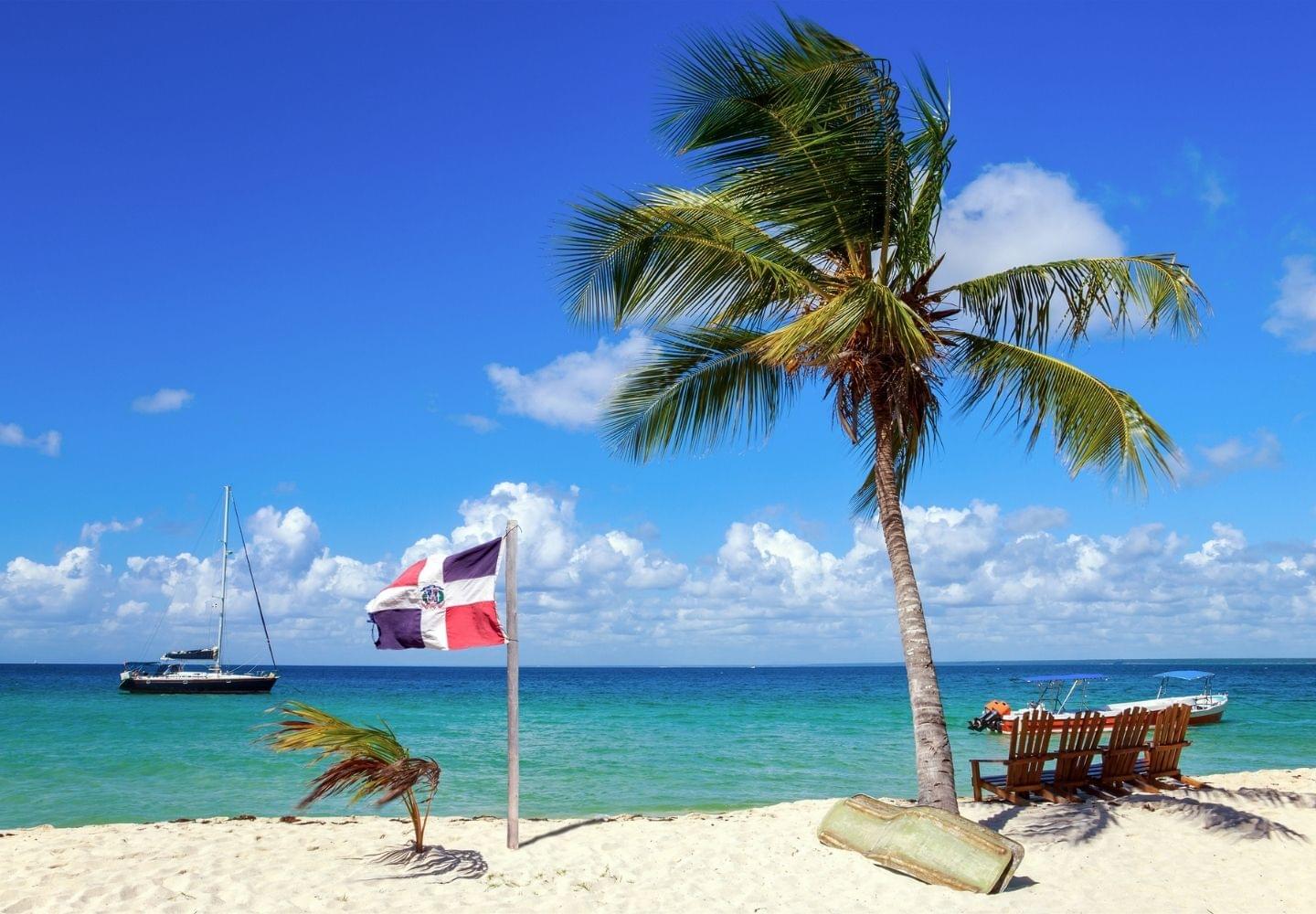
Saona is the most famous boat trip in the country, and you should know exactly what it is before you spend a day on it: a beach-and-boat spectacle with snorkeling attached, not a reef pilgrimage. Done right it is a spectacular day. The classic circuit runs speedboat out and catamaran back (or the reverse), with the swim stops at the Piscina Natural — a waist-deep sandbar in turquoise water where cushion sea stars sit scattered across the bottom — plus beach time on the island and lunch under the palms.7
Two pieces of operator’s advice. First, the starfish: keep them under the water. Lifting one out for a photograph stresses the animal, the wardens will call you on it, and the picture is better through the surface anyway. Second, the difference between a good Saona day and a floating nightclub is the operator and the departure time — the small eco-operators out of Bayahibe run quieter boats to the quieter corners. Seavis Bayahibe is the standard-setter: US$105 including park fees, lunch and gear, adding the Mano Juan fishing village and the untouched Canto de la Playa beach at the island’s far end, with snorkel stops over shallow coral gardens.7
The quiet end of the park is Isla Catalinita, a small cay past Saona’s eastern tip where the longer circuits stop to snorkel the Catuano channel — turtles graze here in the mornings, with rays and the occasional nurse shark over the shallows.8 If a tour offers Catalinita, that is the tour to take.
From Punta Cana, the Saona day trip with the natural pool is the well-reviewed standard version; Bayahibe-based operators sell the same island for US$60–90 without the bus.1
Punta Cana: what “snorkeling included” actually buys
Punta Cana is where most readers of this page are staying, so here is the straight version. The strip faces the open Atlantic, the nearshore is sandy-bottomed and roped into swim zones against constant boat traffic, and shore snorkeling along Bávaro is thin — sparse life over sand, in water that carries more chop than the Caribbean side ever sees.9 Cabeza de Toro, the calmer bay south of Bávaro, is the exception with something to look at from shore.69
The restoration story here is real and worth respecting at its actual size. Fundación Grupo Puntacana and FUNDEMAR, with The Nature Conservancy, farm staghorn coral on nursery frames off this coast — one November 2019 outplanting alone put 1,722 fragments onto the Cabeza de Toro sites, and over three-quarters were alive a year later.10 Genuine, patient work; also a garden bed rather than a reef. Excursions that visit the nurseries are showing you the future tense, and every “coral reef experience” on the strip should be read in that light.
So spend Punta Cana money one of two ways. Take the transfer — Catalina and Saona both collect from strip hotels, at the cost of the bus hours — or book the best of the local water: a small-group reef catamaran out of Bávaro with a capped headcount is a completely different animal from the 60-seat party boats, and the offshore patch reefs have far more life than the roped beach ever will.
Sosúa and the north coast
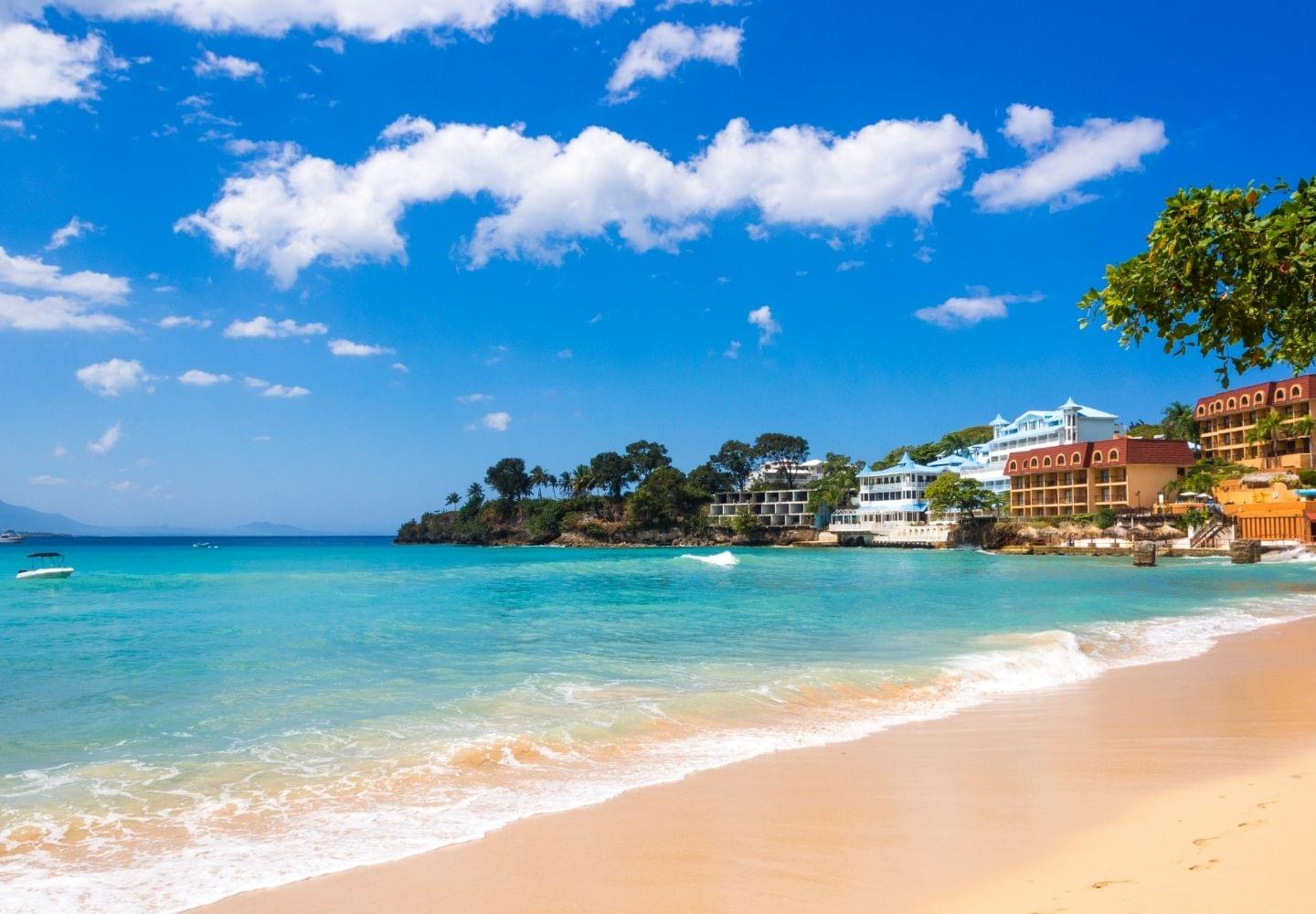
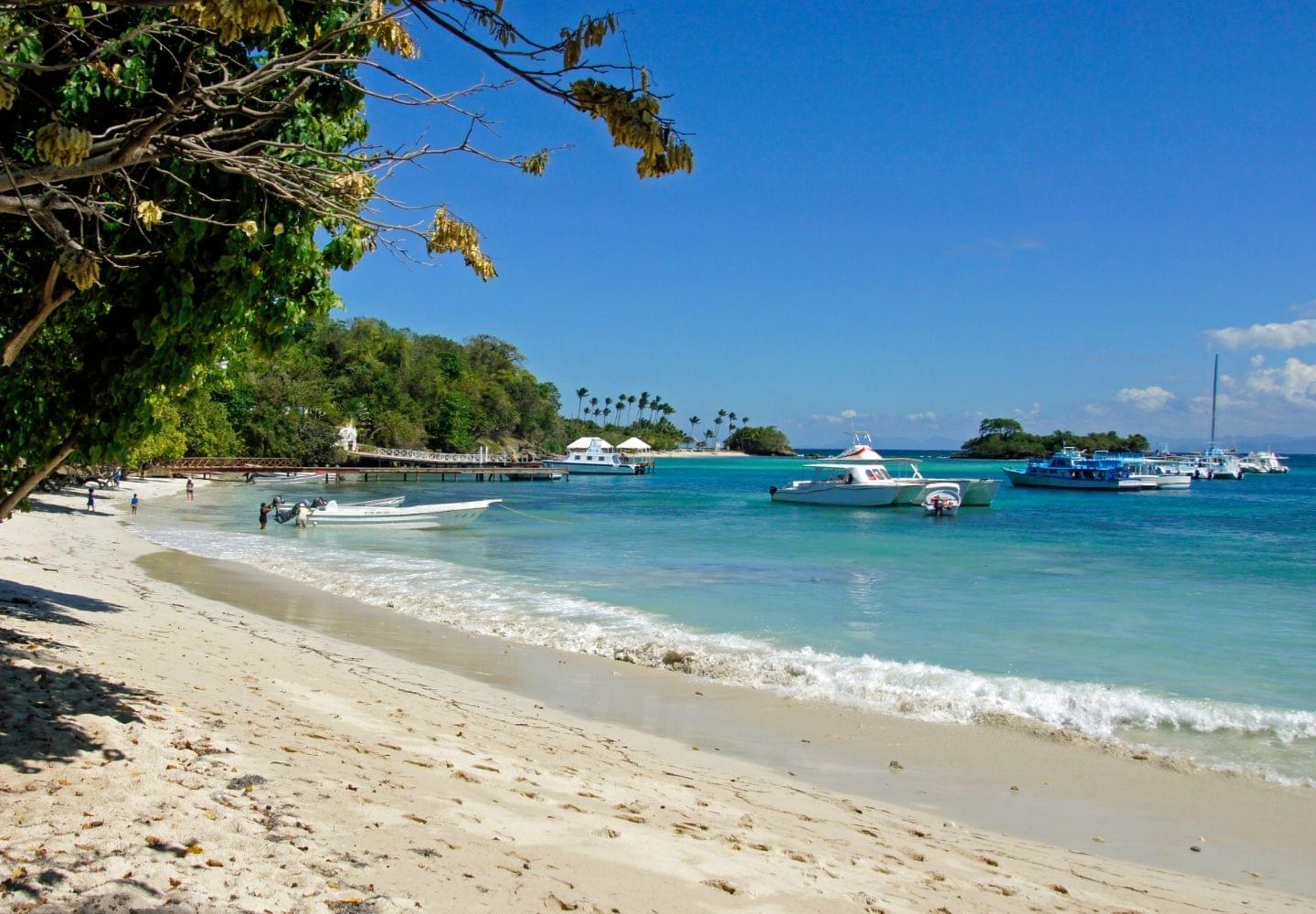
Sosúa Bay is the country’s one first-rate shore entry: a horseshoe of calm water tucked into cliffs on a coast that otherwise belongs to surfers, twenty minutes from Puerto Plata’s airport. You walk in off the sand, and the working end of the bay — Three Rocks and Los Cabezos, where the fish concentrate — is a short guided swim or glass-bottom boat hop away. Guided snorkels off the beach run about US$35 with gear and vests, past blue tangs, yellowtail snappers and sergeant majors, and the good operators here pointedly do not feed the fish.11 The bay’s newest landmark is Atabey, a five-meter steel-and-mineral figure of the Taíno mother goddess sunk as a reef-restoration armature — the largest underwater sculpture in the Caribbean, and an easy, strange, memorable snorkel.12
Sosúa is also mid-renaissance: the beachfront was rebuilt end to end — new promenade, services, and a proper vendors’ plaza replacing the old shack line — and inaugurated on 27 April 2026, an investment north of RD$600 million.13 The glass-bottom economy that has always run this beach came through the rebuild intact. One sailor’s caveat for the whole coast: this is the Atlantic side, and when a winter north swell runs, even the bay feels it at the mouth. Go in the morning — and on the days the surfers up the road are grinning, this is not your coast.
Cruise passengers and Puerto Plata guests can do the bay as a half-day snorkel and beach tour; basing here is cheap and easy, with Sosúa’s hotels a fraction of southeast resort prices.
The north’s big swing is Cayo Arena, a sandbar the size of a tennis court off Punta Rucia, ringed by shallow reef in the clearest water on this coast. It is a proper expedition — a cross-country drive to Punta Rucia, then a speedboat, with a ride through the Estero Hondo mangrove channel on the way back — and the full-day Cayo Arena tour collects from Puerto Plata, Sosúa and Cabarete hotels. The snorkeling is clouds of sergeant majors and snappers in chest-deep water — go for the setting and the fish, arrive on the first boat, and be swimming before the day-trip fleet stacks up at eleven.
Samaná: whales first, snorkeling second
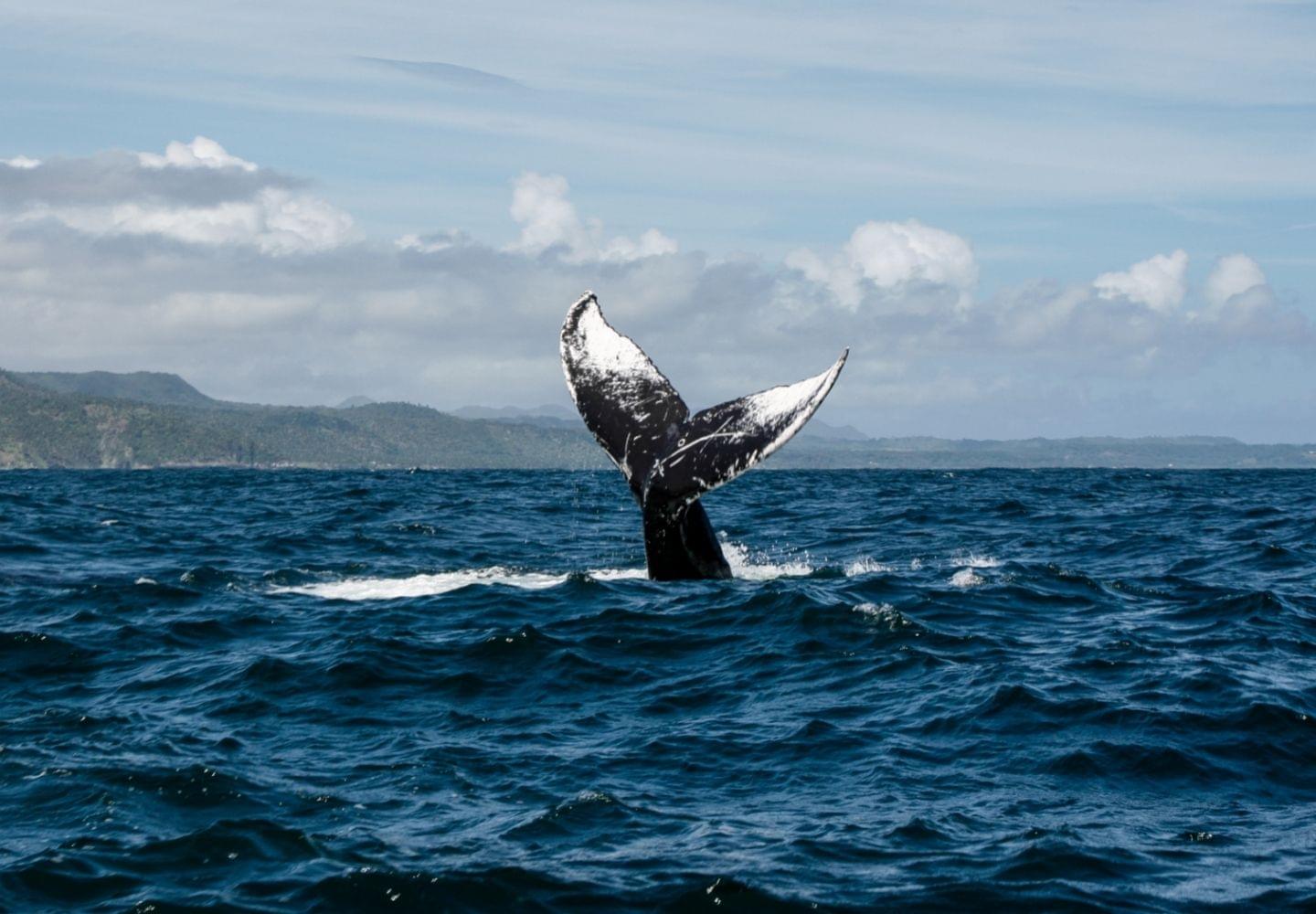
Between mid-January and the end of March, the Samaná Peninsula has the best marine wildlife encounter in the Caribbean, and if your dates overlap it, plan the whole trip around it. North Atlantic humpbacks breed and calve in these waters every winter, and the state runs the show properly: the official season is 15 January to 31 March, opened each year by the Environment Ministry, which issued 46 environmental authorizations for 2026 — 43 for the Samaná observation fleet, 3 for boats out of Puerto Plata — under the management regime of the Banco de la Plata y la Navidad marine mammal sanctuary.14
Book Whale Samana, the operation founded in 1983 by marine mammal specialist Kim Beddall, who is still narrating from the flybridge. Trips run US$65 for adults and US$35 for children from the Samaná town dock, once daily early and late in the season and twice daily through the mid-February-to-mid-March peak — and for US$5 more the boat drops you at Cayo Levantado for the afternoon,15 the palm-covered island in the bay whose beach day pairs naturally with a morning of whales. (Its hotel, incidentally, is now Cayo Levantado Resort, relaunched in June 2023 — guides still selling it as the Bahía Príncipe are four years stale.16) The same tour is bookable ahead of your trip through Viator, and in February that is worth doing — the fleet is capped, and the good boats fill.
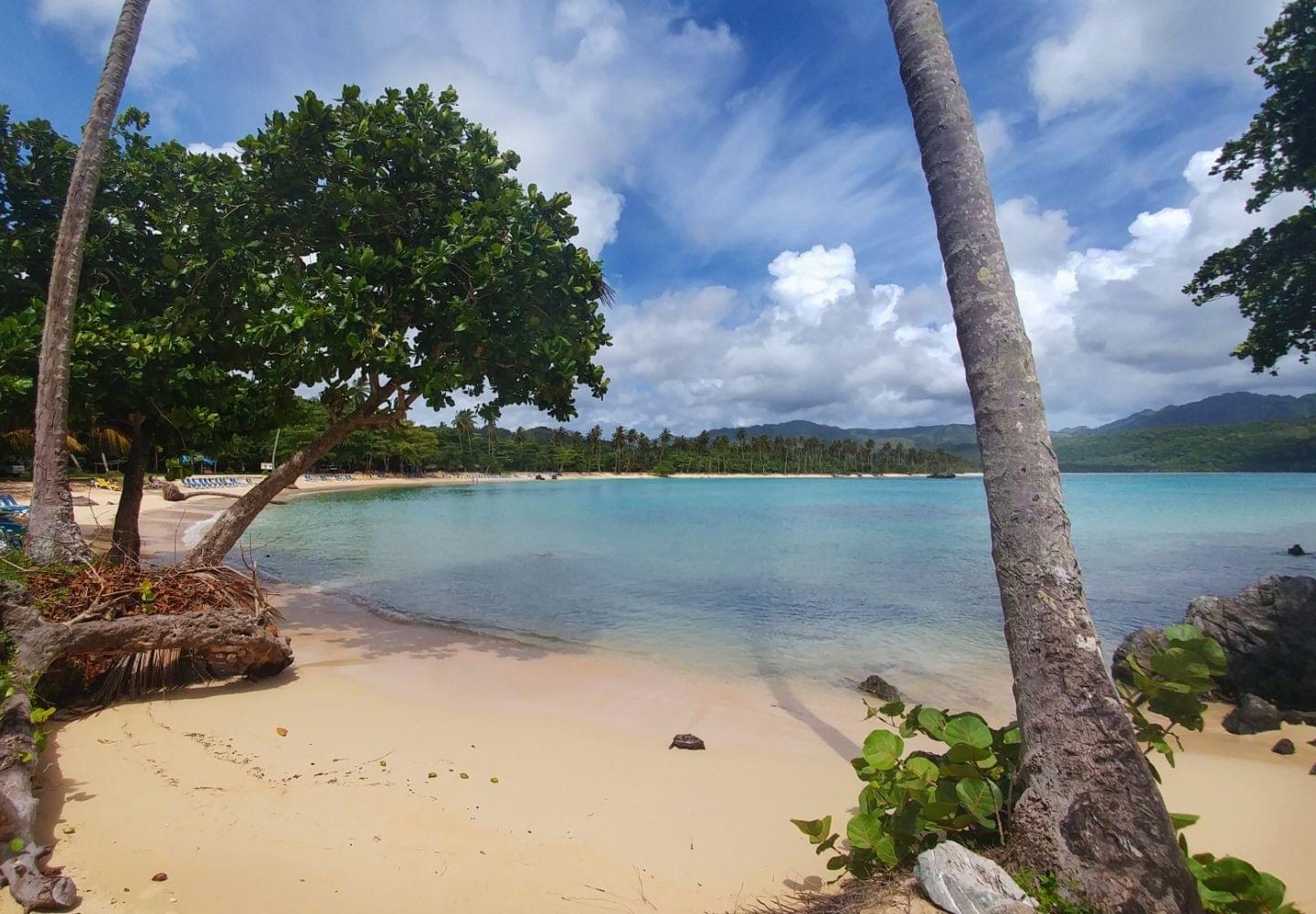
The peninsula’s snorkeling proper is casual rather than world-class, and its best expression is Playa Rincón near Las Galeras — one of the great beaches of the Caribbean, reached by a 15-to-20-minute boat from Las Galeras for about US$25 return (the 4x4 track in is rough enough that the boat is the better call). Snorkel the calm western end over sand and scattered rock; the eastern end takes the swell.17
The bay tours are watch-from-the-boat, full stop. The in-water humpback operation is the Silver Bank, the breeding bank inside the sanctuary about 100 km offshore, and it runs on scarcity: three permitted liveaboard operators — Aquatic Adventures, Conscious Breath Adventures and the Aggressor fleet — take small groups out for week-long trips between January and April.18 Soft in-water encounters with resting whales, snorkel gear only. It books out close to a year ahead, so it is a trip you plan the calendar around, the same migration that fills the Turks and Caicos channels each winter.
La Caleta, the Santo Domingo wildcard
If your DR time is Santo Domingo time, the country’s oldest underwater park sits, improbably, beside Las Américas airport. Parque Nacional Submarino La Caleta covers 10 km² of coast running from Las Golondrinas cave to Punta Caucedo, over depths from 6 m to 180 m, and its headline residents are wrecks: the Hickory, a salvage ship deliberately sunk in 1984 as an artificial reef, lies at about 18 m, with the Limón, Capitán Alsina and Don Quico deeper still.19 Read those numbers as a snorkeler: the wrecks are dive sites. What you get on a mask and fins is the shallow reef terrace inside the cove — worthwhile on a calm day, and the Boca Chica dive shops that work the park take snorkelers along on the easy sites. It is the right half-day for a capital layover, not a reason to change coasts.
When to go
Punta Cana’s monthly water temperatures, with what each month is actually running:20
| Month | Water | What’s running |
|---|---|---|
| January | 80.4 °F / 26.9 °C | Dry season; whale season opens 15 Jan14 |
| February | 79.7 °F / 26.5 °C | Peak whales, dry, calm — the year’s best month |
| March | 79.5 °F / 26.4 °C | Coolest, clearest water; whales to 31 Mar |
| April | 80.4 °F / 26.9 °C | Dry season winds down; crowds thin after Easter |
| May | 81.7 °F / 27.6 °C | Shoulder; green season begins |
| June | 82.8 °F / 28.2 °C | Hurricane season opens 1 Jun21 |
| July | 83.3 °F / 28.5 °C | Warm and breezy; strong mid-summer trades |
| August | 84.0 °F / 28.9 °C | Storm risk climbing |
| September | 84.6 °F / 29.2 °C | Peak of the season, 10 Sep21 |
| October | 84.6 °F / 29.2 °C | Warmest water, biggest gamble |
| November | 83.3 °F / 28.5 °C | Season ends 30 Nov; improving weekly |
| December | 81.7 °F / 27.6 °C | Dry season returns; holiday crowds and prices |
February and March win, because the dry season’s calm, clear mornings9 overlap the whale season — nowhere else in the Caribbean stacks its two best cards in the same six weeks. The water never drops below 79 °F, so a rash guard covers most people year-round and a shorty is a comfort choice for repeated drops, not a necessity — the full reasoning is in what to wear snorkeling.
Treat hurricane season with respect rather than fear. It runs 1 June to 30 November, peaking around 10 September,21 and this coast takes real hits — Fiona came ashore beside Punta Cana on 19 September 2022 as a Category 1 with 90 mph winds.22 A September all-inclusive deal is priced that way for a reason. And in any season, book the boats for your first mornings, not your last: a blown-out trip early in the week reschedules; the same cancellation on departure eve is just money gone.
Dominican Republic snorkeling FAQ
Frequently asked questions
Is Punta Cana good for snorkeling?
Not off the beach, and the excursion desks know it. The nearshore along Bávaro is sandy-bottomed, roped into swim zones and busy with boat traffic, so what "snorkeling included" usually means is borrowed gear inside the ropes — Cabeza de Toro is the one stretch worth a morning on its own. Punta Cana works as a port rather than a reef: spend your snorkel budget on the full-day boats to Catalina or Saona, or on a genuine small-group reef catamaran, and treat everything else as a swim.
How much does snorkeling in the Dominican Republic cost in 2026?
Out of Bayahibe, a full Saona day runs about US$60–90 and a Catalina day about US$100 with lunch, gear and fees included; from Punta Cana the same trips cost US$70–115 because of the road transfer. The Cotubanamá park fee behind the Saona trips is RD$250 for foreign visitors — about four US dollars, folded into almost every tour price — and Catalina carries its own small National Monument entry fee, likewise usually included. A guided shore snorkel at Sosúa is about US$35 with gear, and a Samaná whale-watching seat is US$65 with the island's most experienced operator.
Can you snorkel from the beach anywhere in the Dominican Republic?
One place properly — Sosúa Bay on the north coast, where a sheltered horseshoe of calm water starts at the sand and the good fish life sits a short guided swim or glass-bottom ride away. Beyond Sosúa, Bayahibe's Dominicus beach has patches worth a look, and the calm western end of Playa Rincón near Las Galeras is a beautiful swim with a mask. Every other named site in the country — Catalina, Saona, Cayo Arena, the wreck park at La Caleta — is a boat trip.
When is the best time to snorkel in the Dominican Republic?
February and March, and it is not close. You get the dry season's calm mornings and clear water at about 79–80 °F, and the official humpback season in Samaná runs 15 January to 31 March, so one trip covers the reefs and the whales. Hurricane season is 1 June to 30 November with its peak around 10 September — late summer water is the warmest of the year, and the bet on your one good morning is the worst.
Can you swim with the humpback whales in the Dominican Republic?
Not on the Samaná Bay tours — those are watch-from-the-boat, and rightly so. In-water encounters happen out on the Silver Bank, the breeding ground inside the country's marine mammal sanctuary about 100 km offshore, and only aboard week-long liveaboard trips run by three permitted operators between January and April. Berths sell out close to a year ahead, so that trip gets booked before the flight does. It is the same migration that fills the Turks and Caicos channels each winter.
Sources
Footnotes
-
“Saona Island Day Trip: Tours, Prices and Tips.” Dominican Republic 365, published 3 July 2026, checked 8 August 2026. dominicanrepublic365.com. Cotubanamá entry RD$250 foreigners / RD$100 Dominicans at the Bayahibe and Boca de Yuma booths, tour price ranges by departure point, and the roughly one-hour, 68 km Punta Cana–Bayahibe transfer inside a 10-to-13-hour excursion day. ↩ ↩2 ↩3 ↩4
-
“Impact Investing for Marine Sanctuary ‘Arrecifes del Sureste’.” The Commonwealth Blue Charter case study. thecommonwealth.org. SAMAR’s >1,800 km² extent, its rank among Dominican protected areas, the co-management consortium, and FUNDEMAR’s reef monitoring since 2011. ↩
-
Status and Trends of Caribbean Coral Reefs: 1970–2024. Global Coral Reef Monitoring Network, 9 December 2025. gcrmn.net. Caribbean hard coral cover down 48% since 1980, with the sharp regional losses of 1998 (−9.0%), 2005 (−17.1%) and 2023 (−16.9%). ↩
-
“Catalina Island Snorkeling.” ScubaCaribe, Bayahibe, checked 8 August 2026. scubacaribe.com. US$100 trip price with the Isla Catalina National Monument entrance fee, catamaran, lunch and open bar included; lobster, yellow stingrays and morays listed at The Wall. ↩ ↩2 ↩3
-
“Catalina Island Snorkeling Dominican Republic.” GetYourGuide listing t620490, checked 8 August 2026. getyourguide.com. The Wall from about 5 m down past 40 m, with visibility 10–20 m. ↩
-
“Snorkeling in Punta Cana: avoid the high expectations.” Living Punta Cana. livingpuntacana.com. The Atlantic-side conditions, boat-traffic limits on shore snorkeling, Cabeza de Toro as the exception, and Catalina at roughly 90 minutes’ drive. ↩ ↩2
-
“Saona Crusoe VIP.” Seavis Bayahibe, checked 8 August 2026. seavisbayahibe.com. US$105 adult including park fees, lunch, drinks and gear; Punta Cana transfer US$25; the Piscina Natural, Mano Juan and Canto de la Playa stops with shallow coral-garden snorkeling. ↩ ↩2
-
“Can You See Sea Turtles Around Saona Island?” Quetzal Excursions. quetzalexcursions.com. Morning turtle sightings toward the Catuano channel and rays and starfish at the sandbar stops on the Saona circuits. ↩
-
“Best Snorkeling in Punta Cana — Complete Guide 2026.” Everything Punta Cana, checked 8 August 2026. everythingpuntacana.com. Bávaro’s sparse nearshore life over sand and boat traffic, and the December-to-April dry season as the calm, clear window. ↩ ↩2 ↩3
-
“Dominican Republic — Restoration.” Reef Resilience Network case study. reefresilience.org. The FGPC–FUNDEMAR–TNC staghorn program: 1,722 fragments outplanted at Cabeza de Toro in November 2019, survivorship above 76% in October 2020. ↩
-
“Snorkeling & Glass Bottom Boat Tours in Sosua Bay.” Superior Dive Sosua, checked 8 August 2026. superiordivesosua.com. US$35 guided snorkel with equipment and vests from the beach, the Three Rocks and Los Cabezos sites, the Atabey visit, the species list and the no-fish-feeding policy. ↩
-
“Tallest Underwater Sculpture Finds Home in Sosua Bay.” Sea Horse Ranch. sea-horse-ranch.com. Atabey: a 16-foot steel and pH-neutral cement figure of the Taíno deity, sunk in Sosúa Bay as a coral-restoration structure — the largest underwater sculpture in the Caribbean. ↩
-
“Sosua gets renovated beachfront.” DR1, 28 April 2026. dr1.com. Inauguration of the rebuilt beachfront and vendors’ plaza on 27 April 2026, at an investment above RD$600 million under Ceiztur. ↩
-
“Medio Ambiente da apertura a temporada de avistamiento de ballenas jorobadas 2026.” Ministerio de Medio Ambiente y Recursos Naturales, 16 January 2026. ambiente.gob.do. The official 15 January – 31 March season in Samaná Bay and the Banco de la Plata y la Navidad sanctuary, and the 46 authorizations issued for 2026 (43 Samaná, 3 Puerto Plata). ↩ ↩2
-
“Whale Watching Tours.” Whale Samana, checked 8 August 2026. whalesamana.com. US$65 adults / US$35 children from the Samaná town dock; one sailing daily 15 January–5 February and 14–31 March, two daily 6 February–13 March; Cayo Levantado add-on US$5; operating since 1983 with a marine mammal specialist aboard. ↩
-
“Bahia Principe Hotels & Resorts Set to Open Cayo Levantado Resort.” Hospitality Net. hospitalitynet.org. The rebuilt island property’s relaunch as Cayo Levantado Resort, welcoming guests from 1 June 2023. ↩
-
“Playa Rincón, Las Galeras — How to Get There & What to Expect.” Exploras, checked 8 August 2026. exploras.do. The 15-to-20-minute shuttle boat from Las Galeras at about US$25 return, the rough 4x4 track, and the calm western end for swimming and snorkeling. ↩
-
“Silver Bank.” Wildlife Worldwide. wildlifeworldwide.com. The three permitted Silver Bank operators — Aggressor Fleet, Aquatic Adventures and Conscious Breath Adventures — running week-long in-water humpback trips in the January-to-April season. ↩
-
“Parque Nacional Submarino La Caleta.” Dominican Republic Ministry of Tourism. godominicanrepublic.com. The park’s 10 km² from Las Golondrinas cave to Punta Caucedo, depths of 6–180 m, the Hickory sunk in 1984 at about 18 m, and the deeper Limón, Capitán Alsina and Don Quico wrecks. ↩
-
“Punta Cana water temperature.” Seatemperature.info, monthly averages, checked 8 August 2026. seatemperature.info. ↩
-
“Tropical Cyclone Climatology.” NOAA National Hurricane Center. nhc.noaa.gov. Atlantic season dates of 1 June – 30 November and the 10 September climatological peak. ↩ ↩2 ↩3
-
National Hurricane Center Tropical Cyclone Report: Hurricane Fiona (AL072022). NOAA. nhc.noaa.gov. Fiona’s 19 September 2022 Dominican landfall near Punta Cana as a Category 1 hurricane with 90 mph sustained winds. ↩
Nick Brisson — Co-founder, OutsiderView
Nick was born in Florida and grew up in Puerto Rico. He spent over ten years in Key West working in the boat charter industry, put four to five years into snorkeling and spearfishing the Florida Keys reef, and lives in Jacksonville Beach now, where he surfs year-round.