Snorkeling
Key West snorkeling: reef trips, beach spots, Dry Tortugas, prices
The good snorkeling in Key West is on the reef, about seven miles offshore, so you need a boat. Where the boats go, the one beach worth a swim, the Dry Tortugas day trip, 2026 prices, the calm months, and how the reef is doing.
We earn a commission on purchases made through links on this page, at no extra cost to you. It never affects which products we recommend.
On this page
- Where to snorkel in Key West
- Where do the snorkel boats go?
- How healthy is the reef?
- Can you snorkel from the beach in Key West?
- The backcountry and the sandbar
- Dry Tortugas: the best snorkeling near Key West
- How to pick a snorkel boat in Key West
- What snorkeling in Key West costs in 2026
- When is the best time to snorkel in Key West?
- The rules on the reef
- Where to stay for snorkeling in Key West
- Frequently asked questions
Yes, you can snorkel in Key West, but not from the town beaches. The reef is about seven miles offshore, and you need a boat to get there.1 A three-hour reef trip costs about $40 to $85 a person. From shore, the one spot worth a swim is Fort Zachary Taylor State Park. For the clearest, easiest water, take the ferry 70 miles west to Dry Tortugas.
I worked the Key West charter boat trade for over ten years, putting guests on this reef. On my days off I went back out to snorkel and spearfish it. Most bad days out here start on land: the wrong day, the wrong boat, or the wrong idea of what’s out there.
Where to snorkel in Key West
| Spot | How you get there | Good for |
|---|---|---|
| Sand Key | Reef boat, 7 miles out | The best-known reef, with a lighthouse |
| Rock Key | Reef boat | A quieter reef, a mile from Sand Key |
| Eastern Dry Rocks | Reef boat | A reef being replanted with coral |
| Western Sambo | Reef boat, off Boca Chica Key | A no-fishing reserve east of town |
| Fort Zachary Taylor | Walk in from the beach | The only good shore spot |
| The backcountry | Small boat, north side | Calm, shallow water on windy days |
| Dry Tortugas | Ferry or seaplane, full day | The best water, right off the beach |
Where do the snorkel boats go?
The big boats use four reefs: Sand Key, Rock Key, Eastern Dry Rocks and Western Sambo. You don’t get to pick. Fury, the biggest operator in town, says it on its booking page. The captain picks the reef each morning, from that day’s wind and water. Every boat in town works the same way.
- Sand Key sits 7 miles out, under an old iron lighthouse. The coral ridges are 5 to 20 feet deep. On the south side the bottom drops to 65 feet and more.1 It’s the reef everyone names, and the busiest.
- Rock Key is a mile east of the Sand Key light, 5 to 35 feet deep.1 On a crowded morning it’s often the better swim.
- Eastern Dry Rocks is 5 to 35 feet deep, with long fingers of coral and sand in between.1 It’s one of seven reefs in the Keys that NOAA and its partners are replanting.2
- Western Sambo lies off Boca Chica Key, east of town. It’s a no-fishing reserve, and it’s the longest run from the harbor, so it gets fewer boats.
Sand Key, Rock Key and Eastern Dry Rocks sit a mile or two apart on the same reef line. That’s how a two-stop trip works. The boat just moves down the reef.
Clear water is never a sure thing. At Sand Key you can see anywhere from 15 to 110 feet, depending on wind, waves and tides.1 Fury says it straight: many days the water is clear to 80 feet or more, and some days it isn’t.
How the captain picks on a windy morning
The captain reads the wind first. Key West’s usual breeze blows from the east or southeast. It pushes clean ocean water onto the reef, but it also builds chop. A north wind after a cold front does the opposite. The sea on the reef goes flat, but the wind pushes cloudy water off the shallow flats and out over the coral.
Then comes the radio. The first boats out call in what they see, and the rest of the fleet picks from that. If the mooring balls at one reef are full, the boat moves on. No one may drop anchor on the coral.
So a flat, calm morning after two days of north wind can still mean murky water. A breezy morning at the end of a settled week is often the better swim. Ask the crew at check-in what the wind has done for two days, not what it’s doing now. A good crew will give you a straight answer.
How healthy is the reef?
Not as healthy as the photos. You should know that before you pay.
A coral disease showed up in Florida in 2014, and by 2019 it was spreading fast off Key West. It hits more than 20 kinds of reef-building coral, and a sick coral often dies within months.3 Then came the summer of 2023, the hottest water ever measured on Florida’s reef. Elkhorn and staghorn coral, the big branching corals that once built this reef, died off. In the Keys, 98 to 100% of them were lost. Scientists now call both “functionally extinct” in Florida.4
2026 is another bad year. By mid-September, the heat on the Keys reef was nearly as high as the 2023 record.5 If you snorkel here this fall, expect white, bleached coral. Some of it will recover. Some won’t.
The reef’s shape is still there, with its ridges, ledges and sand channels. Sea fans and sponges still sway on it. And the fish are still here: parrotfish, snapper, grunts, barracuda, and now and then a turtle or a nurse shark. Go for the water and the life on it, not for the colors in old postcards.
Be gentle at Eastern Dry Rocks. Divers have planted young coral there, and the goal is living coral on a quarter of the reef.2 Don’t stand, and don’t touch. For the reef story across the whole chain, see our guide to snorkeling in the Florida Keys.
Can you snorkel from the beach in Key West?
Only at one beach.
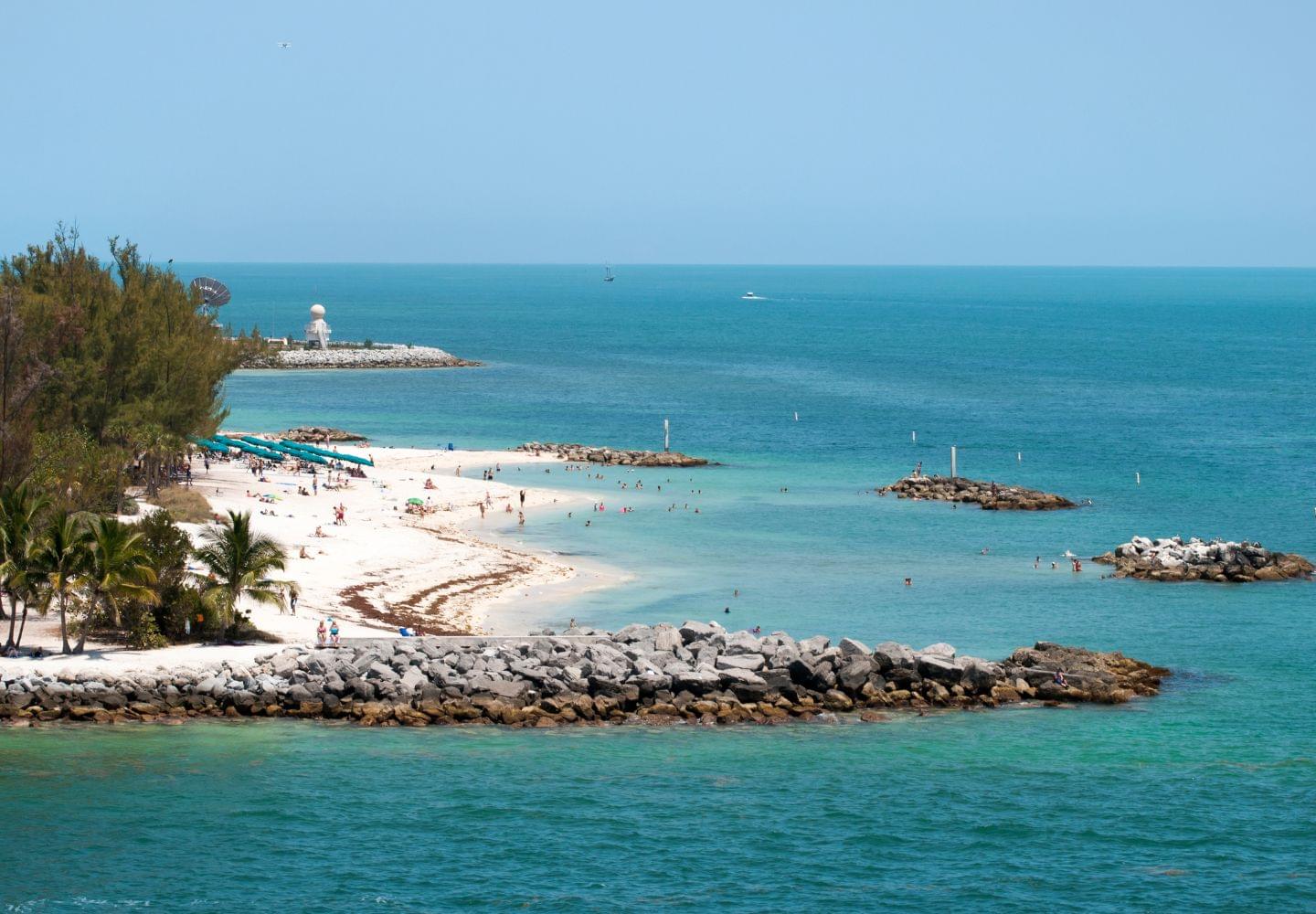
Fort Zachary Taylor Historic State Park, at the west end of the island, is the best shore snorkeling in Key West. Here the coral grows close in, between the seagrass and the beach, which is not how most reefs work. Swim along the rock piles and you’ll see brain coral, sponges, snapper and small barracuda. In 2016 and 2017, Mote Marine Laboratory planted more than 12,000 bits of coral along a snorkel trail here.6
- It costs $6 a car, plus 50 cents a person. The park is open 8 a.m. to sunset, every day.
- Wear water shoes. The way in is rocky.
- A beach hut rents snorkel gear from 10 a.m. to 6 p.m.
- Stay near the rocks. Big boats use the channel off the point.
Higgs Beach, Smathers Beach and the other town beaches are sand and seagrass, with a few small fish. In all my years putting people on boats, nobody came back from Higgs Beach and told me it made their trip. Go to Fort Zach. Florida’s best snorkeling from shore is up on the mainland, at Blue Heron Bridge near West Palm Beach. Our guide to shore snorkeling on the Florida mainland covers it.
The backcountry and the sandbar
North of Key West, on the Gulf side, the water is shallow and calm, with mangrove islands all around. Much of it is the Key West National Wildlife Refuge: 375 square miles, reached only by boat, and open to snorkeling day and night.
The snorkeling there is small patch reef and sponges in a few feet of water. There’s less to see than on the outer reef, but it’s sheltered. When the wind is up on the ocean side, a backcountry trip may be the only one that runs. Cottrell Key is the spot most of these boats use.
Danger Charters’ half-day trip mixes kayaking, snorkeling and a sunset in about four and a half hours. It’s a good pick for a group that doesn’t all want the same day.
A sandbar trip is not a reef trip. The boat runs out to a shallow bank, and you stand in waist-deep water, swim and drink. It’s a fine day out. But lots of people book one thinking they’re going snorkeling. This private sandbar and paddle trip runs about three and a half hours by pontoon, with kayaks and paddleboards on board. Book it for what it is.
Dry Tortugas: the best snorkeling near Key West
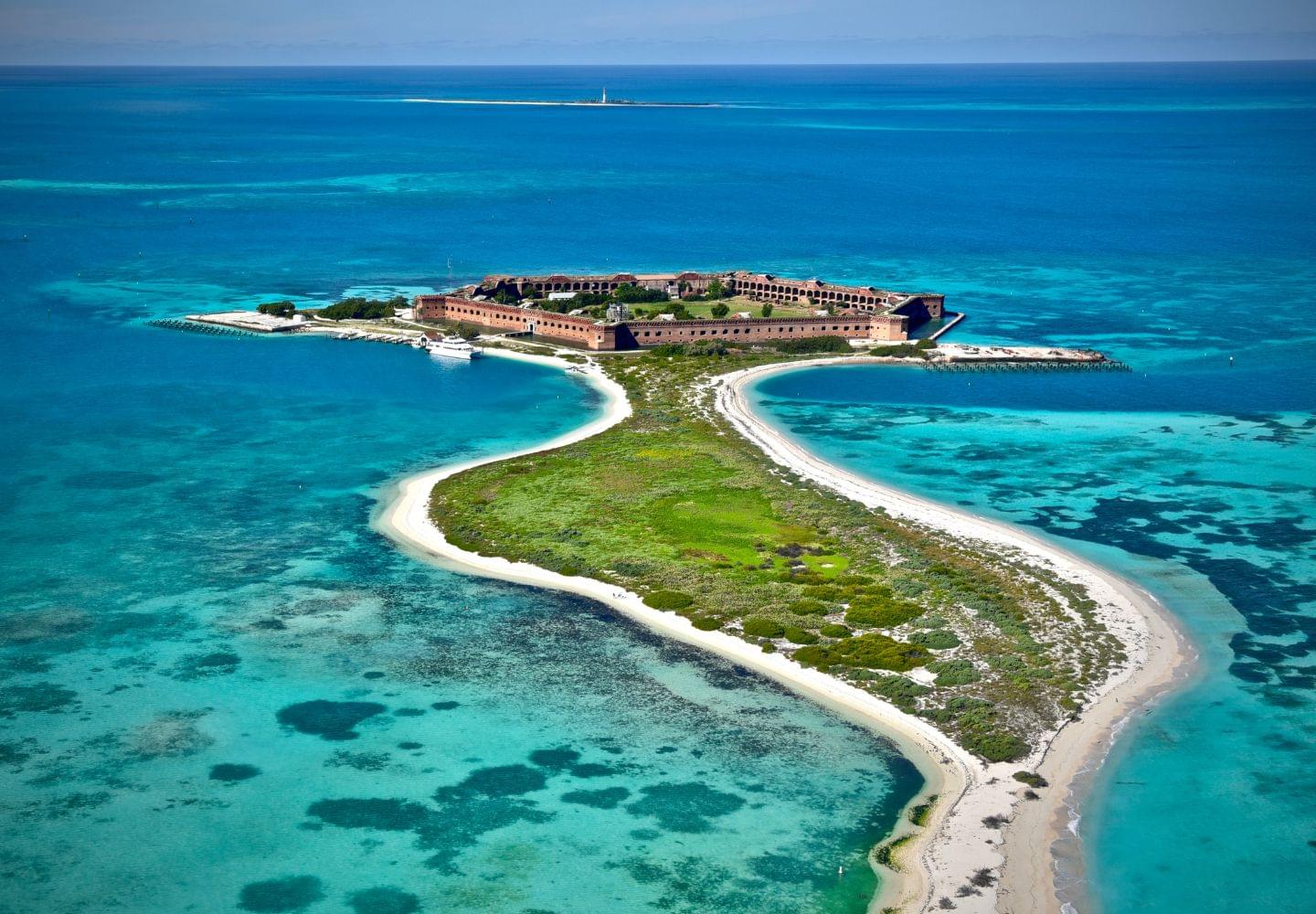
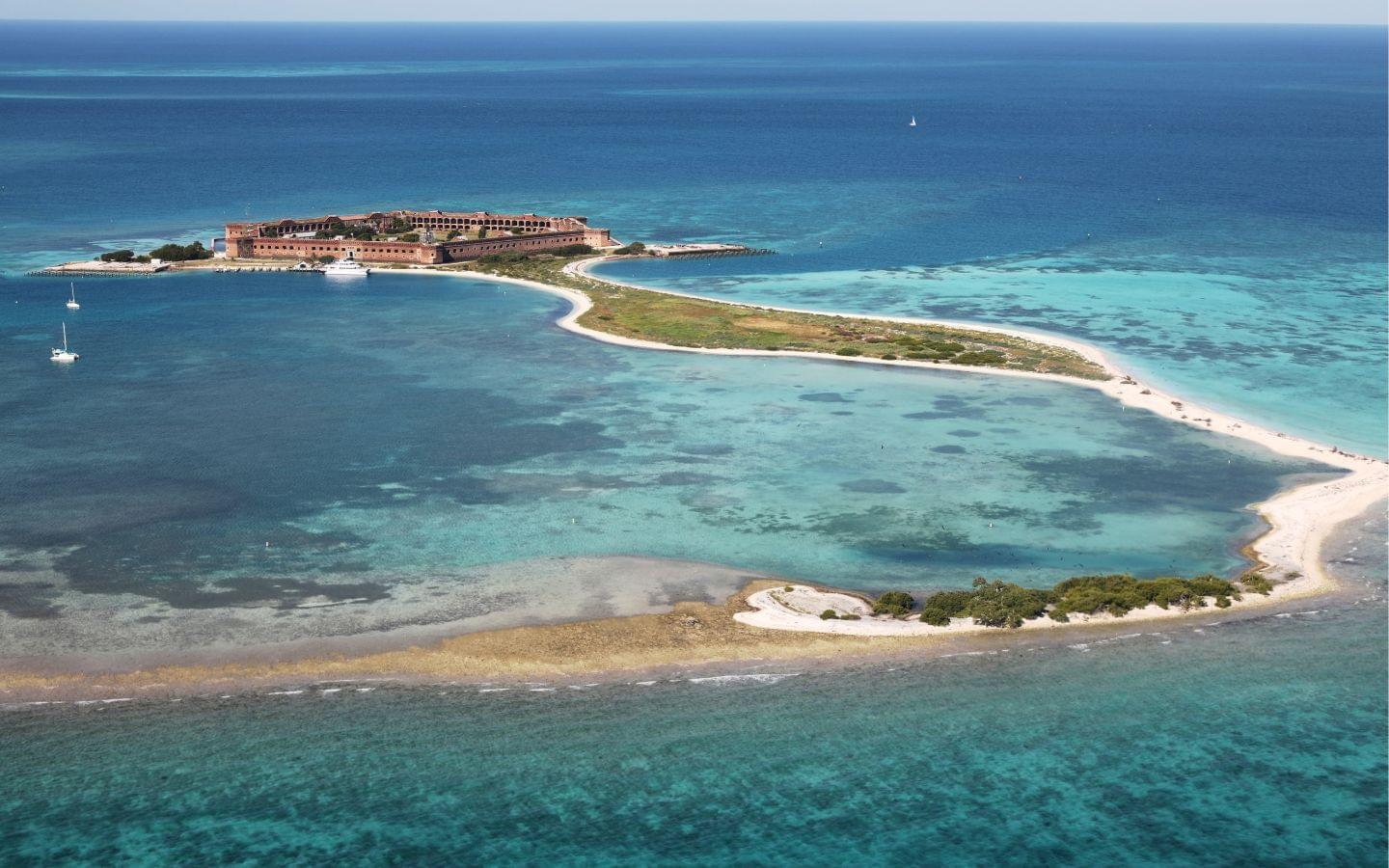
Dry Tortugas National Park is about 70 miles west of Key West.7 You get there by ferry, seaplane or private boat. You snorkel right off the beach by Fort Jefferson, in water from knee-deep to about 15 feet. For a beginner, it’s the easiest good water in the Keys. The 2023 heat hit here too, but the fish and the clear water are still worth the trip.
Parts of the fort’s moat wall have been closed for repairs. Signs and swim lanes in the water show where you can go.7
The ferry. The Yankee Freedom leaves the ferry terminal at 100 Grinnell Street at 8 a.m. It gets back about 5:30 p.m. The ride takes about 2 hours and 15 minutes each way, which leaves you about four and a half hours on the island. Tickets start at $245. That covers the $15 park fee, breakfast, lunch, snorkel gear and a 45-minute tour of the fort. The ferry sells out weeks ahead. You can also book it as a Dry Tortugas day trip.
The seaplane. Key West Seaplane Adventures costs $527 per adult for a half day, with at least two and a half hours on the island. A full day is $910, with at least six and a half hours. The $15 park fee is extra for anyone over 16. You’re paying for the flight, low over the flats, as much as for the swim.
A private boat. A private charter with a captain can make the run on a full day, on your own schedule. It’s priced by the boat, so it only makes sense for a group.
Book it for the first good day of your trip, not the last. Seventy miles of open sea is the first trip to go when the wind blows. Booked early, a bad forecast costs you a new date. Booked on your last day, it costs you the trip.
How to pick a snorkel boat in Key West
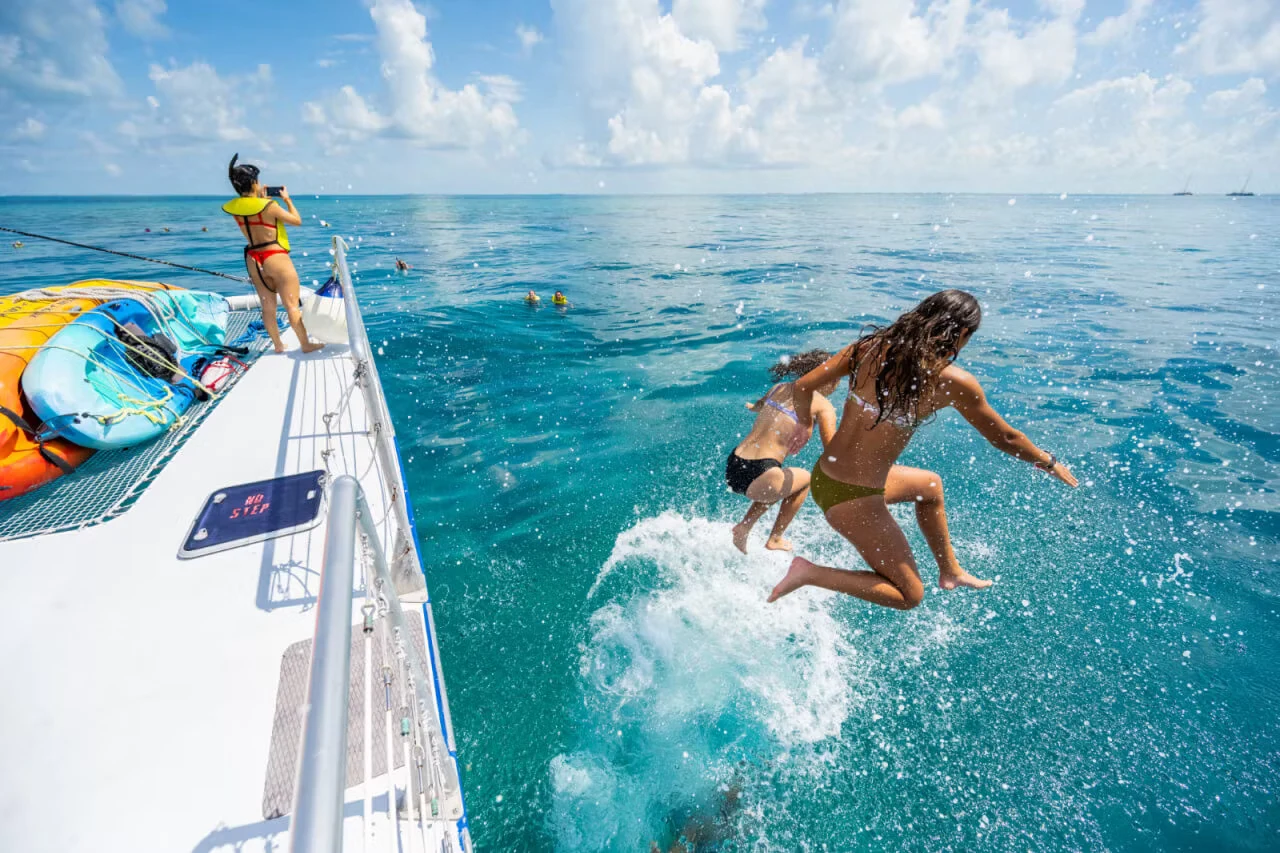
Most reef trips run three hours on a big catamaran. Fury, Sebago and Sunset Watersports run the biggest fleets. Fury leaves from the Opal Key marina at Front and Greene streets. Its 65-foot boats carry over 100 people, with a stairway into the water, a fresh-water rinse and toilets. Gear, a short lesson and reef-safe sunscreen come with the ticket. Sodas and water are free the whole time. Beer and wine come out after the swim, not before. Any crew that pours before you get in is telling you something.
The two-stop trip is worth the upgrade. It isn’t twice the snorkeling. It’s a second chance at clear water. If the first reef is stirred up, the second often isn’t. You can book Fury’s two-stop Double Dip or Sebago’s afternoon reef sail online.
Big boat or small boat? A big boat is steady in chop and cheap. On a quiet week you might share it with 20 people. On a busy one, it’s 100. A small charter costs more, because you pay for the whole boat. But it goes where you ask and waits for slow swimmers.
Check the Blue Star list. NOAA’s Blue Star program marks operators who teach guests how to treat the reef. In Key West the snorkel and dive list includes Fury, Honest Eco, Lost Reef Adventures, Southpoint Divers, Captain’s Corner, Captain Hook’s and Finz.
What the booking page won’t tell you
- You can’t stand up out there. Fury says you must know how to swim, because seven miles out there’s nowhere to touch bottom. Not every boat sets the bar there, so ask. If you’re a weak swimmer, wear a snorkel vest and tell the crew at check-in. It changes where they put you and who watches you. Our guide to snorkeling if you can’t swim has more.
- Three hours on the boat is not three hours in the water. The ride out and back takes over an hour of it.
- A canceled trip is the good outcome. If the crew calls it for weather, you get a new date or your money back. The bad day is the one that runs, safely, into cloudy water. So book early in your stay and keep a spare day.
Mistakes I watched first-timers make
- Taking the seasick pill on the boat. By then it’s too late. Take it before you board.
- Trusting a mask they’d never tried on. If you own a mask that fits, bring it. A leaky one ruins the swim.
- Standing on the reef to fix a mask. It kills coral and cuts feet. Roll onto your back and float, or swim to the boat.
- Kicking hard right over the reef. Big fins stir up sand. Slow down, stay high, and let the fish come to you.
- Burning the backs of their legs. An hour face-down in Key West sun will do it. Wear a rash guard and leggings. Our guide on what to wear snorkeling has the full list.
What snorkeling in Key West costs in 2026
| Trip | Price |
|---|---|
| Fort Zachary Taylor, from the beach | $6 a car, plus 50¢ a person |
| Fury morning reef trip, 3 hours | $39 to $59 adult; $32 to $43 ages 4 to 10; under 4 free |
| Fury two-stop Double Dip, 3 hours | $63 to $84 adult |
| Sunset Watersports reef trips, 3 hours | about $46 to $75 |
| Sebago morning or afternoon reef sail | $69.95 list, often on sale |
| Yankee Freedom ferry to Dry Tortugas | from $245, park fee included |
| Seaplane to Dry Tortugas | $527 half day, $910 full day, plus $15 park fee |
These prices come from the operators’ own sites on 27 September 2026. They move with the season and the day of the week. Operators often run their own sale codes, so check their sites before you book anywhere else.
When is the best time to snorkel in Key West?
Average water temperature by month:8
| Month | Water | Month | Water |
|---|---|---|---|
| January | 69°F | July | 87°F |
| February | 70°F | August | 87°F |
| March | 75°F | September | 86°F |
| April | 79°F | October | 82°F |
| May | 83°F | November | 76°F |
| June | 86°F | December | 72°F |
April to June is the best time for most people. The water is warm, the winter fronts are done, and the worst of hurricane season is still ahead.
July to September has the warmest water and often the flattest sea. It’s also hurricane season, which runs from June 1 to November 30 and peaks from mid-August to mid-October, per the National Hurricane Center. In hot years like 2023 and 2026, these are the months the coral bleaches. Buy travel insurance for a September trip.
December to March still works, but it’s the season of canceled boats. Cold fronts roll through all winter. Behind each one the wind swings north, stirs up the flats and clouds the reef for days. At 69 to 72°F you’ll want a shorty wetsuit, and Fury rents them in limited sizes. Our guide to snorkeling in winter covers why wind matters more than water temperature.
Skip the two-day lobster mini-season at the end of July unless you’re hunting lobster. It’s the busiest two days on this water all year.
The rules on the reef
All of this water is in the Florida Keys National Marine Sanctuary. The four reef sites are no-take zones. On them:9
- Don’t touch or stand on coral, living or dead.
- Don’t take anything. That means no fishing, no spearfishing, and no shells or coral.
- Don’t feed the fish.
- Boats tie up to mooring balls. No one anchors on coral.
A new, stricter rulebook for the sanctuary took effect in March 2025. It applies only in the federal waters farther out. Florida’s governor vetoed it for state waters, within 3 miles of shore on the ocean side, so the old 1997 rules still apply there.10 The four rules above hold in both.
Key West once voted to ban sunscreens with oxybenzone and octinoxate. A 2020 state law stopped the ban before it began, so there’s no ban today. A long-sleeve rash guard beats any lotion, for the reef and for your back.
Where to stay for snorkeling in Key West
The reef is offshore, so any hotel works. What changes is your walk to the dock at 8 in the morning.
The Hyatt Centric Key West Resort and Spa sits on the Gulf side with its own dock, a short walk from the Historic Seaport and the Dry Tortugas ferry. Ocean Key Resort and Spa is at the harbor end of Duval Street, the closest of all to Fury’s dock at Front and Greene.
On the Atlantic side, The Reach has its own small beach. It’s the pick if you want a beach at the door and don’t mind a taxi to the boats.
With more days, drive 45 minutes up the highway to Looe Key, off Big Pine Key. It’s the best shallow reef in the chain. Our guide to snorkeling in the Florida Keys covers it and the other keys. And Cuba is just 90 miles south. Snorkeling in Cuba includes reef you can walk into at the Bay of Pigs.
Frequently asked questions
Is it worth snorkeling in Key West?
Yes, if you get on a boat. The reef is about seven miles out, and a three-hour trip costs $40 to $85. The town beaches are mostly sand and seagrass. If you can give it one full day, spend it at Dry Tortugas. The water there is the best near Key West.
Which beach in Key West is best for snorkeling?
Fort Zachary Taylor State Park, at the west end of the island. Swim along the rock piles off the beach. Coral grows close to shore there, and so do the fish. It costs $6 a car, plus 50 cents a person. Bring water shoes. The way in is rocky.
Is snorkeling better in Key West or Islamorada?
For reef close to shore, Islamorada wins. Its best patch reef is just over a mile out, in shallow water. Key West's reef is seven miles out. But Key West has far more boats. It's also the only place to catch the ferry to Dry Tortugas. Our Florida Keys guide compares the keys.
Do you need to know how to swim to snorkel in Key West?
On most reef boats, yes. Fury says so plainly. Seven miles out, there is nowhere to stand. Some crews will put a weak swimmer in a vest and keep an eye on them. Ask before you book, not at the dock. Our guide to snorkeling if you can't swim lists what to ask.
Can you snorkel in Key West in the winter?
You can, but plan for it. The water drops to 69°F in January, so wear a shorty wetsuit. Cold fronts bring north winds. They cloud the water and cancel boats, so leave spare days. Our guide to snorkeling in winter explains why wind matters more than warmth.
Resources
Footnotes
-
“Sand Key,” “Rock Key” and “Eastern Dry Rocks” Sanctuary Preservation Areas. Florida Keys National Marine Sanctuary, NOAA, read 27 Sept. 2026, Sand Key, Rock Key, Eastern Dry Rocks. ↩ ↩2 ↩3 ↩4 ↩5
-
“Restoring Seven Iconic Reefs: A Mission to Recover the Coral Reefs of the Florida Keys.” NOAA Fisheries, read 27 Sept. 2026, fisheries.noaa.gov. ↩ ↩2
-
“NOAA and Partners Respond to Ongoing Outbreak of Coral Disease in Florida.” National Ocean Service, NOAA, July 2019, oceanservice.noaa.gov. ↩
-
Cunning, R., et al. “Heat-driven functional extinction of Caribbean Acropora corals from Florida’s Coral Reef.” Science, 23 Oct. 2025, summary at news.miami.edu. ↩
-
“Florida Keys Regional Virtual Station.” NOAA Coral Reef Watch, degree heating weeks, data to 25 Sept. 2026, coralreefwatch.noaa.gov. ↩
-
“Key West reef restoration project surpasses 12,000-coral milestone.” Mote Marine Laboratory & Aquarium, 30 Aug. 2017, mote.org. ↩
-
“Frequently Asked Questions” and “Swimming, Snorkeling, and Diving.” Dry Tortugas National Park, National Park Service, read 27 Sept. 2026, FAQ, snorkeling. ↩ ↩2
-
“Florida Keys Weather & Climate.” Monroe County Tourist Development Council, read 27 Sept. 2026, visitfloridakeys.com. ↩
-
“Sanctuary Preservation Areas” and “Sanctuary Regulations.” Florida Keys National Marine Sanctuary, NOAA, read 27 Sept. 2026, SPAs, regulations. ↩
-
“Sanctuary moves forward with Restoration Blueprint in federal waters.” Florida Keys Weekly, 12 Mar. 2026, keysweekly.com. ↩

Nick Brisson — Co-founder, OutsiderView
Nick was born in Florida and grew up in Puerto Rico. He spent over ten years in Key West working in the boat charter industry, put four to five years into snorkeling and spearfishing the Florida Keys reef, and lives in Jacksonville Beach now, where he surfs year-round.