Snorkeling
Snorkeling in Jamaica: which coast, which boat, and when
Jamaica is a resort coast with snorkeling on it, not a reef destination — and that decides every booking. Where the water earns a morning after Melissa, what the fees actually are, and how to judge the excursion desk's snorkel trip before you pay for it.
We earn a commission on purchases made through links on this page, at no extra cost to you. It never affects which products we recommend.
On this page
- Where the snorkeling actually is
- What the storm and the heat left
- Doctor’s Cave Beach and the Montego Bay Marine Park
- Negril: Seven Mile Beach, Booby Cay and the cliffs
- Ocho Rios and the White River Fish Sanctuary
- Runaway Bay: the quiet answer
- Lime Cay, out of Kingston
- How to judge the resort snorkel trip
- When to go
- Jamaica snorkeling FAQ
Jamaica is not a snorkeling destination. It is a resort coast with snorkeling on it, and everything about planning the in-water part of a Jamaica trip goes better once you accept the difference. Nobody chooses this island the way they choose Bonaire — for the reef and nothing else. You choose Jamaica for Jamaica, land at Sangster with a resort booked, and then face the actual question, which is narrower and more useful: from my hub, which water is worth a morning, and which boat do I trust to take me there?
I spent over ten years in the charter business in Key West, on the operator’s side of exactly this transaction — the resort guest, the excursion desk, the boat that may or may not be worth the money. Jamaica runs that transaction at greater volume and with a wider spread between the good boats and the bad ones than anywhere else in the Caribbean, which is why this page spends as much time on how to buy the trip as on where the fish are.
It also deals honestly with the two things that have rewritten this coastline since most guides were last touched: the 2023–24 marine heatwave, and Hurricane Melissa, which in October 2025 hit Jamaica harder than any storm in its recorded history. The short version is better than you would guess. The details are below, with dates on every number.
Where the snorkeling actually is
Jamaica’s snorkeling lives on the north and west coasts, strung along the same corridor as the resorts. From Sangster International (MBJ), the island’s tourist gateway:
| Hub | From MBJ | The water | Who it suits |
|---|---|---|---|
| Montego Bay | Minutes | Doctor’s Cave Beach, the marine park’s reefs by boat | First-timers, short stays, cruise days |
| Negril | ~1 h 40 m1 | Booby Cay and the reef by boat; cliff entries on the West End | Couples, confident swimmers, anyone who hates crowds |
| Runaway Bay | ~1 h 15 m | Reef within reach of shore, quiet dive-shop coast | People for whom the snorkeling is the point |
| Ocho Rios | ~1 h 40 m–2 h1 | The White River Fish Sanctuary; the catamaran circuit | Families, cruise passengers, mixed groups |
| Kingston / Port Royal | Other side of the island — fly into Kingston | Lime Cay, by local boat | Independent travelers; the local’s answer |
Two planning consequences fall straight out of that table. Montego Bay is the only hub with water minutes from the runway, and its nearshore is better than its party-town reputation suggests, because it has sat inside a marine park for over thirty years. And Negril and Ocho Rios are far enough out that you pick one and stay there; the transfer is a half-day round trip, and the north-coast road after dark is nobody’s friend.
What the storm and the heat left
Get the hard part out of the way first, because your search results are full of 2021 pages pretending it never happened.
Hurricane Melissa came ashore near New Hope in Westmoreland on 28 October 2025 with sustained winds near 185 mph — the strongest landfall ever recorded in Jamaica, and its costliest disaster, with 45 lives lost.2 The southwest took the catastrophe: Westmoreland and St Elizabeth, Black River stripped of its roofs. Montego Bay flooded — the port, the airport terminal — and the World Bank and IDB assessed damage at US$8.8 billion.3
Nine months on, here is the state of the recovery where visitors go, per the Jamaica Tourist Board’s rolling tracker, checked 8 August 2026: Kingston and Port Antonio fully open; Negril largely open, with Royalton Negril and Grand Lido back on 25 August 2026; Ocho Rios predominantly open; Montego Bay mixed — Sandals Montego Bay returns 18 December 2026, and a string of big names (both Secrets resorts, Hyatt Zilara and Ziva, Breathless, Dreams, Jewel Grande) are listed for 2027.4
Underwater, the news is genuinely better. The first post-storm checks on the north coast’s sanctuary coral nurseries found a fraction of the feared damage — at Derby Beach in Trelawny, one nursery site came through with 100 percent survival and abrasion scars, and no unique coral strain was lost.5 The project’s lead, Felix Charnley, put it plainly: the day before, they believed they were back to square one, and they were not.5
The heat is the deeper wound. In the October 2023 global bleaching event, more than 90 percent of Jamaica’s corals suffered — the White River Fish Sanctuary’s own number6 — with thermal stress parked over the island for more than five months, among the longest anywhere in the Caribbean.7 Across the region, hard coral cover fell 16.9 percent in 2023 alone.8 Jamaica’s reefs were never coming into this from strength; the long regional decline the reef monitoring record documents since the 1970s runs straight through this island,8 and what recovery there is now runs through community sanctuaries and nurseries — including heat-resistant strains that took the 2023 summer without bleaching, which is why Caribbean restoration people watch this island closely.5
So set your expectations like this: you are coming for fish, structure, warm clear water and a handful of genuinely patrolled sanctuaries — not for fields of live coral. On those terms, Jamaica delivers. If dense, healthy reef is the point of the trip, be honest with yourself now and book Grand Cayman or Roatán instead; our Caribbean guide ranks the alternatives.
Doctor’s Cave Beach and the Montego Bay Marine Park
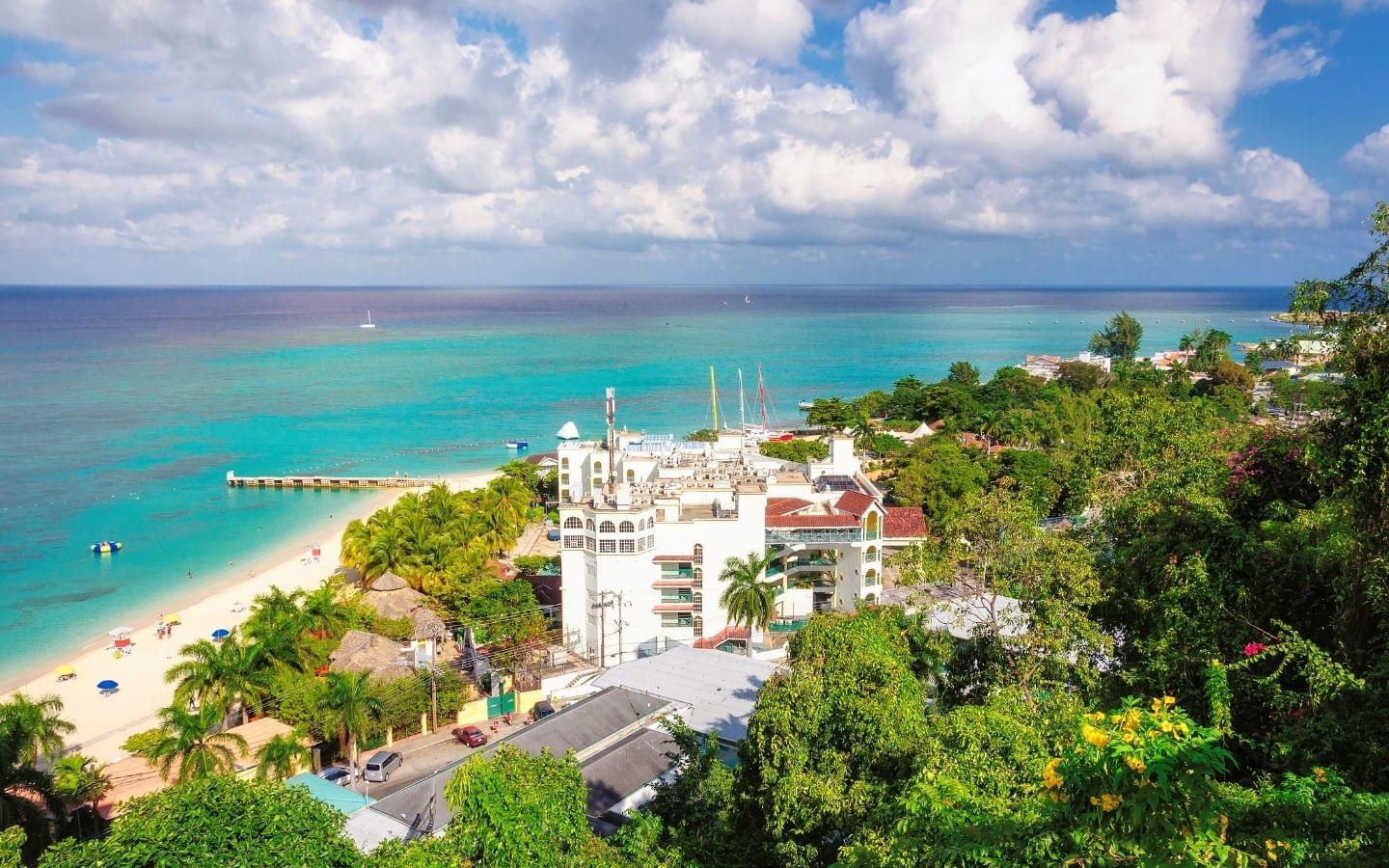
Doctor’s Cave is the best-run beach in Jamaica and the easiest first hour of snorkeling on the island. The bathing club has operated since 1906, when Dr Alexander McCatty donated the property and his medical friends gave it its name;9 today it is US$8 for adults, US$4 for children under 12, open 8:30 a.m. to 5:30 p.m. daily10 — half the internet still quotes the old US$6.
What you get for it: calm, genuinely clear water over sand and scattered rock, sergeant majors and wrasse in the shallows, lifeguards, and a clubhouse. The bottom nearest the sand is not a reef; swim out along the flanks of the swimming area and the rock patches carry the fish. Go at opening time — the beach sits on the cruise-ship circuit, and by late morning on a port day you are sharing it with a ship’s worth of company.
The water it sits in has been the Montego Bay Marine Park since 1992 — Jamaica’s first marine park, about 15 square kilometers of the bay, with two fish sanctuaries inside it (Bogue Lagoon and Airport Point) and rangers who enforce a spearfishing ban carrying a JMD$50,000 penalty.11 There is no separate user fee for snorkelers; the park’s own site publishes none.11 Three decades of protection is the reason the fish density here beats beaches twice as pretty elsewhere on the island.
The proper reefs of the park are offshore, and you reach them by boat. A morning snorkel tour out of Montego Bay buys about ninety minutes over the reef — sheet and brain coral, wrasse, parrotfish, rays if you are lucky — which is roughly three times the water time the catamaran circuit gives you. If your group wants the party version anyway, the marine-park snorkel cruise at least snorkels inside the protected area.
Where to sleep: the S Hotel sits directly on Doctor’s Cave, rode out Melissa at full occupancy without closing,12 and puts you in the water at 8:31. The wider Montego Bay hotel market is the deepest on the island — 300-plus properties — which is exactly why you check the reopening tracker before you fall for one.
Negril: Seven Mile Beach, Booby Cay and the cliffs
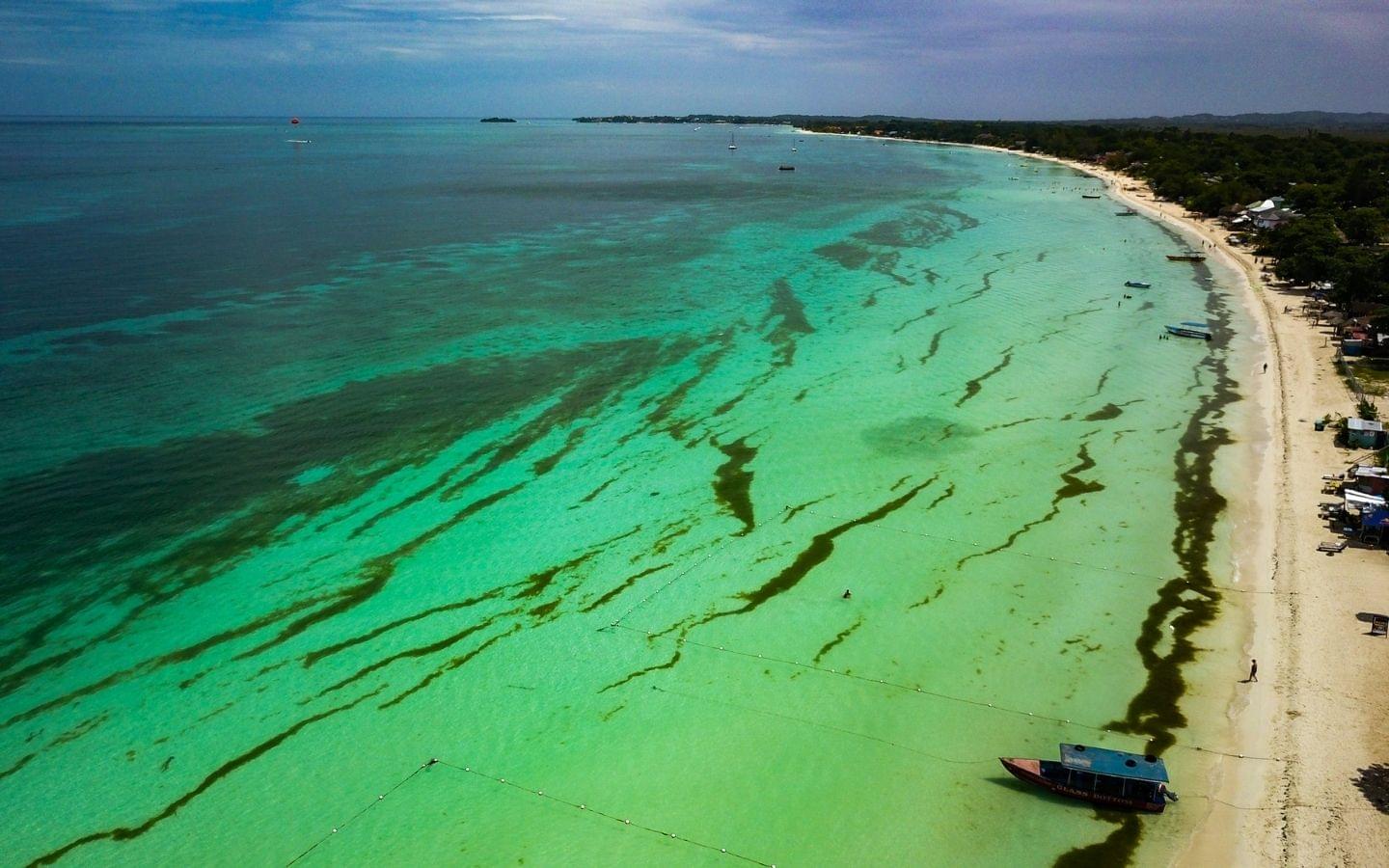
First, the record corrected: most of the internet — the old version of this page included — sells Seven Mile Beach as “incredible snorkeling right off the beach.” It is not. Seven Mile is a world-class swimming beach, miles of white sand over a sand bottom, which is precisely why there is little to snorkel from shore. The reef and the fish are offshore, inside the Negril Marine Park, designated in 1998.13
The standard way out is one of the glass-bottom snorkel boats working the beach and Bloody Bay, most of them combining a reef stop with Booby Cay, the scrap of island off Rutland Point named for its boobies. The shape of the trip is consistent across operators: ride out, an hour or so on the reef, then the cay, where vendors cook lobster you pay cash for; staying at a West End cliff hotel usually adds a pickup surcharge.14 A Booby Cay glass-bottom and snorkel run is the honest version of Negril snorkeling and the right first booking here.
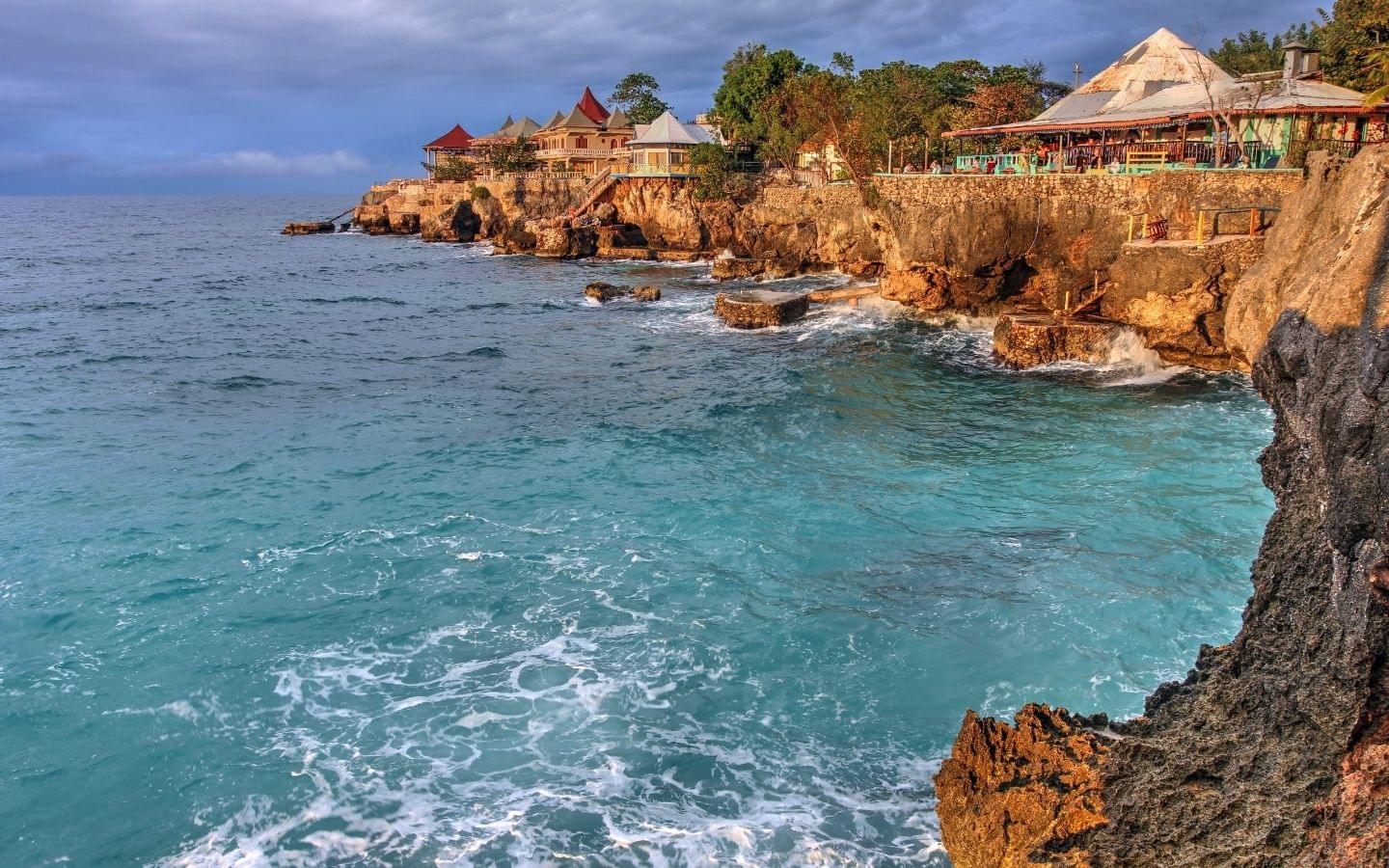
The better secret is at the other end of town. The West End cliffs are the best from-your-hotel snorkeling in Jamaica — ladder and rock entries straight off the limestone into deep, glass-clear blue, with caves and overhangs cut into the cliff base and fish holding in the shade of them. This is confident-swimmer water: no beach, no gradual entry, real depth under you from the first stroke, and on a swell day the ladders are unusable — judge it like a sailor, by what the wind has been doing since yesterday, not by how the surface looks from your balcony. On a calm morning there is no better value on the island, because it costs nothing.
The cliff hotel that made this famous is Rockhouse — thatched villas on the rock, ladders into the water below, and one of the fastest recoveries on the island: Melissa cost it landscaping, which it turned into sea views, and its foundation fed tens of thousands of meals into the relief effort.15 Negril as a whole reopened faster than anywhere else on the west coast, and its hotel market — beach on one side of town, cliffs on the other — is the one I would send a couple to first.
Ocho Rios and the White River Fish Sanctuary
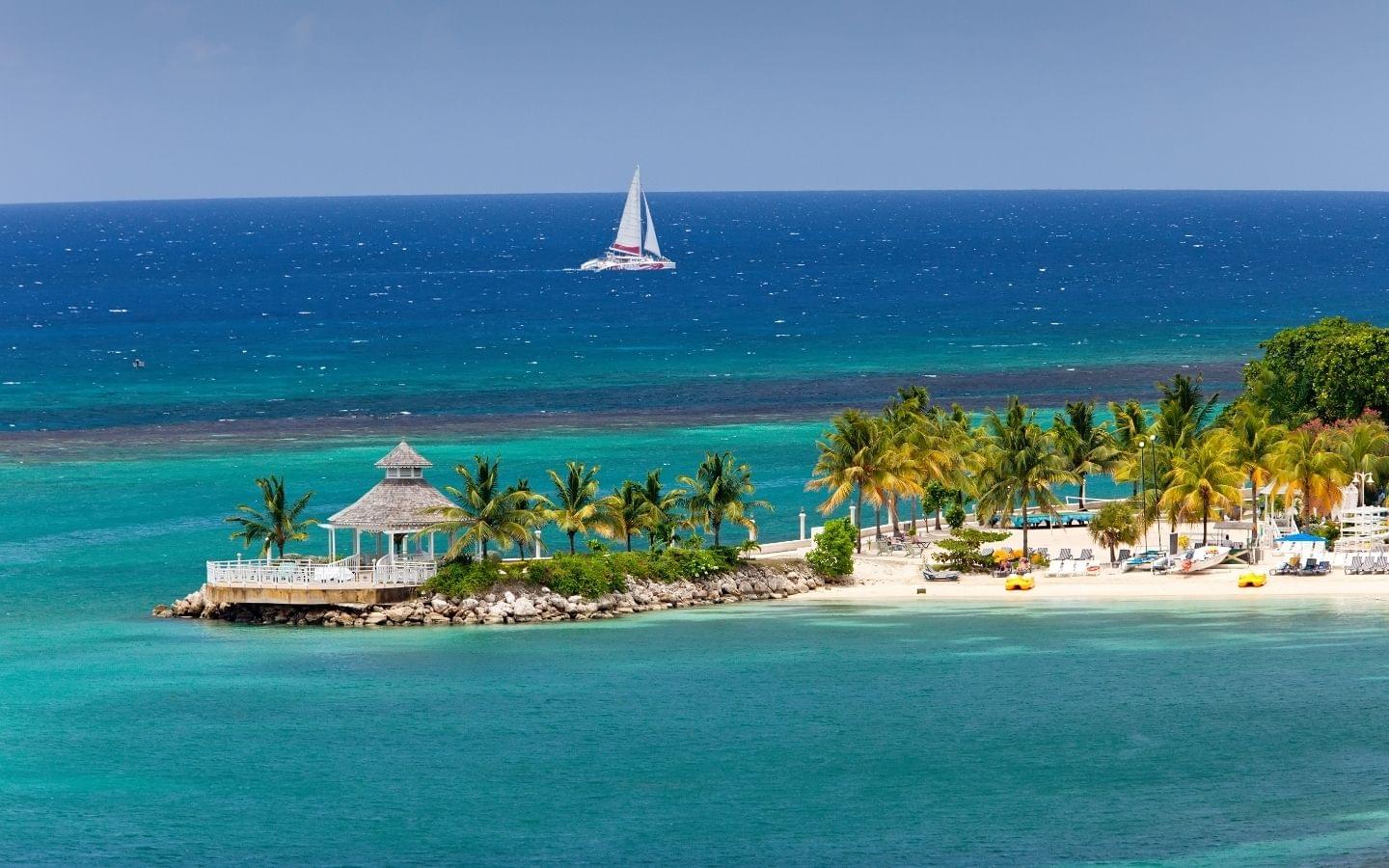
Ocho Rios is Jamaica’s cruise town, and its snorkeling economy is built accordingly: big catamarans running the same loop — a reef stop, an open bar, and Dunn’s River Falls. Understand what you are buying and it is a perfectly good day. The four-hour catamaran with an open bar and a Dunn’s River stop is the professionally run version of it. Expect thirty to forty minutes of actual water time in a large group — this is a cruise with a snorkel stop, not a snorkel trip — and take the morning departure, before the wind and the crowds are up.
The conservation story here is better than the party-boat surface suggests. The White River Fish Sanctuary, at the east end of town, is a community-run no-take area — a partnership of the local fishermen’s and marine associations — with wardens who patrol it and prosecute: ten arrests and six convictions since February 2024.6 Its coral nurseries are part of the island-wide restoration network that came through Melissa intact,5 and the fish biomass inside patrolled water like this is the visible difference a few years of enforcement makes. When a boat offers you the sanctuary reefs rather than the generic “coral gardens,” take it.
Ocho Rios is predominantly open post-Melissa,4 and its hotel row suits families who want waterfalls, gardens and river tubing wrapped around their beach days.
Runaway Bay: the quiet answer
A short drive west of Ocho Rios, Runaway Bay is what the north coast looks like without a cruise pier: a low-rise strip of resorts and dive shops on water where the reef sits close enough to shore to reach without a big-boat production. It has long been where I would point someone who cares more about time underwater than about nightlife — the dive operations here run small groups to near-shore reef, and the beaches at the resort ends hold fish the party coast does not.
Its post-Melissa story is the island’s recovery in miniature: Bahia Principe’s Runaway Bay resort reopened on 1 April 2026 after a full renovation, returning 664 rooms and 800 staff to the coast.16 The town works best as a base if you are renting a car or content to stay put; it is between the hubs, which is the point of it.
Lime Cay, out of Kingston
The local’s answer, and the one no resort desk will sell you. Off Port Royal — the old pirate harbor at the mouth of Kingston’s bay — a fifteen-minute boat run puts you on Lime Cay, an uninhabited spit of sand with clear water and small reef fish around its edges.17 You arrange the boat at the marina in Port Royal — pay the return fare at the Y-Knot bar — and you bring everything, because the cay has nothing: no shade to rent, no bar, no bathrooms.18 Boats shuttle back until late afternoon.18
Go on a weekday and you may share it with pelicans; go on a Sunday and you will share it with Kingston, which is its own kind of good day. Kingston’s hotels are fully open,4 and if your Jamaica trip is business, family or music rather than resort, Lime Cay is how you get your snorkel morning without crossing the island.
How to judge the resort snorkel trip
This is the section I am most qualified to write, because for over a decade putting tourists on boats was my job. The gap between the best and worst snorkel operations in a resort harbor is enormous, the brochure photographs are identical, and the excursion desk is not neutral — it earns commission on what it sells you. Here is how to buy well, in Jamaica specifically.
Ask where the boat goes, by name. “The reef” is not an answer. “The marine park,” “the sanctuary reefs,” “Booby Cay” are answers. A crew that names its sites has sites it believes in; a crew that gestures at the sea is going wherever is closest to the fuel dock.
Ask how long you are in the water, not how long the trip is. A three-hour cruise with a thirty-minute snorkel stop is a boat ride; ninety minutes of water time is a snorkel trip. They sell at similar prices, and the desk will not volunteer the distinction.
Ask how many guests share the boat. Forty people over one patch of reef is a crowd, and the fish agree. The small-boat operators in Negril and Runaway Bay run a better in-water product than any party catamaran, at about the same money.
Take the first departure of the morning. Everywhere on this coast the breeze fills in around midday, the chop builds, and inshore visibility goes with it. The 9 a.m. boat and the 1 p.m. boat are not the same trip. This is the single cheapest upgrade in Caribbean snorkeling and it costs nothing.
Judge the wind by yesterday, not by the morning. Visibility answers to what the wind has done for the last two days, not to how the palms look at breakfast. After a blowy stretch, the flat morning that follows is still stirred up; after three settled days, even a breezy morning swims well. If the desk cannot tell you what the wind has been doing, that tells you something too.
Insist on flotation, and bring your own mask. Every decent boat carries vests — wear one, float still, and you will see more, because the people who see the most on a reef are the ones who stop swimming. And a mask that fits your face beats every rental in the rack; our travel snorkel gear guide covers what packs flat.
The included trip is usually the thirty-minute version. All-inclusives bundle a snorkel outing precisely because it is cheap to run at scale. Take it as a taster on your first full day — then book the independent boat to the water you actually want. In Montego Bay that is the marine-park reef trip; in Negril, Booby Cay or a calm morning under the cliffs; in Ocho Rios, whichever boat names the sanctuary.
When to go
Montego Bay’s water, by month:19
| Month | °F | Month | °F |
|---|---|---|---|
| January | 82 | July | 84 |
| February | 81 | August | 86 |
| March | 82 | September | 86 |
| April | 82 | October | 86 |
| May | 84 | November | 86 |
| June | 84 | December | 84 |
The water never needs a wetsuit — a rash guard for sun is the only layer worth packing, and what to wear snorkeling settles the rest.
December through April is the answer, for reasons that have nothing to do with temperature: it is the dry season, the wind is at its most settled, and it sits entirely outside the Atlantic hurricane season, which runs 1 June to 30 November and peaks on 10 September.20 Jamaica’s recent record makes the season worth taking seriously rather than politely: Beryl ran the length of the south coast as a major hurricane in July 2024,21 and Melissa in October 2025 was the strongest landfall the island has ever recorded.2 Two majors in sixteen months is not a pattern you plan a September trip against. If you must travel in the season, buy the insurance, book resorts with generous storm policies, and favor June or November over the September–October core.
Crowds follow the same calendar, so the two best value windows are early December and late April: dry-season water, shoulder-season prices, and the boats half-empty on their morning runs.
Jamaica snorkeling FAQ
Frequently asked questions
Is Jamaica good for snorkeling?
It is good-not-great, and knowing which is which saves the trip. The fish life inside the patrolled sanctuaries — Montego Bay's marine park, the White River Fish Sanctuary at Ocho Rios — is genuinely worth a morning, the water is warm all year, and the cliff entries on Negril's West End are some of the most pleasant swimming in the Caribbean. What Jamaica does not have is the dense, healthy coral that makes a dedicated reef trip: the 2023 marine heatwave hit more than 90% of the island's corals. If the reef itself is the point of your holiday, book Grand Cayman or Roatán instead. If you are going to Jamaica anyway — which is how almost everyone arrives at this question — this guide tells you which mornings belong in the water.
How much does Doctor's Cave Beach cost?
US$8 for adults and US$4 for children under 12, open 8:30 a.m. to 5:30 p.m. every day, per the club's own admission page — many older guides still quote the US$6 fee, which is out of date. Chairs and umbrellas are rented separately. It is the best-run beach in Montego Bay and the easy answer for a first hour in Jamaican water.
Can you snorkel in Jamaica without a boat?
In a few specific places, yes. Doctor's Cave Beach in Montego Bay has clear, calm water and fish over a sandy, patchy bottom. The cliffs on Negril's West End — the Rockhouse stretch — drop you by ladder into deep, glass-clear water, the best from-your-hotel snorkeling on the island if you swim confidently. Runaway Bay has reef within reach of shore. But the resort beaches most visitors stand on, including Seven Mile Beach, are sand-bottomed swimming beaches: the reef is a boat ride away, and pretending otherwise is how people end up disappointed. Budget for one boat trip.
Is Jamaica open for snorkeling trips after Hurricane Melissa?
Yes. Melissa struck southwestern Jamaica in October 2025 as the strongest hurricane in the island's recorded history, and the recovery has been fast where tourists go: Kingston and Port Antonio are fully open, Negril and Ocho Rios are largely open, and the snorkel boats, catamarans and beach clubs are all running. Montego Bay is the one hub to double-check — several large all-inclusives (both Secrets resorts, the Hyatt Zilara and Ziva, Breathless, Dreams, Jewel Grande) are not due back until 2027. Confirm your specific resort on the Jamaica Tourist Board's reopening tracker before you book anything else around it.
When is the best time to snorkel in Jamaica?
December through April. The water is at its coolest and clearest — around 81–82°F, which still needs no wetsuit — the weather is at its driest, and you are outside hurricane season entirely. September and October are the months to avoid: peak storm risk and the warmest, most rain-stirred water. Jamaica has now taken two serious hurricanes in sixteen months — Beryl in July 2024 and Melissa in October 2025, both in that season.
Sources
Footnotes
-
Driving times MBJ–Negril (~1 h 39 m) and MBJ–Ocho Rios (~1 h 37 m–2 h): Travelmath and Rome2Rio, checked 8 August 2026. travelmath.com, rome2rio.com. ↩ ↩2
-
National Hurricane Center Tropical Cyclone Report, Hurricane Melissa (AL132025). NOAA/NHC. Landfall near New Hope, Westmoreland, 28 October 2025, ~185 mph sustained; strongest and costliest hurricane on record to strike Jamaica; 45 deaths. nhc.noaa.gov. ↩ ↩2
-
“World Bank, IDB, Estimate Hurricane Melissa Damage to Jamaica Totals All-Time-High of US$8.8 Billion.” World Bank, 19 November 2025. worldbank.org. ↩
-
“Jamaica Resorts Status & Reopening Updates.” Jamaica Tourist Board, visitjamaica.com, checked 8 August 2026. Per-property status by resort area, including the 2026–2027 reopening dates cited. visitjamaica.com. ↩ ↩2 ↩3 ↩4
-
Lewis, Emma. “Post-Melissa, a glimmer of hope for Jamaica’s coral reefs.” Petchary’s Blog, 4 November 2025. Post-storm checks at the White River and Derby Beach sanctuaries; 100% survival at one Derby Beach nursery site; Felix Charnley quotes; the heat-resistant strains that came through 2023 unbleached. petchary.wordpress.com. ↩ ↩2 ↩3 ↩4
-
White River Fish Sanctuary, Ocho Rios — WRFA/WRMA partnership, warden enforcement record (10 arrests, 6 convictions since February 2024), and the sanctuary’s statement that more than 90% of Jamaica’s corals suffered in the October 2023 global bleaching event. Checked 8 August 2026. whiteriverfishsanctuary.com. ↩ ↩2
-
“Lab-grown corals resisted bleaching during Caribbean’s worst marine heat wave.” Mongabay, September 2024. Thermal stress persisting more than five months around Jamaica in 2023, among the longest in the region. news.mongabay.com. ↩
-
Status and Trends of Caribbean Coral Reefs: 1970–2024. Global Coral Reef Monitoring Network, 9 December 2025. Regional hard coral cover −16.9% in 2023; Caribbean SST +1.07 °C, 1985–2024. gcrmn.net. ↩ ↩2
-
“Our History.” Doctor’s Cave Bathing Club — founded 1906 on Dr Alexander McCatty’s donated property; named for the medical men who swam there. doctorscavebathingclub.com. ↩
-
“General Admission.” Doctor’s Cave Bathing Club, Montego Bay — US$8 adults, US$4 under-12, hours 8:30–17:30 daily, checked 8 August 2026. doctorscavebathingclub.com. ↩
-
Montego Bay Marine Park Trust — established 1991, declared August 1992; ~15 km² with the Bogue Lagoon and Airport Point fish sanctuaries; spearfishing penalty JMD$50,000; no snorkeler user fee published. Checked 8 August 2026. montegobaymarinepark.org. ↩ ↩2
-
“Post Hurricane Updates.” S Hotel Montego Bay — remained open through Melissa at full occupancy; all facilities operating. Checked 8 August 2026. shotelsjamaica.com. ↩
-
“Negril Marine Park.” CaMPAM MPA factsheet, Gulf and Caribbean Fisheries Institute — designation 1998. campam.gcfi.org. ↩
-
“Glass Bottom Boat Ride/Snorkeling/Booby Cay Island from Negril” — tour listing: reef stop of about an hour, Booby Cay lobster cooked by vendors for cash, West End pickup surcharge. Checked 8 August 2026. viator.com. ↩
-
“Just 3 Months After Hurricane Melissa, Jamaica Is Ready for Travelers.” AFAR, 2026 — Rockhouse’s storm damage limited to landscaping, its foundation’s relief work with World Central Kitchen. afar.com. ↩
-
“Bahia Principe reopens in Runaway Bay, adding 664 rooms and 800 jobs.” Caribbean National Weekly, April 2026 — reopening 1 April 2026 after post-Melissa renovation. caribbeannationalweekly.com. ↩
-
“Lime Cay.” Visit Jamaica (Jamaica Tourist Board listing) — access by boat from Port Royal, snorkeling around the cay. visitjamaica.com. ↩
-
“Lime Cay.” Jamaicans.com — return fares paid at the Y-Knot bar by the marina; ~15 minutes by boat; no facilities on the cay; boats run until late afternoon. jamaicans.com. ↩ ↩2
-
“Montego Bay Water Temperature.” seatemperature.net, monthly averages, checked 8 August 2026. seatemperature.net. ↩
-
“Tropical Cyclone Climatology.” NOAA National Hurricane Center — Atlantic season 1 June–30 November, climatological peak 10 September. nhc.noaa.gov. ↩
-
National Hurricane Center Tropical Cyclone Report, Hurricane Beryl (AL022024) — the July 2024 pass along Jamaica’s south coast at major-hurricane strength. NOAA/NHC Tropical Cyclone Report archive. nhc.noaa.gov. ↩
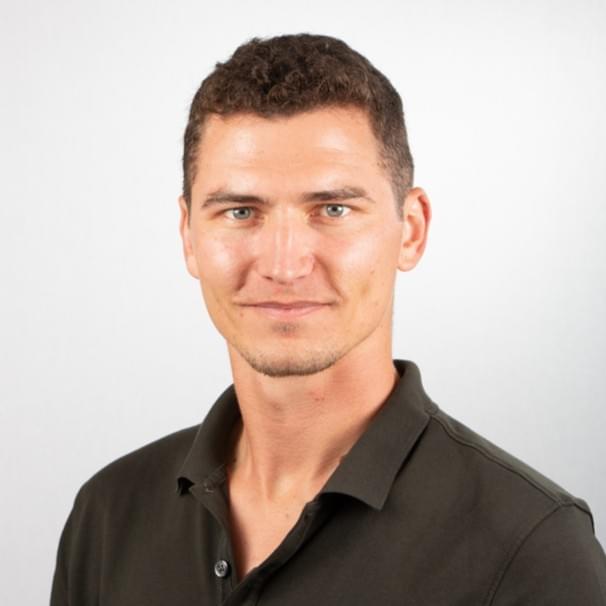
Nick Brisson — Co-founder, OutsiderView
Nick was born in Florida and grew up in Puerto Rico. He spent over ten years in Key West working in the boat charter industry, put four to five years into snorkeling and spearfishing the Florida Keys reef, and lives in Jacksonville Beach now, where he surfs year-round.