Scuba diving
How much does scuba diving cost? Prices we checked in 2026
About $400 to $1,200 to get certified, and where you do it matters most. Every figure comes from a named dive shop or agency price list, read on 31 July 2026.
On this page
- Why most cost pages are wrong before you read them
- What certification actually costs, by where you do it
- The bill after the bill
- Try one dive before you buy the course
- Gear: rent for longer than they tell you
- The cost nobody publishes: staying a diver
- Three worked years
- What might stop you before you spend anything
- Is it worth it? An honest answer
- Frequently asked questions
- Where to go next
Somebody has quoted you a number and you want to know whether it is a fair one. That is almost always why people arrive here, and it is a question every other page on this subject answers with a range so wide it cannot be wrong.
So here is the answer first, with the working shown afterwards.
Why most cost pages are wrong before you read them
Prices are the only thing this page is for, so it is worth saying how these were gathered.
Every figure below was read directly from the source that publishes it — a dive shop’s own rates page or a training agency’s own course page — on 31 July 2026, and each one carries a footnote to the page it came from. Where a price is in baht or pesos it is quoted in baht or pesos, because converting it would add an exchange rate with its own expiry date and hide the thing you actually want to see.
That sounds like pedantry. It is the entire difference between this page and the rest of the results you are looking at. A cost guide with no dates is a snapshot of whenever it was written, which is usually years ago, presented in the present tense. This page was wrong that way for five years before it was rebuilt.
Two things that will make you doubt every number you find:
The training agency does not set the price. PADI’s own Open Water Diver page carries no course price at all — only a link to find a dive center.1 SSI’s is the same, and SSI’s digital learning materials come through its free app rather than as a line item.2 The number you are quoted comes from the shop, not the certification.
Nobody quotes the same bundle. One shop’s price includes gear, marine park fees and the certification card. The next excludes all three and sells you the manual separately. Comparing headline prices between shops without reading what is in them is how people end up feeling cheated by a shop that was cheaper all along.
What certification actually costs, by where you do it
Six real price lists, read on the same day. Every one of these is a PADI Open Water Diver course — the same certification, recognized everywhere.
| Dive center | Where | Listed price | What is in it |
|---|---|---|---|
| Black Turtle Dive3 | Koh Tao, Thailand | 12,950 THB | All-inclusive: certification fees, digital materials, full equipment rental, 3–4 days |
| Blue Note Scuba4 | Cozumel, Mexico | $400 + eLearning | Five confined-water sessions, four open-water dives, gear, marine park fees, digital card. eLearning paid straight to PADI |
| Ocean Enterprises5 | San Diego, USA | from $455 | Orientation, pool training, four open-water dives. eLearning bought separately |
| Dive Paradise6 | Cozumel, Mexico | $497 shore only / $607 with boat dives | Instructor, rental kit, tanks. Marine park fee, manual and card all extra |
| Sea Dwellers7 | Key Largo, USA | $645 with eLearning / $575 without | Full course |
| Undersea Divers8 | Danvers, USA | $1,176.44 total | eLearning $251, pool sessions $499, four ocean dives $385, logbook $39 |
The spread is the finding. The cheapest and the most expensive here are the same qualification, and the gap is roughly ninefold. That is not a quality difference. It is wages, pool hire, boat fuel and water temperature. A course in New England has to heat a pool, put you in a thick wetsuit and run a boat in cold water; a course on Koh Tao walks you into 29°C water off a beach.
Two structural details in that table are worth more than the numbers.
The eLearning is often not included, and it is not small. Undersea Divers lists PADI’s eLearning at $251, paid directly to PADI, separately from everything the shop charges.8 Blue Note and Ocean Enterprises both do the same.45 If you are comparing a $400 quote against a $645 quote, check which side of that line each sits on before concluding anything.
You can split the course across two countries. Undersea Divers lists a $750 referral option — eLearning and pool sessions at home, open-water dives finished somewhere warm on holiday.8 It is the least-known and most useful pricing structure in diving: you do the tedious part where you live and the four dives that matter somewhere you actually want to be.
I went through this ladder myself and paid for every rung of it. What I did not understand at the time, and what nobody tells you at the counter, is that the course fee is the part of the bill you have the most control over and the part you will think about least a year later.
The bill after the bill
The course price is not the total, and the extras are published if you look for them. Dive Paradise, to its credit, lists all of its own:6
- Marine park fee — 225 pesos a day, cash. Cozumel’s park fee is charged per diving day and is not part of the course price at that shop. Blue Note includes it in theirs.4
- PADI manual — 1,580 pesos. A physical book, on top of the eLearning if you want one.
- Certification card — 1,100 pesos. The plastic card is a line item. Digital cards are usually free; Blue Note’s price includes one.4
- Transport. Dive Paradise excludes travel to the shore site and to the marina.
None of these is outrageous and all of them are avoidable surprises. Five questions turn any quote into a comparable number, and a good shop answers all five without hesitating:
- Is the eLearning included, or do I pay PADI separately? This is the single biggest swing, at around $251.8
- Is the certification card included, and is it digital or plastic?
- Is all the equipment included, including a wetsuit? Warm-water shops usually include everything; cold-water shops sometimes charge for exposure protection.
- Are there park, entry or boat fees on top, and are they cash only?
- How many students per instructor? Not a price question, but it is the one that decides whether you are getting the cheap course or the crowded one, and the answer costs nothing to ask.
Try one dive before you buy the course
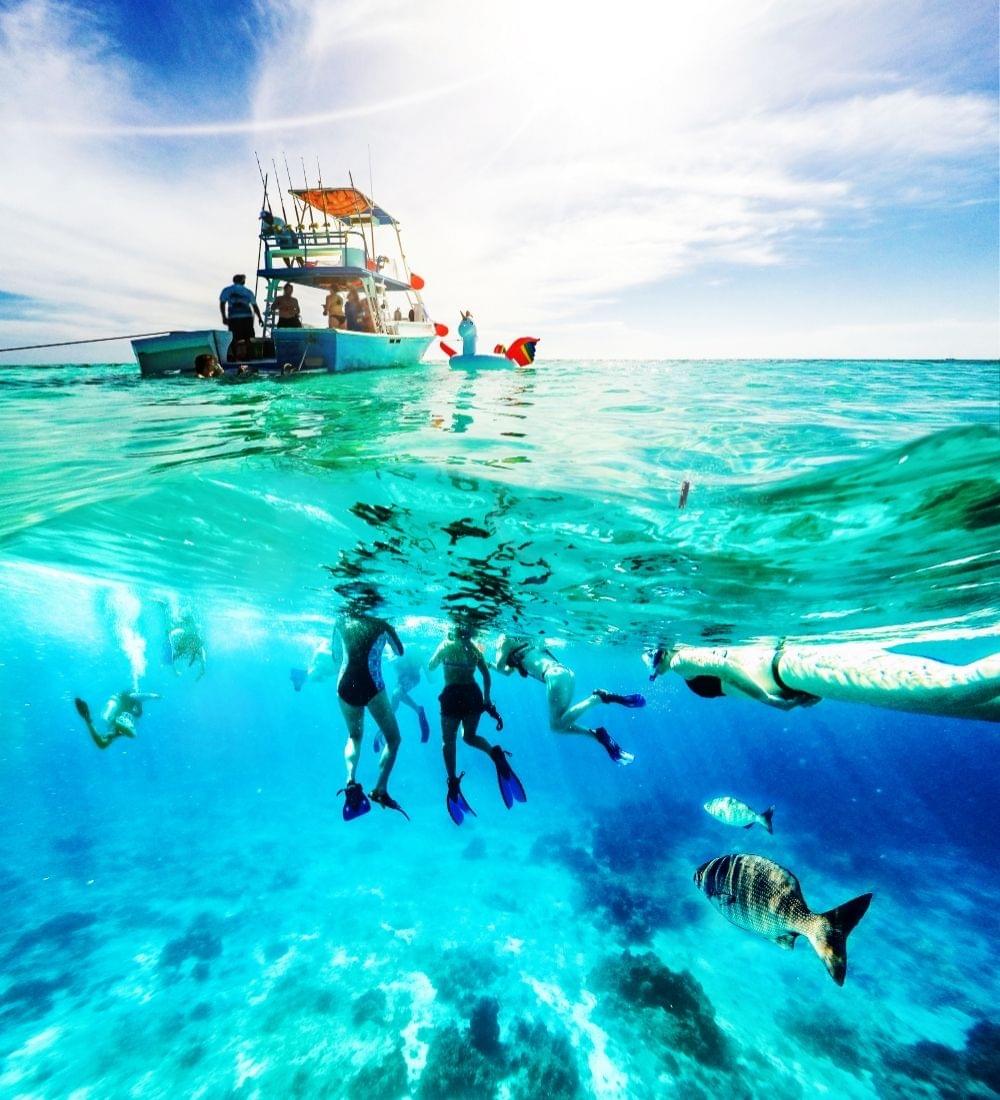
If you are not sure you will like breathing underwater — and plenty of people do not — a supervised single dive is the cheapest possible way to find out.
Blue Note Scuba listed a one-tank shore version at $95 and a two-tank boat version at $175.9 Sea Dwellers in Key Largo listed a Discover Scuba Diving experience at $250.7 Both include an instructor, all the equipment and a shallow dive.
Be clear about what you are buying. A Discover Scuba experience is an introduction supervised by a professional, and it certifies you for nothing at all. What it does tell you is whether you can equalize your ears, whether a regulator in your mouth makes you panic, and whether the whole thing is as good as it looks from a boat. At around a fifth of the price of a course, that is a sensible risk to take first.
If you have already booked one and want to know what actually happens on the day, that is what our guide to preparing for your first scuba dive is for.
Gear: rent for longer than they tell you
This is where the folk wisdom is wrong, and where the arithmetic is easy to do once you have two real price lists.
Renting. Rainbow Reef in Key Largo publishes an itemised list:10 mask, fins and snorkel $10 a day; buoyancy compensator $12; regulator with octopus and gauges $15; dive computer $15; full wetsuit $12; tank $10 a trip. Bundled, its core pack — buoyancy compensator, regulator and gauges — is $25 a day, and the full pack including mask, fins and wetsuit is $35 a day.
Buying. At Divers Supply on the same day, a complete beginner package with buoyancy compensator, regulator and instrumentation was $549.95, with mid-range packages at $799.95 and $999.95 and a Mares package including a dive computer and a tank at $1,434.95.11 Bought piece by piece: masks from $26.95 to $250.00;12 fins from $26.95 to $259.00;13 a 3 mm wetsuit $119.95, 5 mm $184.95, 7 mm $349.95;14 buoyancy compensators from $189.95 to $1,198.00;15 regulator second stages from $144.95 and complete regulator sets from $399.95;16 wrist dive computers from $224.95, with a Suunto Zoop Novo at $299.00 and a Shearwater Peregrine at $580.00.17
Now the sum nobody publishes. Buying the equivalent of that $35-a-day full rental pack — the $549.95 package, a $26.95 mask, $26.95 fins and a $119.95 3 mm wetsuit — comes to about $724. Divided by $35, that is a break-even somewhere around day twenty-one in the water. Because a dive day is usually a two-tank trip, twenty-one days is closer to forty dives than to the twenty you will hear quoted in every dive shop in the world.
And it gets slightly worse once you own it, because owned kit has to be maintained (below) while rented kit does not.
The exception is mask and fins, and you should buy those immediately. They are $54 together at the cheap end, they pay for themselves in about five rental days, and unlike a regulator they only work if they fit your face and your feet. A leaking rental mask ruins more dives than any other single piece of equipment.
The cost nobody publishes: staying a diver
Every cost page stops at certification. This is the part that decides whether you are still diving in three years.
Air, and gas. Aquatic Safaris in Wilmington listed air fills at $8 to $11 depending on tank size, and 32% nitrox at $10 to $15.18 Divers Supply in Jacksonville listed a single air fill at $5 and nitrox up to 36% at $11.50.19 On a boat, Rainbow Reef charged $12 for a single nitrox fill and $20 for two.10
Servicing, which is not optional. Divers Supply Jacksonville lists a full first- and second-stage regulator service at $55, a first stage alone at $35, an octopus at $25 and a buoyancy compensator service at $30. A tank visual inspection with a fill is $15 for air and $25 for nitrox; a hydrostatic test including inspection and fill is $40, or $60 oxygen-clean.19 Call it $85 to $150 a year if you own a full set and a tank.
Insurance and assistance. DAN membership was $40 a year for an individual and $60 for a family, with an enhanced tier at $75 and $100. DAN states plainly that membership alone does not provide coverage for the costs of a dive accident and that dive accident insurance must be bought separately for each member.20 Read that sentence twice before assuming you are covered.
The cost of stopping. This is the line item that catches people. Take two years off and most shops will require a refresher before they put you on a boat: Sea Dwellers lists one at $250, or $130 for the pool-only version.7 Diving twice in a year is cheaper than diving twice in three years, which is an odd but real feature of the sport.
Going further. Advanced Open Water was $585 at Sea Dwellers7 and from $189 at Rainbow Reef10 — two shops twenty minutes apart, which tells you how much these prices are worth comparing. Rescue Diver was $455 and a nitrox certification $225 at Sea Dwellers,7 and Black Turtle listed Advanced at 11,900 baht.3
Three worked years
Built only from the figures above, with the assumptions stated. None of these includes flights, hotels or food.
The holiday diver. One week in the Florida Keys, five dive days, owns a mask and fins, rents the rest. Five-trip card at Rainbow Reef $425, core rental pack $25 × 5 = $125, nitrox at $20 a day = $100, DAN membership $40. About $690 for the year’s diving, or $590 without nitrox.1020
The local diver. Owns a full set and a tank, twenty dives a year from shore or a friend’s boat. Twenty air fills at $9 = $180, annual regulator service $55, buoyancy compensator service $30, tank inspection and fill $15, DAN $40. About $320 a year, plus whatever the boat costs.191820
The budget certifier. Certifies on Koh Tao during a trip already planned. Open Water 12,950 baht all-inclusive, then ten fun dives on the ten-dive card at 10,000 baht — a little under 1,000 baht a dive against 1,100 for a single.3 Everything included, nothing to service, nothing to store.
The third of those is genuinely the cheapest way into diving, with one honest caveat: it only saves money if you were going anyway. A flight to Thailand to save $600 on a course is not a saving.
And the worst case, for completeness. Someone who certifies at a US shop and buys a full set of kit before their first independent dive is looking at the course at $645,7 a mid-range package at $799.95,11 a mask and fins at about $54,1213 a 3 mm wetsuit at $119.95,14 a dive computer if the package lacks one at $224.95,17 and DAN at $40.20 That is a first year somewhere near $1,880 before a single boat trip. It is a real number and it is roughly what people mean when they say diving is expensive — but almost none of it was compulsory in year one, and the section above is the argument for why.
What might stop you before you spend anything
Two gates worth checking before you pay a deposit, both of which have their own page here because neither belongs in a paragraph.
A medical one. Dive shops ask you to complete a medical questionnaire, and some answers mean a doctor has to sign before you can get in the water. If you have asthma, that applies to you — what the questionnaire asks and how to arrive with the right paperwork is covered in scuba diving with asthma. We are not doctors and this page gives no medical advice.
A scheduling one. You cannot dive right up to your flight home. Surface-interval guidance costs most people the last half-day of a dive holiday, and planning around it is the subject of flying after diving. Budget one non-diving day at the end of the trip and you will never think about it again.
Is it worth it? An honest answer
Diving costs roughly ten times what snorkeling costs, and for a week on a shallow tropical reef, snorkeling frequently shows you more. Reef life is concentrated in the top few meters, snorkeling gear is a one-off purchase somewhere under $150, and nobody has to certify anybody. If your reason for diving is “I want to see the reef”, the cheap answer is the good one, and our comparison of snorkeling and scuba diving works the trade through properly.
What diving buys you is different in kind rather than degree: wrecks, walls, caverns, big animals, and time. Twenty minutes hanging weightless beside something enormous is not a better version of snorkeling, it is a different activity, and no amount of surface time substitutes for it.
That is the decision the money is really attached to. Once it is made, the numbers on this page are the cheapest part of it — because the recurring cost of diving is not fills and servicing, it is the flights to water worth diving in.
Frequently asked questions
Frequently asked questions
How much does scuba diving cost?
Getting certified costs roughly $400 to $1,200 depending on where you do it, and the range is real rather than vague. On 31 July 2026, Blue Note Scuba in Cozumel listed its PADI Open Water course at $400 plus eLearning, Ocean Enterprises in San Diego listed from $455, Sea Dwellers in Key Largo listed $645 with eLearning included, and Undersea Divers in Massachusetts listed a full course total of $1,176.44. After that, a day of diving with rented kit runs roughly $99 to $145 on a US boat, and staying a diver costs a few hundred dollars a year.
How much does it cost to go scuba diving if you are already certified?
A two-tank boat trip with tanks and weights included was $99 at Rainbow Reef Dive Center and $110 at Sea Dwellers, both in Key Largo, on 31 July 2026. Rainbow Reef's full rental package — buoyancy compensator, regulator, gauges, mask, fins and wetsuit — was $35 a day on top, and nitrox was $20 for two tanks. Multi-trip cards cut the per-trip price to $80 to $90.
Why do scuba courses vary so much in price?
Because the training agency does not set the price — the dive center does. PADI and SSI publish no course price at all on their own course pages. What you are really paying for is local wages, pool time, boat time and how much of the kit is included, which is why the same PADI Open Water certification was 12,950 baht at Black Turtle Dive on Koh Tao and $1,176.44 at Undersea Divers in Danvers, Massachusetts on the same day.
How much does scuba gear cost to buy?
At Divers Supply on 31 July 2026, a complete beginner package with buoyancy compensator, regulator and instrumentation was $549.95, mid-range packages ran $799.95 to $1,434.95, and a top-end custom package was $3,074.00. Bought separately, masks started at $26.95, fins at $26.95, a 3 mm wetsuit at $119.95, a buoyancy compensator at $189.95, a regulator second stage at $144.95 and a wrist dive computer at $224.95.
Is it cheaper to rent or buy scuba gear?
Rent, for longer than most people tell you. Rainbow Reef in Key Largo charged $35 a day for a full kit; the equivalent bought new at Divers Supply came to about $724. That is a break-even around the twenty-first day in the water, which on two-tank days is closer to forty dives than the twenty you will hear quoted. Mask and fins are the exception — buy those immediately, because fit matters and they pay for themselves in about five days.
How much does scuba diving cost each year once you are certified?
More than nothing and less than people fear. On 31 July 2026, Divers Supply in Jacksonville listed a full regulator service at $55, a buoyancy compensator service at $30, a tank visual inspection with fill at $15 and a hydrostatic test at $40. Air fills ran $8 to $11 at Aquatic Safaris in Wilmington. DAN membership was $40 a year for an individual, with dive accident insurance sold separately. A diver with their own kit doing twenty dives a year can expect a few hundred dollars before travel.
Where is the cheapest place to get scuba certified?
South East Asia, consistently. Black Turtle Dive on Koh Tao listed its PADI Open Water course at 12,950 baht on 31 July 2026, including certification fees, digital materials and full equipment rental. That is a fraction of what a cold-water course costs in the United States or northern Europe, and the certification is identical. The catch is that you have to already be there, and a course bought as part of a holiday you were taking anyway is the only version of this that genuinely saves money.
Where to go next
- You have booked a course or a Discover Scuba: how to prepare for your first scuba dive — what happens, in what order, and what the instructor is watching for
- Still deciding: snorkeling versus scuba diving — the honest comparison, including the cost ratio above
- Planning a dive holiday: flying after diving — the surface interval that decides your last day
- Checking you can dive at all: scuba diving with asthma — the medical questionnaire, and what happens when you tick the box
A note on these prices. Every figure was read from the source named beside it on 31 July 2026. Dive shops change their rates, and the ones here are named because they publish theirs openly, not because we are recommending them over their neighbors. Check the current price with the shop before you book anything.
References
Footnotes
-
“Open Water Diver.” PADI, read 31 July 2026, store.padi.com. No course price is published; the page directs the reader to a dive center. ↩
-
“Free Online Training” and “MySSI app.” Scuba Schools International, read 31 July 2026, divessi.com. ↩
-
“PADI Diving Course Prices Koh Tao.” Black Turtle Dive, read 31 July 2026, blackturtledive.com. ↩ ↩2 ↩3
-
“PADI Open Water Scuba Certification in Cozumel.” Blue Note Scuba, read 31 July 2026, bluenotescuba.com. ↩ ↩2 ↩3 ↩4
-
“The PADI Open Water Diver course.” Ocean Enterprises, San Diego, read 31 July 2026, oceanenterprises.com. ↩ ↩2
-
“PADI Open Water Diver Certification.” Dive Paradise, Cozumel, read 31 July 2026, diveparadise.com. ↩ ↩2
-
“Scuba Diving & Snorkel Trip Prices.” Sea Dwellers Dive Center, Key Largo, read 31 July 2026, seadwellers.com. ↩ ↩2 ↩3 ↩4 ↩5 ↩6
-
“Full Open Water E-Learning Course.” Undersea Divers, Danvers, Massachusetts, read 31 July 2026, underseadivers.com. ↩ ↩2 ↩3 ↩4
-
“Discover Scuba Diving.” Blue Note Scuba, Cozumel, read 31 July 2026, bluenotescuba.com. ↩
-
“Scuba Diving Prices.” Rainbow Reef Dive Center, Key Largo, read 31 July 2026, rainbowreef.com. ↩ ↩2 ↩3 ↩4
-
“Scuba BCD Packages.” Divers Supply, read 31 July 2026, divers-supply.com. ↩ ↩2
-
“Scuba Masks.” Divers Supply, read 31 July 2026, divers-supply.com. ↩ ↩2
-
“Diving Fins.” Divers Supply, read 31 July 2026, divers-supply.com. ↩ ↩2
-
“Scuba Wetsuits.” Divers Supply, read 31 July 2026, divers-supply.com. ↩ ↩2
-
“Scuba BCD.” Divers Supply, read 31 July 2026, divers-supply.com. ↩
-
“Scuba Regulators.” Divers Supply, read 31 July 2026, divers-supply.com. ↩
-
“Dive Computers.” Divers Supply, read 31 July 2026, divers-supply.com. ↩ ↩2
-
“Scuba Tank Fill Prices.” Aquatic Safaris, Wilmington, North Carolina, read 31 July 2026, aquaticsafaris.com. ↩ ↩2
-
“Service Rates, Jacksonville.” Divers Supply, read 31 July 2026, divers-supply.com. ↩ ↩2 ↩3
-
“Membership.” Divers Alert Network, read 31 July 2026, dan.org. ↩ ↩2 ↩3 ↩4
Liz Meyer — Travel writer
Liz is a full-time traveler and a PADI Rescue Diver. She loves to explore new places in and out of the water and share her experiences with others.